|
Unraveling CD23’s Regulatory Role: Mechanisms in Immunoglobulin E-Mediated Allergic Reactions
hits:18 Date:02/03/26
Concept
CD23 is a type II transmembrane protein consisting of 321 amino acids, typically existing as cell surface trimers. It belongs to the C-type lectin family and exhibits calcium-dependent biological activity. With two isoforms—CD23a (specifically expressed on B lymphocytes) and CD23b (expressed on B cells, epithelial cells, and other cell types)—CD23 exists in both membrane-bound and soluble forms. Protease-mediated cleavage of membrane-bound CD23 generates soluble fragments, and the dynamic equilibrium between these two forms is critical for its regulatory functions. As a low-affinity receptor for immunoglobulin E (IgE), CD23 plays a multifaceted role in immune regulation, particularly in IgE-mediated allergic responses.
Research Frontiers
Molecular Traits and Expression Profiles of CD23: The structural divergence between CD23a and CD23b lies in a single amino acid difference within their intracellular domains, which underpins their cell-type-specific expression patterns. The conversion between membrane-bound and soluble CD23 is a tightly regulated process: soluble CD23 fragments, derived from proteolytic cleavage, exert distinct biological effects compared to their membrane-bound counterparts. This dual-form existence allows CD23 to modulate immune responses through both cell-surface interactions and soluble signaling.
CD23-IgE Interaction Mechanisms: CD23 binds to the Cε3 and Cε4 domains of IgE, functioning as a low-affinity receptor. While its monomeric binding affinity for IgE is lower than that of the high-affinity receptor FcεRI, CD23 oligomerization on the cell surface significantly enhances its overall binding capacity. Notably, CD23 preferentially binds IgE-allergen complexes over free IgE, a specificity influenced by IgE valency. Calcium binding induces conformational changes in CD23, further strengthening its interaction with IgE—an intricate mechanism that ensures targeted immune responses.
CD23’s Dual Role in IgE Synthesis Regulation: CD23 acts as a bidirectional regulator of IgE production. Transgenic animal studies demonstrate that CD23 overexpression suppresses allergen-specific IgE synthesis post-exposure, while CD23-deficient mice exhibit elevated IgE levels. At the molecular level, high IgE concentrations stabilize membrane-bound CD23, inhibiting proteolytic cleavage and forming a negative feedback loop to restrain excessive IgE production. Conversely, enhanced CD23 cleavage disrupts this feedback, potentially leading to pathological IgE dysregulation in allergic diseases.
Immunological Significance of CD23-Mediated Antigen Presentation: CD23 drives IgE-facilitated antigen presentation, a specialized pathway wherein B cells capture IgE-allergen complexes via surface CD23, process the allergens, and present derived peptides to T lymphocytes through MHC class II molecules. This mechanism is pivotal for initiating and sustaining allergic reactions. Allergen-specific immunotherapy can induce protective IgG4 antibodies, which competitively block IgE binding to CD23, interrupting antigen presentation and promoting immune tolerance.
CD23 Interactions with Other Immune Molecules: CD23 forms regulatory networks with other immune molecules, most notably complement receptor CD21. Binding between CD23 and CD21—at distinct sites from CD23’s IgE-binding domain—does not interfere with IgE interaction but instead enhances CD23’s affinity for IgE. IgG subclasses exert differential effects on this crosstalk: IgG4, for instance, may modulate B cell-immune complex interactions by disrupting CD23-CD21 binding, highlighting CD23’s multidimensional role in immune regulation.
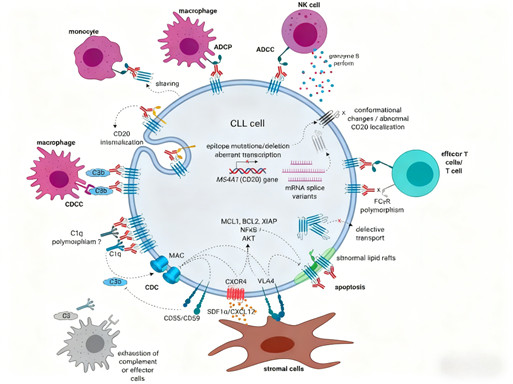
Challenges and Opportunities in CD23-Targeted Therapies: While anti-IgE monoclonal antibodies have proven effective in treating allergic diseases, direct CD23-targeted strategies face unique hurdles. Simply blocking CD23-IgE interactions is often insufficient to alleviate allergic symptoms, largely due to CD23’s dual regulatory functions. Future therapeutic development requires a deeper understanding of CD23’s context-dependent roles in physiological and pathological states, as well as the design of precise intervention strategies. Given its involvement in IgE clearance, synthesis inhibition, and immune modulation, CD23 remains a promising target for innovative allergy treatments.
Research Significance
CD23’s complex regulatory mechanisms in IgE-mediated allergic reactions address a critical gap in understanding allergy pathogenesis. By elucidating its roles in IgE synthesis, antigen presentation, and intermolecular crosstalk, researchers gain new insights into the initiation and progression of allergic diseases. This knowledge not only advances basic immunology research but also lays the groundwork for developing more effective therapeutic approaches—beyond current anti-IgE therapies—by targeting CD23’s specific functions. Additionally, CD23’s utility as a B cell activation marker enhances its value in diagnosing B cell lymphomas and studying immune dysregulation in inflammatory conditions.
Related Mechanisms, Research Methods, and Product Applications
Mechanisms
CD23 regulates allergic responses through multiple pathways:
(1) Negative feedback on IgE synthesis via membrane-bound CD23 stabilization;
(2) IgE-facilitated antigen presentation to initiate T cell activation;
(3) Interactions with CD21 and IgG subclasses to modulate immune complex processing;
(4) Soluble CD23 fragments exerting distinct signaling effects. Dysregulation of these mechanisms contributes to aberrant IgE production and sustained allergic inflammation.
Research Methods
Key research methods for studying CD23 include:
* Immunohistochemistry (IHC) and immunofluorescence to detect CD23 expression and localization in tissues and cells.
* Flow cytometry for quantitative analysis of membrane-bound CD23 on B cells, epithelial cells, and other immune cells.
* Co-immunoprecipitation and binding assays to investigate interactions between CD23, IgE, CD21, and other immune molecules.
* In vitro functional assays (e.g., B cell proliferation, IgE secretion, antigen presentation assays) to evaluate CD23’s regulatory effects.
* Animal models (CD23-overexpressing, CD23-deficient) to study in vivo roles in allergic responses.
Product Applications
ANT BIO PTE. LTD.’s CD23 antibodies, led by the STARTER brand’s "S-RMab® CD23 Recombinant Rabbit Monoclonal Antibody" (Catalog No.: S0B2023), are essential tools for immunology research and clinical diagnostics:
* B-Cell Lymphoma Diagnosis & Classification: Enables accurate diagnosis and differential diagnosis of chronic lymphocytic leukemia/small lymphocytic lymphoma (CLL/SLL), follicular lymphoma, and other B cell malignancies.
* Germinal Center Research: Facilitates studies on activated B cells and follicular dendritic cell function in germinal center reactions.
* Allergy & Inflammatory Disease Research: Supports exploration of CD23’s role in IgE-mediated allergic reactions and chronic inflammatory conditions.
* Immune Regulation Studies: Aids in investigating CD23’s role in B cell function modulation and immune response negative feedback mechanisms.
The S0B2023 antibody, developed using ANT BIO PTE. LTD.’s proprietary S-RMab® recombinant rabbit monoclonal platform and validated for IHC, offers exceptional advantages: high specificity with clear membrane/cytoplasmic localization (ensuring reliable detection in FFPE samples) and superior staining stability with minimal batch variation—critical for consistent results in clinical diagnostics and translational research.
Brand Mission
ANT BIO PTE. LTD. is dedicated to empowering the global life science community with high-quality, innovative biological reagents and solutions. Leveraging advanced development platforms—including recombinant rabbit monoclonal antibody, recombinant mouse monoclonal antibody, rapid monoclonal antibody, and multi-system recombinant protein expression platforms (E.coli, CHO, HEK293, Insect Cells)—and adhering to rigorous certifications (EU 98/79/EC, ISO9001, ISO13485), we strive to deliver reliable tools that accelerate scientific breakthroughs in immunology, oncology, and inflammatory diseases, ultimately advancing human health.
Related Product List
| Catalog No. |
Product Name |
Host |
| S0B2023 |
S-RMab® CD23 Recombinant Rabbit mAb (SDT-028-67) |
Rabbit |
| S0B5172 |
FITC Rat Anti-Mouse CD23 Antibody (S-R672) |
Rat |
| S0B5172 |
FITC Rat Anti-Mouse CD23 Antibody (S-R672) |
Rat |
| S0B5231 |
PE Rat Anti-Mouse CD23 Antibody (S-R672) |
Rat |
| S0B8122 |
Alexa Fluor® 647 Rat Anti-Mouse CD23 Antibody (S-R672) |
Rat |
| S0B5951 |
Alexa Fluor® 488 Rat Anti-Mouse CD23 Antibody (S-R672) |
Rat |
AI Disclaimer
This article is AI-compiled and interpreted based on the original work. All intellectual property (e.g., images, data) of the original publication shall belong to the journal and the research team. For any infringement, please contact us promptly and we will take immediate action.
ANT BIO PTE. LTD. – Empowering Scientific Breakthroughs
At ANTBIO, we are committed to advancing life science research through high-quality, reliable reagents and comprehensive solutions. Our specialized sub-brands (Absin, Starter, UA) cover a full spectrum of research needs, from general reagents and kits to antibodies and recombinant proteins. With a focus on innovation, quality, and customer-centricity, we strive to be your trusted partner in unlocking scientific mysteries and driving medical progress. Explore our product portfolio today and elevate your research to new heights.
|
 中文
中文