 中文
中文


Home > News > CD182 Antibodies: Deciphering CXCR2’s Multifaceted Roles in the Tumor Microenvironment and Immune Regulation
CD182 Antibodies: Deciphering CXCR2’s Multifaceted Roles in the Tumor Microenvironment and Immune Regulation
- 1. Concept
CD182, also known as CXCR2, is a key G protein-coupled receptor (GPCR) in the chemokine receptor family. It exerts central regulatory effects in physiological and pathological processes by recognizing specific chemokine ligands (e.g., CXCL2) and activating downstream signaling networks that govern cell migration, proliferation, and differentiation. CXCR2 expression is tightly regulated via transcriptional control, post-translational modifications, and protein stability mechanisms, with distinct expression patterns across cell types that determine its functional specificity. Highly expressed on myeloid cells (neutrophils, monocytes, myeloid-derived suppressor cells), CXCR2 plays pivotal roles in shaping the tumor microenvironment (TME) and regulating immune responses. CD182 antibodies, developed by ANT BIO PTE. LTD., enable precise detection and functional modulation of this receptor, supporting in-depth research into its multifaceted biological functions.
2. Research Frontiers
Cutting-edge research on CXCR2 (CD182) has uncovered its complex and context-dependent roles across diverse fields:
Tumor Microenvironment Regulation: CXCR2 shapes the immunosuppressive TME by recruiting neutrophils, macrophages, and myeloid-derived suppressor cells. Its role in tumor progression is dual-sided: promoting angiogenesis and metastasis in most contexts, while exhibiting anti-tumor activity under specific conditions—highlighting the need for tumor-type-specific mechanistic studies.
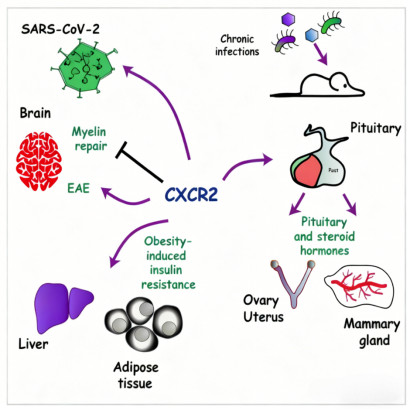
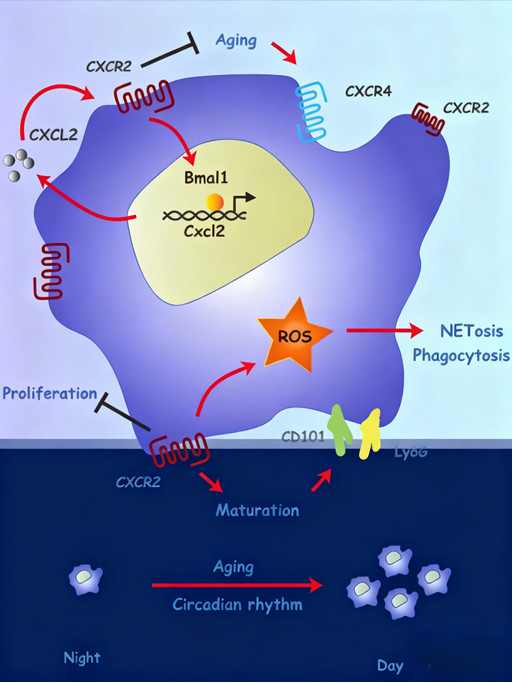
Immune Cell Function Innovation: In neutrophils, CXCR2 regulates circadian rhythmic fluctuations, influencing cell maturation, reactive oxygen species (ROS) production, and extracellular trap (NET) formation. It also indirectly modulates reproductive and metabolic organ immunity via the hypothalamic-pituitary-gonadal axis. In autoimmune disease models (e.g., EAE), CXCR2 activation exacerbates inflammation and inhibits central nervous system myelin regeneration.
Infectious Disease Pathophysiology: During SARS-CoV-2 infection, CXCR2 promotes neutrophil recruitment to lung lesions, exacerbating inflammatory responses and tissue damage—providing a potential target for respiratory viral infection interventions. Its role varies by pathogen and infection site, requiring precise contextual evaluation.
Therapeutic Synergy Potential: CXCR2 antagonists show promise in combination with immune checkpoint inhibitors, producing synergistic anti-tumor effects. Ligand-specific neutralizing antibodies and tissue-targeted regulatory strategies offer new avenues for precise intervention.
3. Research Significance
CXCR2 (CD182) research holds profound implications for oncology, immunology, and translational medicine:
Tumor Biology Insights: It reveals the molecular mechanisms linking chemokine signaling, immune cell recruitment, and TME formation—critical for developing novel immunotherapeutic strategies.
Immune Regulation Understanding: CXCR2’s role in neutrophil circadian rhythms, neuroimmune interactions, and inflammatory responses expands knowledge of immune system complexity.
Therapeutic Target Validation: Despite its broad physiological involvement, CXCR2’s tumor-specific and inflammation-associated functions make it a viable target for cancer and inflammatory disease therapies—with combination approaches mitigating off-target risks.
Translational Value: Preclinical research supports the development of CXCR2-targeted antibodies and antagonists, with potential to address unmet needs in tumor immunotherapy and infectious disease management.
4. Related Mechanisms, Research Methods, and Product Applications
Related Mechanisms
CXCR2 (CD182) mediates its effects through conserved and context-specific signaling pathways:
Ligand-Binding Signaling: Binding to chemokine ligands (e.g., CXCL2) activates GPCR signaling, triggering downstream cascades (MAPK, PI3K-AKT) that regulate cell migration, proliferation, and inflammation.
Immune Cell Recruitment: CXCR2-dependent chemotaxis recruits myeloid cells to the TME and inflammatory sites, reinforcing immunosuppression or tissue damage.
Circadian Regulation: CXCR2 interacts with the circadian clock gene Bmal1 to modulate neutrophil function rhythmically, aligning immune responses with biological cycles.
Research Methods
CD182 antibodies support core research techniques in oncology and immunology:
Expression Analysis: Flow cytometry and immunofluorescence to detect CXCR2 on myeloid cells and tumor-associated immune subsets.
Functional Assays: Chemotaxis assays to evaluate CXCR2-dependent cell migration; ROS and NET formation assays to assess neutrophil function; angiogenesis assays to study tumor vascularization.
In Vivo Studies: Tumor-bearing and inflammatory disease mouse models to investigate CXCR2’s role in TME formation, inflammation progression, and therapeutic response—alone or in combination with other therapies.
Signaling Pathway Analysis: Western blot and qPCR to explore downstream signaling cascades (MAPK, PI3K-AKT) and gene expression changes mediated by CXCR2.
Product Applications by ANT BIO PTE. LTD.
ANT BIO PTE. LTD., via its sub-brand STARTER (specializing in high-performance antibodies), offers a curated portfolio of CD182 antibodies with exceptional specificity, affinity, and batch consistency. These products are rigorously validated for diverse applications:
Granulocyte Research: Investigation of CXCR2’s role in neutrophil chemotaxis, activation, and recruitment to inflammatory sites.
Inflammatory Disease Studies: Mechanistic analysis of granulocyte infiltration in mouse models of acute pneumonia, peritonitis, and arthritis.
Tumor Immunology: Exploration of CXCR2+ neutrophil recruitment, polarization, and immunosuppressive functions in the TME.
Tissue Repair and Angiogenesis: Research into CXCR2’s non-classical roles in injury repair and vascular development.
5. Brand Mission
At ANT BIO PTE. LTD., our mission is to empower global innovative pharmaceutical companies, research institutions, and life science researchers with high-quality, high-value biological reagents and comprehensive solutions. Leveraging state-of-the-art technology platforms—including recombinant rabbit monoclonal antibody, recombinant mouse monoclonal antibody, rapid mouse monoclonal antibody, and recombinant protein development systems (E.coli, CHO, HEK293, Insect Cells), as well as the One-Step ELISA Platform and PTM Pan-Modification Antibody Platform—we strive to accelerate scientific discovery and translational research. Our sub-brands (Absin for general reagents and kits, STARTER for antibodies, and UA for recombinant proteins) synergize to address diverse research needs, contributing to breakthroughs in oncology, immunology, and inflammatory disease research. With certifications including EU 98/79/EC, ISO9001, and ISO13485, we uphold the highest standards of quality and reliability to support our mission of advancing human health through science.
6. Related Product List
| S0B0925 | CXCR2 Recombinant Rabbit mAb (S-1292-30) | Host : Rabbit Conjugation : Unconjugated |
| S0B5179 | Rat Anti-Mouse CD182 Antibody (S-R718) | Host : Rat Conjugation : Unconjugated |
7. AI Disclaimer
This article is AI-compiled and interpreted based on the original work. All intellectual property (e.g., images, data) of the original publication shall belong to the journal and the research team. For any infringement, please contact us promptly and we will take immediate action.
ANT BIO PTE. LTD. – Empowering Scientific Breakthroughs
At ANTBIO, we are committed to advancing life science research through high-quality, reliable reagents and comprehensive solutions. Our specialized sub-brands (Absin, Starter, UA) cover a full spectrum of research needs, from general reagents and kits to antibodies and recombinant proteins. With a focus on innovation, quality, and customer-centricity, we strive to be your trusted partner in unlocking scientific mysteries and driving medical progress. Explore our product portfolio today and elevate your research to new heights.
Related News
- Prestained Protein Marker: A Comprehensive Guide for Western Blot and Protein El 9/17/2026
- PSEN1 Antibody: A Critical Tool for Deciphering Alzheimer's Disease Pathogenesis 9/16/2026
- SHP Substrate 1 Recombinant Protein: Molecular Design, Functional Mechanisms and 9/15/2026
- Research Progress on Hepatic Lectin H1 Protein 9/14/2026
- PIC Paired Antibodies: A Comprehensive Analysis of Principles, Preparation, and 9/11/2026
- CMS: Initial Prescriptions for Silevimig Injection, the World's First Bispecific 9/10/2026
- Precision in Practice: Why Skilled Manufacturing Remains Central to Titan Enterp 9/10/2026
- Adagene Achieves Milestone in Collaboration with Exelixis for Advancement of SAF 9/10/2026
- Avi-Tag Technology: High-Precision Biotinylation Labeling Facilitates Molecular 9/10/2026
- ANT BIO: The Remarkable Biotinylated Proteins 9/9/2026