 中文
中文


Home > News > CD172a Antibodies: A Cornerstone Tool for Immune Regulation Research
CD172a Antibodies: A Cornerstone Tool for Immune Regulation Research
- 1. Concept
CD172a, also known as signal regulatory protein α (SIRPα), is a key immunoregulatory transmembrane protein belonging to the immunoglobulin superfamily. It is widely expressed on myeloid cells—including dendritic cells, macrophages, and neutrophils—with low expression on lymphoid cells (T/B lymphocytes), reflecting its cell-type-specific regulatory role. Structurally, CD172a features three extracellular immunoglobulin-like domains, a transmembrane region, and a cytoplasmic tail containing immunoreceptor tyrosine-based inhibitory motifs (ITIMs). Its core function lies in maintaining immune homeostasis through interaction with the ligand CD47: ligand binding triggers ITIM phosphorylation, recruiting protein tyrosine phosphatases (SHP-1, SHP-2) to initiate inhibitory signaling pathways. As an important immune checkpoint target, CD172a antibodies—developed by ANT BIO PTE. LTD.—enable precise detection and functional modulation of this receptor, serving as indispensable tools in immunology research.
2. Research Frontiers
Cutting-edge research on CD172a antibodies has expanded their applications in immune regulation and disease biology:
Specificity Validation Innovations: Addressing structural homology with family members (e.g., CD172b), researchers use epitope mapping, gene knockout cell models, and biophysical techniques (surface plasmon resonance, isothermal titration calorimetry) to ensure antibody specificity. Multi-platform validation (flow cytometry, IHC, immunoprecipitation) optimizes working conditions and minimizes background interference.
Functional Antibody Development: Agonistic CD172a antibodies mimic CD47-CD172a pathway activation to study immune cell regulation, while blocking antibodies dissect the pathway’s role in physiological/pathological processes. These functionally distinct antibodies deepen understanding of immune checkpoint mechanisms.
Immune Cell Atlas Construction: Combined with other surface markers, CD172a antibodies enable precise classification of myeloid subsets—distinguishing conventional/plasmacytoid dendritic cells, resolving monocyte heterogeneity, and identifying tissue-resident macrophages—advancing immune cell biology.
Disease Mechanism Exploration: In tumor immunology, CD172a antibodies reveal myeloid-derived suppressor cell roles in immunosuppressive microenvironments; in autoimmune diseases and infections, they uncover CD172a signaling abnormalities and pathogen evasion mechanisms.
3. Research Significance
CD172a antibodies hold profound implications for immunology and translational research:
Immune Regulation Insights: They unravel the CD47-CD172a inhibitory pathway, shedding light on the fine-tuning of immune responses and myeloid cell function—foundational to understanding immune homeostasis.
Therapeutic Target Validation: CD172a’s role as an immune checkpoint makes it a promising target for cancer immunotherapy; blocking antibodies enhance macrophage phagocytosis of tumor cells, offering a strategy to overcome immunosuppression.
Disease Research Tools: These antibodies enable analysis of CD172a expression and distribution in patient samples and animal models, accelerating discoveries in autoimmune diseases, infections, and neuroinflammation.
Preclinical to Clinical Translation: High-quality CD172a antibodies support preclinical efficacy evaluation of checkpoint blockade therapies, bridging basic research and clinical application.
4. Related Mechanisms, Research Methods, and Product Applications
Related Mechanisms
CD172a mediates immune regulation through conserved signaling pathways:
CD47-CD172a Interaction: Binding of CD172a to CD47 (expressed on various cells) triggers ITIM phosphorylation, recruiting SHP-1/SHP-2 to inhibit myeloid cell activation, phagocytosis, and pro-inflammatory cytokine secretion.
Inhibitory Signaling Cascades: Downstream pathways suppress MAPK, PI3K-AKT, and NF-κB signaling, attenuating immune responses and maintaining tolerance.
Pathogen Evasion: Some pathogens exploit CD172a-mediated inhibition to evade immune surveillance, while autoimmune diseases may involve dysregulated CD172a signaling.
Research Methods
CD172a antibodies support core techniques in immunology research:
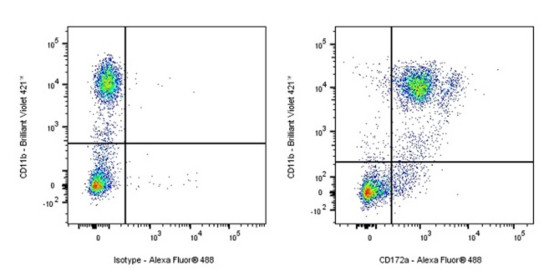
Immune Cell Phenotyping: Flow cytometry and immunofluorescence to identify and isolate CD172a-positive myeloid subsets.
Signaling Pathway Analysis: Western blot and immunoprecipitation to study ITIM phosphorylation and SHP-1/SHP-2 recruitment.
Functional Assays: Phagocytosis assays (assessing macrophage activity after CD172a blockade), cytokine secretion analysis (ELISA, qPCR), and T cell activation assays.
Disease Model Studies: In vivo experiments using CD172a antibodies to modulate immune responses in tumor, autoimmune, and infection models.
Product Applications by ANT BIO PTE. LTD.
ANT BIO PTE. LTD., via its sub-brand STARTER (specializing in high-performance antibodies), offers a curated portfolio of CD172a antibodies with exceptional specificity, affinity, and batch consistency. These products are rigorously validated for diverse applications:
Macrophage Function Research: Investigating SIRPα’s role in phagocytosis, activation, and polarization.
Immune Checkpoint Studies: CD47-SIRPα blockade research for tumor immunotherapy development.
Myeloid Cell Biology: Tracking SIRPα-positive cells in bone marrow, spleen, and other tissues to study development and differentiation.
Neuroimmune Research: Detecting SIRPα in microglia and analyzing its role in neuroinflammation.
5. Brand Mission
At ANT BIO PTE. LTD., our mission is to empower global innovative pharmaceutical companies, research institutions, and life science researchers with high-quality, high-value biological reagents and comprehensive solutions. Leveraging state-of-the-art technology platforms—including recombinant rabbit monoclonal antibody, recombinant mouse monoclonal antibody, rapid mouse monoclonal antibody, and recombinant protein development systems (E.coli, CHO, HEK293, Insect Cells), as well as the One-Step ELISA Platform and PTM Pan-Modification Antibody Platform—we strive to accelerate scientific discovery and translational research. Our sub-brands (Absin for general reagents and kits, STARTER for antibodies, and UA for recombinant proteins) synergize to address diverse research needs, contributing to breakthroughs in immunology, oncology, and neurobiology. With certifications including EU 98/79/EC, ISO9001, and ISO13485, we uphold the highest standards of quality and reliability to support our mission of advancing human health through science.
6. Related Product List
| S0B8414 | Biotin Mouse Anti-Human CD172a/b Antibody (S-3431) |
Host : Mouse Conjugation : Biotin |
| S0B8321 | Biotin Rat Anti-Mouse CD172a (SIRPα) Antibody (S-R713) |
Host : Rat Conjugation : Biotin |
| S0B8220 | Pacific Blue Mouse Anti-Human CD172a/b Antibody (S-3431) |
Conjugation : Pacific Blue |
| S0B8241 | Alexa Fluor® 488 Rat Anti-Mouse CD172a (SIRPα) Antibody (S-R713) | Host : Rat Conjugation : Alexa Fluor® 488 |
| S0B8285 | Pacific Blue Rat Anti-Mouse CD172a (SIRPα) Antibody (S-R713) |
Host : Rat Conjugation : Pacific Blue |
7. AI Disclaimer
This article is AI-compiled and interpreted based on the original work. All intellectual property (e.g., images, data) of the original publication shall belong to the journal and the research team. For any infringement, please contact us promptly and we will take immediate action.
ANT BIO PTE. LTD. – Empowering Scientific Breakthroughs
At ANTBIO, we are committed to advancing life science research through high-quality, reliable reagents and comprehensive solutions. Our specialized sub-brands (Absin, Starter, UA) cover a full spectrum of research needs, from general reagents and kits to antibodies and recombinant proteins. With a focus on innovation, quality, and customer-centricity, we strive to be your trusted partner in unlocking scientific mysteries and driving medical progress. Explore our product portfolio today and elevate your research to new heights.
Related News
- Prestained Protein Marker: A Comprehensive Guide for Western Blot and Protein El 9/17/2026
- PSEN1 Antibody: A Critical Tool for Deciphering Alzheimer's Disease Pathogenesis 9/16/2026
- SHP Substrate 1 Recombinant Protein: Molecular Design, Functional Mechanisms and 9/15/2026
- Research Progress on Hepatic Lectin H1 Protein 9/14/2026
- PIC Paired Antibodies: A Comprehensive Analysis of Principles, Preparation, and 9/11/2026
- CMS: Initial Prescriptions for Silevimig Injection, the World's First Bispecific 9/10/2026
- Precision in Practice: Why Skilled Manufacturing Remains Central to Titan Enterp 9/10/2026
- Adagene Achieves Milestone in Collaboration with Exelixis for Advancement of SAF 9/10/2026
- Avi-Tag Technology: High-Precision Biotinylation Labeling Facilitates Molecular 9/10/2026
- ANT BIO: The Remarkable Biotinylated Proteins 9/9/2026