 中文
中文


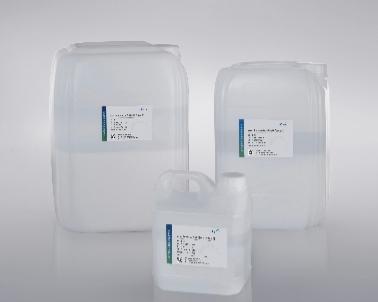
BG ProA FF Antibody Purification Resins

- Product Detail
- Company Profile
- 1.Deatails
The BG ProA FF Antibody Purification Resins specifically binds to the Fc region of antibodies through coupled Protein A ligand, achieving high-selective adsorption of antibody molecules and Fc fusion proteins. After elution under acidic conditions, high-purity target products can be collected. Target High-purity antibodies can be obtained from samples such as ascites, serum, and culture medium through a single step of affinity chromatography. The BG ProA FF antibody purification medium uses agarose gel as the matrix and recombinant Protein A as the ligand, offering high binding capacity, excellent physicochemical stability, low ligand detachment, and long lifetime.
2.Features
|
Properties |
Performance Specification |
|
Average Particle Size |
90 μm±15μm |
|
Matrix |
Agarose |
|
Ligand |
r-Protein A |
|
Dynamic binding Capacity |
≥40mg IgG/ml wet resin gel |
|
Maximum Pressure Limit |
0.3 MPa |
|
pH Stability |
pH 3-12 |
|
Storage |
2~10 ℃ (20% Ethanol) |
Chromatographic operation Procedure
BG ProA FF Antibody Purification Resins are widely used for the separation and purification of various antibodies. Chromatographic operations typically include column packing, equilibration, sample loading, washing, elution, and regeneration steps. The specific operating procedures are as follows:
1. Equilibration: Equilibrate the chromatography column with 5-10 column volumes (CV) of equilibration buffer (20 mM PB + 0.15 M NaCl, pH 7.0, with appropriate concentration of NaCl added to Inhibit non-specific adsorption) until the conductivity and pH of the effluent remain constant (consistent with the equilibration buffer).
2. Sample Loading: The sample buffer should be as consistent as possible with the equilibration buffer. Solid samples can be dissolved and prepared in equilibration buffer; dilute sample solutions can be dialyzed with equilibration buffer; concentrated sample solutions can be diluted with equilibration buffer. To avoid column clogging, samples should be centrifuged or microfiltered (0.45 μm). The feed volume should be determined based on the medium's binding capacity and the target protein content in the sample.
3. Washing: After loading, continue washing with equilibration buffer until the UV absorbance drops to baseline.
4. Elution: Elute with elution buffer (20 mM sodium acetate, pH 3.0-4.0 or 0.1 M glycine, pH 3.0), and collect the effluent. After elution, immediately neutralize the collected antibody solution with alkaline buffer (such as 1 M Tris-HCl, pH 9.0) to neutral pH to prevent antibody inactivation and maintain antibody biological activity.
5. Regeneration and cleaning in place: After several uses (5-10 times, depending on the conditions and source of raw materials and experimental requirements), the resins require regeneration and cleaning in place.(1) Wash the column with 0.1 M acetic acid or 20% ethanol for 3-5 CV, then wash to neutrality with buffer for reuse;(2) Alternatively, wash the column with 0.05 M NaOH + 1 M NaCl or 6 M guanidine hydrochloride for 3-5 CV, rinse with 3-10 CV of pure water, then wash to neutrality with buffer for reuse.
6. Storage:Store at 2-10°C in 20% ethanol; the unpacked resins can be washed with 20% ethanol and stored at 2-10°C
7. Other considerations:When using and storing columns, avoid column dry-out or inadequate sealing to prevent air bubbles from entering.
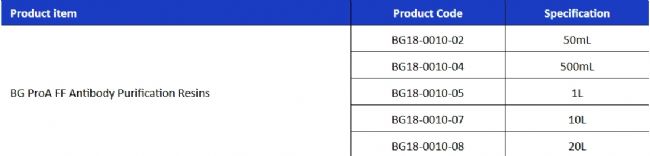
3.Specification
-
Duoning Biotech is a leading one-stop bioprocess solutions provider from China, committed to offering products and services required for the discovery, development and commercialization production of biologics, including reagents, consumables, instruments, equipment, and services. Leveraging our integrated bioprocess system, we empower our customers to achieve effective, reliable, lower-cost and higher-quality biologics manufacturing processes.
| Request Information |
| Other Products |
| Related Products |
| Recently viewed products |