 中文
中文


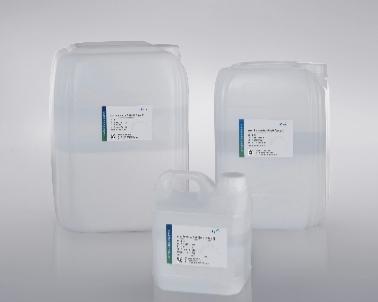
BG Heparin FF Affinity Chromatography Resins

- Product Detail
- Company Profile
- 1.Details
The ligand of BG Heparin FF affinity chromatography Resins is heparin, an acidic polysaccharide containing sulfate esters. It can bind to anticoagulant factor III, thrombin, thrombin-like enzymes, and human coagulation factors. It can also bind to biological macromolecules such as human interleukin, human prostate growth factor, recombinant human vascular endothelial growth factor, cartilage growth factor, basic fibroblast growth factor, recombinant human acidic fibroblast growth factor, recombinant hepatocyte growth factor, recombinant mouse heparin cofactor II, recombinant human platelet factor 4, recombinant human endostatin, and recombinant human keratinocyte growth factor expressed by E. coli. The heparin affinity chromatography Resins uses agarose soft gel as the matrix and heparin as the ligand, suitable for the purification of the above-mentioned coagulation factor-related biomolecules. It can meet the application requirements of capture, medium purification, polishing, and analytical purification. We provide comprehensive solutions for biological sample purification from laboratory to industrial production.
2.Features
|
Properties |
Performance Specification |
|
Average Particle Size |
90±15 μm |
|
Matrix |
Agarose |
|
Ligand |
Heparin |
|
Dynamic binding Capacity |
≥15 mg LF/ml wet resin gel |
|
Maximum Pressure Limit |
0.3 MPa |
|
pH Stability |
pH 4~12 |
|
Storage |
2~10°C (0.05M Sodium Acetate + 20% Ethanol) |
BG Heparin FF Affinity Chromatography Resins are used for the separation and purification of biological macromolecules such as anticoagulant factor III, thrombin, thrombin-like enzymes, human coagulation factors IX, XI, and VIII. Chromatographic operations typically include column packing, equilibration, sample loading, washing, elution, and regeneration. The specific operating procedures are as follows:
1. Equilibration: Equilibrate the chromatography column with 5-10 column volumes (CV) of equilibration buffer (20-50 mM PB or Tris-HCl, pH 7.4-8.0, 0.15 M NaCl can be added to suppress non-specific adsorption) until the conductivity and pH of the effluent remain constant (consistent with the equilibration buffer).
2. Sample Loading: The sample buffer should be as consistent as possible with the equilibration buffer. Solid samples can be dissolved and prepared in equilibration buffer; dilute sample solutions can be dialyzed against equilibration buffer; concentrated sample solutions can be diluted with equilibration buffer. To avoid column clogging, samples should be centrifuged or microfiltered. The sample loading volume should be calculated based on the resins' binding capacity and the target protein concentration in the sample.
3. Washing: After loading, continue washing with equilibration buffer until the UV absorbance drops to baseline.
4. Elution: Elute with elution buffer (20-50 mM PB or Tris-HCl + 1-2 M NaCl, pH 7.4-8.0, the NaCl concentration may need to be adjusted according to the target protein's binding strength), and collect the effluent. Linear or step gradients can be used for elution.
5. Cleaning In Place (CIP): To avoid cross-contamination between different samples or when the column is seriously contaminated (increased back pressure), CIP is required.
For proteins bound by ionic bonds, clean with 2-3 CV of 2 M NaCl, followed by rinsing with 3 CV of pure water.
For precipitated or denatured proteins, clean with 0.1 M NaOH (1-2 hours), followed by rinsing with 3-10 CV of equilibration buffer and 3 CV of pure water. Alternatively, 6 M guanidine hydrochloride or 8 M urea can be used for cleaning (0.5-1 hour).
For hydrophobically bound proteins, clean with 0.1-0.5% non-ionic detergent (1-2 hours), followed by rinsing with 3-10 CV of pure water.
6. Storage: Store at 2-10°C in 0.05 M sodium acetate + 20% ethanol.
7. Other considerations: During use and storage, ensure the column remains wet and properly sealed to prevent air bubbles from entering.
3.Specification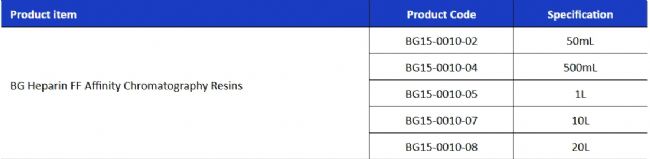
-
Duoning Biotech is a leading one-stop bioprocess solutions provider from China, committed to offering products and services required for the discovery, development and commercialization production of biologics, including reagents, consumables, instruments, equipment, and services. Leveraging our integrated bioprocess system, we empower our customers to achieve effective, reliable, lower-cost and higher-quality biologics manufacturing processes.
| Request Information |
| Other Products |
| Related Products |
| Recently viewed products |