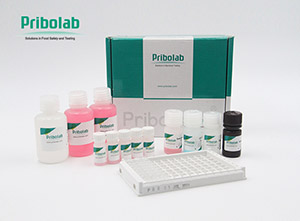
Self-supplied consumables:
Microplate reader or visible spectrophotometer (can measure the absorbance at 620 nm)
96-well plate or micro-glass cuvette, adjustable pipeting gun and gun head
thermostatic box, water bath, centrifuge
deionized water, concentrated sulfuric acid
mortar, sealing membrane
reagent preparation
Extraction Buffer
read-to-use type; Before use, equilibrate to room temperature; Store at 4 ° C.
Reagent I
ready-to-use; Before use, equilibrate to room temperature; Store at 4 ° C.
Reagent II
prepared before use; After adding 3.75 mL distilled water, slowly add 21.25 mL concentrated sulfuric acid, stirring constantly, fully dissolved until used; It can be stored at 4 ° C in the dark for a week.
Standard
prepared before use; Add 1 mL deionized water to dissolve it, that is, 10 mg/mL glucose standard solution, which can be stored for a week at 4 ° C.
standard preparation: using 10 mg/mL standard solution, as shown in the table below, further diluted into standards:
| NO. | Standard volume | Deionized water(μL) | Concentration(mg/mL) |
|---|
| Std.1 | 200 μL 10 mg/mL Standard | 1800 | 1 |
| Std.2 | 400 μL of Std.1 (1 mg/mL) | 600 | 0.4 |
| Std.3 | 200 μL of Std.1 (1 mg/mL) | 800 | 0.2 |
| Std.4 | 100 μL of Std.1 (1 mg/mL) | 900 | 0.1 |
| Std.5 | 50 μL of Std.1 (1 mg/mL) | 950 | 0.05 |
| Std.6 | 40 μL of Std.1 (1 mg/mL) | 960 | 0.04 |
| Std.7 | 30 μL of Std.1 (1 mg/mL) | 970 | 0.03 |
| Std.8 | 20 μL of Std.1 (1 mg/mL) | 980 | 0.02 |
| Blank | 0 | 1000 | 0 |
Sample preparation
Note
1, it is recommended to use fresh samples, if not immediately to experiment, the sample can be preserved in - 80 ℃ for a month. When measuring, the temperature and time of thawing should be controlled. When thawing at room temperature, the sample should be thawed within 4 hours. 2, some reagents have strong corrosion, operation must be protected.
- After the plant tissue was dried at 37℃ or air-dried, about 0.03 g of the sample was weighed and thoroughly ground in a mortar, and 1 mL Extraction Buffer was added. After rapid homogenization, the sample was transferred to a 2 mL EP tube (covered tightly and wrapped around the tube mouth with the sealing film) and extracted for 30 min in a water bath at 80℃. 3000 g, 25 ℃ for 5 min, supernatant, precipitation.
- Add 0.5 mL deionized water to the precipitate, put it into 95℃ water bath and gelatinize for 15 min (cover tightly and use the sealing film to wrap the tube mouth).
3, after cooling, by adding 0.35 mL Reagent (I), in 95 ℃ water bath extraction 15 min (cover tightly and use the sealing film winding pipe), during the period of oscillation of 3-5 times.
- After cooling, 0.85 mL deionized water was added, mixed, centrifuged at 3,000 g at 25 ° C for 10 min, and the supernatant was taken for measurement.
The experimental steps:
- Preheat the microplate reader or visible spectrophotometer for 30 min and adjust the wavelength to 620 nm. Visible spectrophotometer with deionized water to zero.
- Operation table (The following operations are carried out in 1.5 mL EP tube)
| Reagent | Detector tube(μL) | Standard tube(μL) | Blank tube(μL) |
|---|
| Sample on clear | 50 | 0 | 0 |
| Standard | 0 | 50 | 0 |
| Deionized water | 0 | 0 | 50 |
| Reagent II | 250 | 250 | 250 |
3, After mixing, put into 95℃ water bath for 15 minutes (cover tightly and use the sealing film to wrap the tube mouth), cool to room temperature, thoroughly mix, take 200 μL to A microglass cuvette or 96 well plate, measure the absorbance at 620 nm, recorded as A determination, A standard, A blank, respectively. ΔA assay =A assay -A blank and ΔA standard =A standard -A blank were calculated.
Note
Standard curves and blank tubes only need to be done 1-2 times. Before the experiment, it is recommended to select 2-3 samples with large expected differences for pre-experiment. If the determination of A is greater than 1.0, the sample supernatant can be used to extract (according to 0.35 mL Reagent I: 1.35 mL of deionized water, prepared as needed) were further diluted, and the calculated results were multiplied by the dilution factor. If A was less than A blank, the sample size could be increased appropriately.
Results of calculation:
Note
we provide you with the formula, including the formula derivation and concise calculation formula. The two are exactly the same. Recommendations to the bold simple calculation formulas for calculating formula for the final.
1, draw the standard curve of the concentration of standard solution as the x axis, Δ A standard for the y axis, draw the standard curve, get the standard equation y = kx + b, will get x Δ A determination to the equation (mg/mL).
2, the calculation of starch content
Starch content (mg/g dry weight) = x x V kind present sample (W * V present V sample total) present (N = 1.11 x 1.53 x present W * N
V-like
sample volume added to the reaction system, 0.05 mL; V sample total: add Extraction Buffer volume, 1.7 mL; W: sample quality, g; 1.11: is the constant that the glucose content measured by this method is converted to the starch content, that is, the color of 111 μg glucose with anthrone reagent is equivalent to that of 100 μg starch with anthrone reagent; N: sample dilution.
 中文
中文