 中文
中文


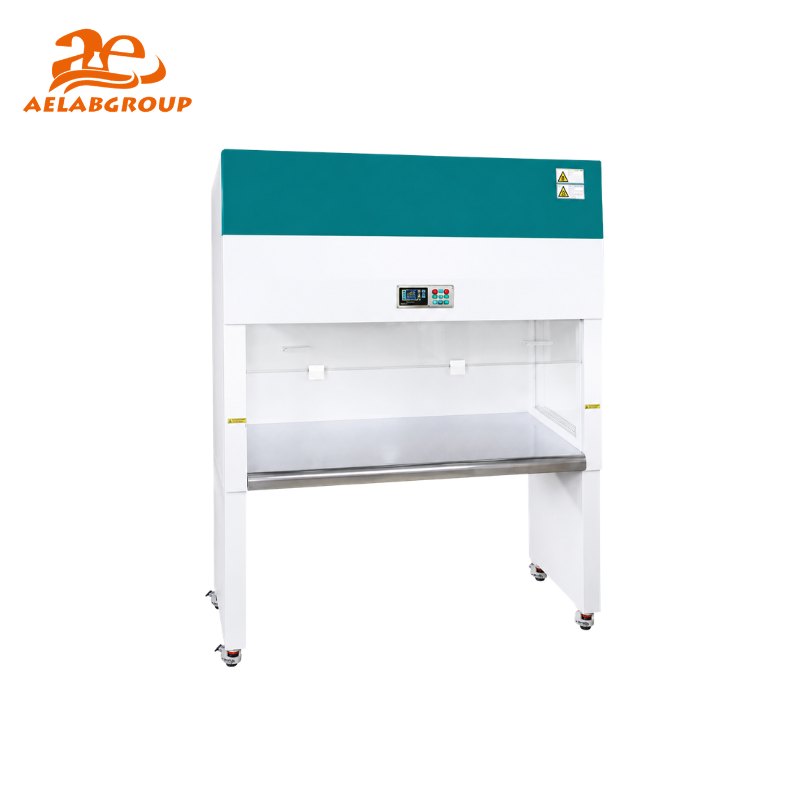
AELAB Laminar Flow Cabinet and Clean Bench Solutions

- Product Detail
- Company Profile
- Preparation of non-hazardous laboratory samples
- Pouring and handling microbiological culture media
- Clean assembly of laboratory materials and components
- Pharmaceutical research and quality-control sample preparation
- Food and beverage microbiology workflows
- Plant tissue and non-hazardous cell-culture preparation
- Environmental and water-testing sample preparation
- Preparation of sterile containers and laboratory consumables
- Electronics and precision-component assembly
- University teaching and research laboratories
- Clean handling of reagents and sensitive materials
- Laboratory procedures requiring reduced particle contamination
- Install the cabinet away from doors, open windows, ventilation outlets and heavy personnel traffic.
- Maintain sufficient clearance around air-intake and service areas.
- Avoid placing large objects directly below or in front of critical airflow paths.
- Clean the work surface before and after each operating session.
- Allow the blower to stabilize before beginning contamination-sensitive work.
- Use the UV lamp only when the work zone is unoccupied and the window is correctly positioned.
- Do not look directly at an operating UV lamp or expose skin to UV radiation.
- Inspect and clean the pre-filter according to the operating environment and maintenance schedule.
- Arrange clean and used materials separately to reduce cross-contamination.
- Verify airflow and filter performance through scheduled inspection and professional servicing.
- Full-size and compact clean-bench configurations
- Vertical filtered airflow for contamination-sensitive procedures
- Models for one-person and two-person operation
- Single-sided and double-sided access options within the CJ series
- Adjustable air-velocity control
- Stainless steel internal working surfaces
- Integrated work lighting and UV sterilization functions
- Digital control options and airflow monitoring on selected models
- Model-selection assistance based on laboratory workflow
- International supply, export packaging and shipping support
- Power-supply and configuration support according to destination requirements where available
AELAB supplies laminar flow cabinets designed to create a clean and controlled workspace for laboratory procedures that require protection from airborne particles and contamination.
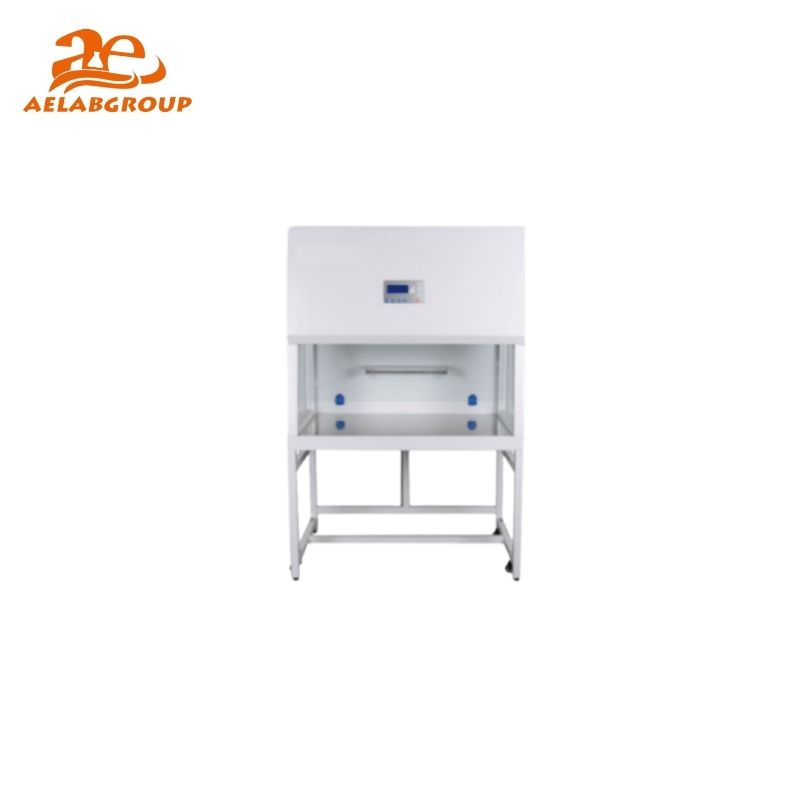
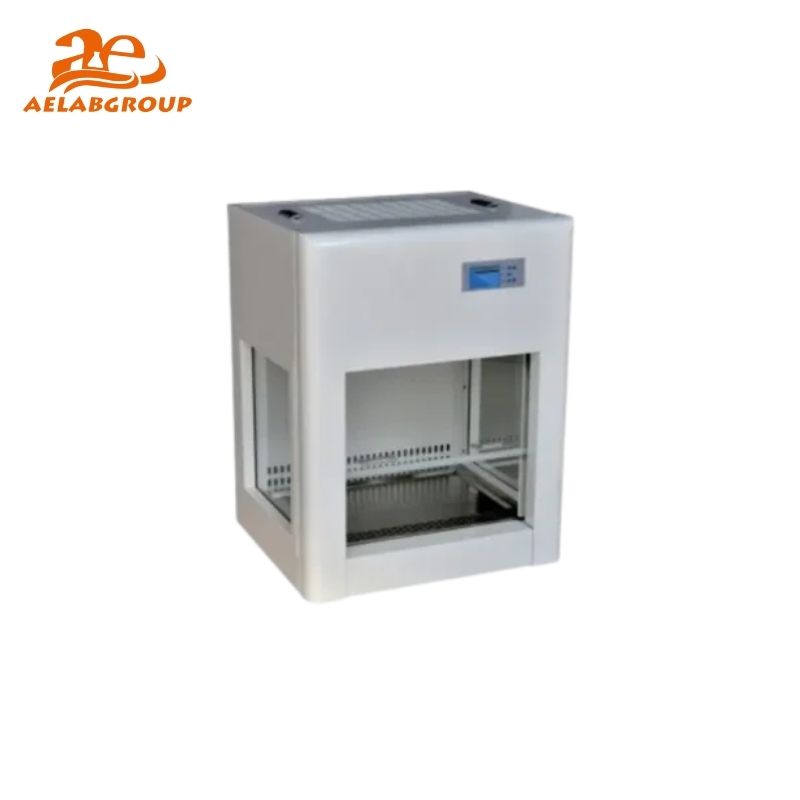
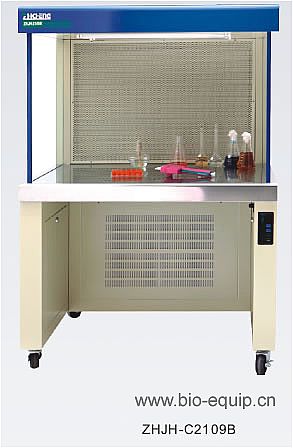
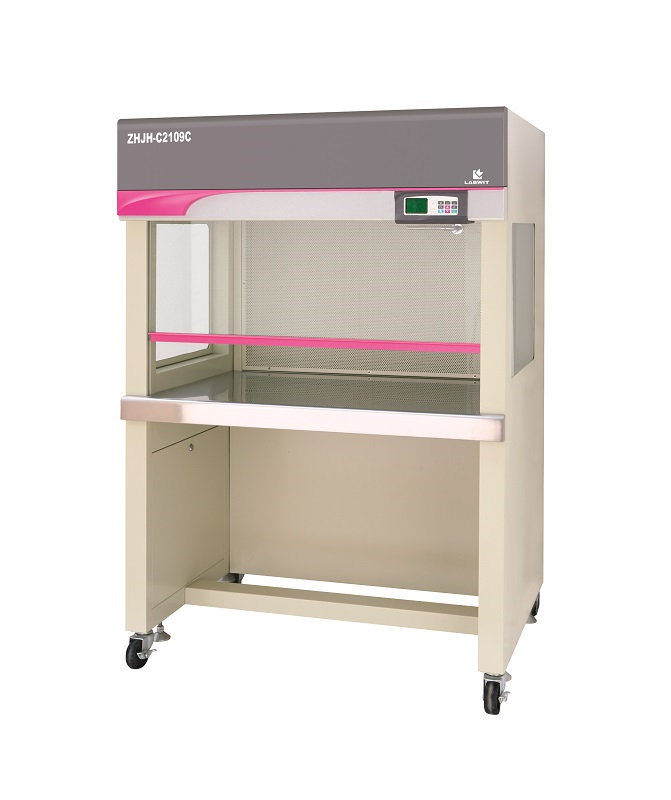
The available range includes full-size vertical airflow clean benches for one or two operators, as well as compact benchtop laminar flow cabinets for laboratories with limited working space.
AELAB laminar flow cabinets use high-efficiency filtration and controlled unidirectional airflow to support sample preparation, media handling, microbiological procedures, pharmaceutical quality control, laboratory research and other non-hazardous clean-work applications.
Customers can compare available models according to cabinet size, operator capacity, airflow velocity, filtration efficiency, work-zone dimensions, control system and installation requirements.
Important application note
A standard laminar flow cabinet is primarily designed to protect the product or sample. It should not be selected for infectious agents, toxic powders, hazardous aerosols or procedures requiring operator and environmental containment. A suitable biological safety cabinet or chemical fume hood should be selected for hazardous work.
Compare full-size and compact vertical airflow clean benches for contamination-sensitive laboratory procedures.
What Is a Laminar Flow Cabinet?
A laminar flow cabinet, also called a clean bench or laminar flow clean bench, is an enclosed laboratory workstation that directs filtered air through the working zone in a uniform and unidirectional pattern.
Room air is drawn into the cabinet, passed through preliminary and high-efficiency filtration stages and then delivered across the work surface. This continuous flow helps reduce the entry and deposition of airborne particles on samples, containers and working materials.
AELAB models in this category use vertical airflow, meaning filtered air moves downward from the upper filter area toward the stainless steel work surface.
Available Laminar Flow Cabinet Configurations
| Configuration | Typical Requirement | Suitable Applications |
|---|---|---|
| Single-Operator Clean Bench | Standard workspace for one laboratory operator. | Routine sample preparation, media handling, laboratory research and quality-control procedures. |
| Double-Operator Clean Bench | Wider working area for two operators or larger materials. | Parallel workflows, larger sample batches, production laboratories and research facilities. |
| Single-Sided Operation | Access from one working side. | Installation against or near a laboratory wall and conventional clean-bench workflows. |
| Double-Sided Operation | Access from two sides of the cabinet. | Shared laboratory workflows and installations requiring access from opposite sides. |
| Compact Benchtop Cabinet | Small footprint and portable desktop configuration. | Educational laboratories, small research facilities and workspaces with limited floor area. |
How an AELAB Vertical Laminar Flow Cabinet Works
1. Air Intake
Ambient laboratory air enters the cabinet through the designed intake system.
2. Preliminary Filtration
The pre-filter captures larger particles and helps protect the main high-efficiency filter.
3. HEPA Filtration
Air passes through a high-efficiency filter before entering the controlled work zone.
4. Vertical Airflow
Filtered air moves uniformly downward across the working surface.
Typical Applications
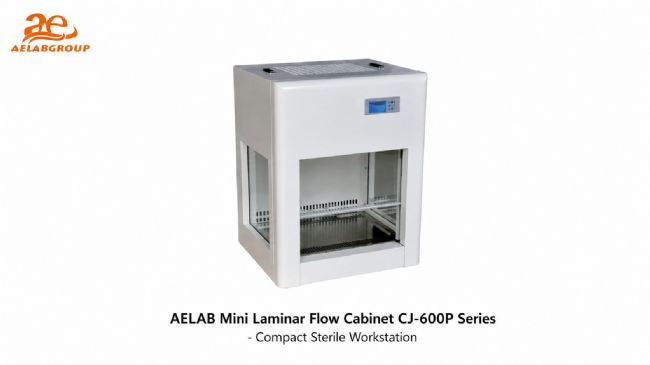
Key Technical Features
| Feature | Purpose |
|---|---|
| Vertical Airflow | Directs filtered air downward across the work surface to maintain a controlled clean zone. |
| High-Efficiency Filtration | Removes airborne particles before air enters the working chamber. |
| Adjustable Air Velocity | Allows airflow to be adjusted according to the selected model and working procedure. |
| SUS304 Work Surface | Provides a durable, smooth and practical surface for routine cleaning. |
| Tempered-Glass Window | Provides visibility and controlled access to the internal working zone. |
| UV Sterilization Lamp | Supports surface decontamination when the cabinet is not being actively used. |
| UV Safety Interlock | Selected models automatically switch off the UV lamp when the glass window is opened. |
| Low-Noise Fan System | Supports stable airflow while improving operator comfort during extended procedures. |
| Digital Control System | Provides convenient control of airflow, lighting, sterilization and selected cabinet functions. |
How to Select the Right Laminar Flow Cabinet
Selecting a clean bench should not be based only on its external dimensions. The required work-zone size, number of operators, airflow performance, installation space, filter specification and application safety must also be evaluated.
| Selection Factor | Questions to Consider |
|---|---|
| Application and Sample Risk | Is the procedure non-hazardous, or does it require operator and environmental containment? |
| Number of Operators | Will the cabinet be used by one operator or two operators at the same time? |
| Working-Zone Size | How much space is required for samples, containers, racks and supporting materials? |
| Access Configuration | Is a single-sided cabinet suitable, or is access from two sides required? |
| Cabinet Format | Is a full-size floor-standing clean bench required, or would a compact benchtop model be more practical? |
| Airflow Adjustment | Does the workflow require multiple adjustable fan or air-velocity levels? |
| Control and Monitoring | Are an LCD display, timer, airflow sensor or status indication required? |
| Internal Utilities | Are built-in electrical sockets, work lighting or additional accessories required? |
| Installation Conditions | Is sufficient space available around the air intake and cabinet for stable operation and servicing? |
| Electrical Supply | What voltage, frequency and plug configuration are required in the destination country? |
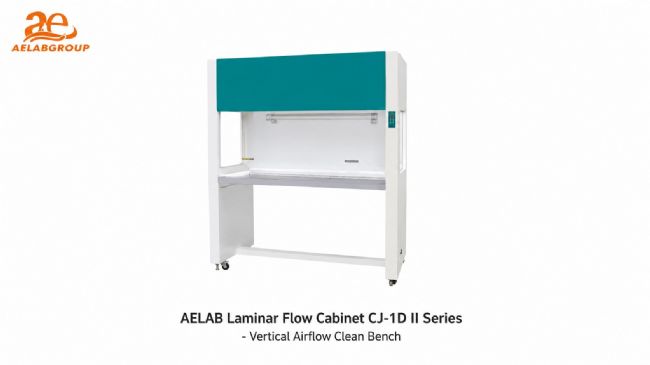
Which AELAB Product Family Should You Choose?
| Requirement | Recommended Family | Reason |
|---|---|---|
| Standard full-size workstation | CJ-1D II Series | Provides a larger work zone and multiple operator configurations. |
| Two-person operation | CJ-2D or CJ-2S configurations | Designed with a wider working area for two operators. |
| Access from two sides | Selected CJ-1S or CJ-2S configurations | Supports workflows requiring access from opposite sides. |
| Limited laboratory space | CJ-600P Series | Compact desktop format requires less installation space. |
| Portable desktop arrangement | CJ-600P Series | Smaller housing and integrated handle improve placement flexibility. |
| Air-speed monitoring | Selected Model III or Model II sensor-equipped configurations | Selected versions include a wind-speed sensor for additional monitoring. |
Installation and Operating Considerations
Laminar Flow Cabinet vs. Biological Safety Cabinet
| Comparison | Laminar Flow Cabinet | Biological Safety Cabinet |
|---|---|---|
| Main Purpose | Protection of clean samples and materials | Containment of biological aerosols and protection according to cabinet class |
| Product Protection | Yes | Normally provided by Class II cabinets |
| Operator Protection | No | Yes, depending on cabinet class and correct operation |
| Hazardous Biological Work | Not suitable | Select the appropriate certified class based on the risk assessment |
| Typical Use | Non-hazardous sterile or clean procedures | Microbiological and biological containment procedures |
Why Choose AELAB Laminar Flow Cabinets?
AELAB is a laboratory equipment and scientific-instrument supplier based in Guangzhou, China. The company provides laboratory, analytical, environmental-testing and quality-control solutions for distributors, universities, research organizations, laboratories and industrial customers.
The AELAB range includes laminar flow cabinets, biological safety cabinets, air samplers, fume hoods, analytical instruments, pharmaceutical-testing equipment, laboratory equipment and sample-preparation systems.
Official website: www.aelabgroup.com
Frequently Asked Questions
What is the main purpose of a laminar flow cabinet?
Its main purpose is to provide a clean, filtered work zone and protect non-hazardous samples or materials from airborne particle contamination.
Does a laminar flow cabinet protect the operator?
A standard clean bench should not be treated as operator-containment equipment. Procedures involving infectious, toxic or hazardous materials require an appropriate safety enclosure selected through a risk assessment.
What AELAB laminar flow cabinet families are available?
The category includes the CJ-1D II Series vertical airflow clean bench and the CJ-600P Series compact laminar flow cabinet.
Which model is suitable for a small laboratory?
The compact CJ-600P Series may be suitable where bench space is limited. Final selection should consider internal dimensions, sample size and the required working procedure.
Are two-person configurations available?
Yes. Selected CJ-2D and CJ-2S configurations provide a wider workspace intended for two-person operation.
Are UV lamps included?
The published AELAB configurations include UV sterilization functions. UV should be operated only according to the safety instructions and while the working zone is unoccupied.
How frequently should the filters be checked?
Inspection frequency depends on operating hours, room cleanliness and application requirements. Airflow performance and filter condition should be evaluated through scheduled maintenance rather than only by visual inspection.
Can AELAB recommend a cabinet for my application?
Yes. Provide the application, sample type, number of operators, required working dimensions, installation space, destination country and electrical supply. The AELAB team can then recommend a suitable configuration.
Tell the AELAB technical sales team about your application, required work-zone dimensions, number of operators, cabinet configuration, installation space and destination electrical supply.
A suitable proposal can include available models, technical specifications, dimensions, optional configurations, estimated delivery time, export packaging and shipping information.
View AELAB Laminar Flow Cabinet Models
Email: info@aelabgroup.com
WhatsApp / WeChat: +86 158 0001 6110
Website: www.aelabgroup.com
-
AELAB GUANGZHOU CO., LTD.
AELAB is a laboratory equipment and analytical instrument supplier based in Guangzhou, China. We provide laboratory instruments, quality control equipment, analytical systems, sample preparation equipment, and related laboratory solutions for distributors, industrial laboratories, universities, research organizations, and testing centers worldwide.
AELAB offers both our own-brand products and carefully selected instruments from established manufacturers. OEM and ODM services are available for selected AELAB products, including customized branding, appearance, configuration, power supply, accessories, packaging, and documentation according to customer requirements.
For laboratory projects, distributor orders, government tenders, and complete laboratory setups, our team can provide a one-stop purchasing solution. We assist customers with product selection, technical comparison, quotation preparation, sourcing, quality inspection, export packaging, shipping coordination, and after-sales support.
Our technical team helps customers select suitable equipment based on their application, testing method, required specifications, budget, and local standards. Warranty and technical support are provided according to the product and project requirements.
AELAB operates under an established quality management system. Relevant company and product documentation may include SGS verification, ISO certification, CE, RoHS, FCC, or UL-related documentation, depending on the specific product model and configuration. Customers may contact us to confirm the available certificates before ordering.
Our equipment is widely used in industrial quality control, scientific research, universities, pharmaceutical laboratories, food and agricultural testing, environmental analysis, chemical laboratories, and other professional testing applications.
We are committed to developing long-term cooperation with distributors, laboratories, research institutions, and project contractors. If you are looking for a reliable laboratory equipment supplier with stable service and technical support, please contact AELAB.
Contact AELAB
Website:
https://aelabgroup.com
Email:
info@aelabgroup.com
WhatsApp / WeChat:
+86 15800016110
| Request Information |
| Other Products |


| Recently viewed products |