 中文
中文


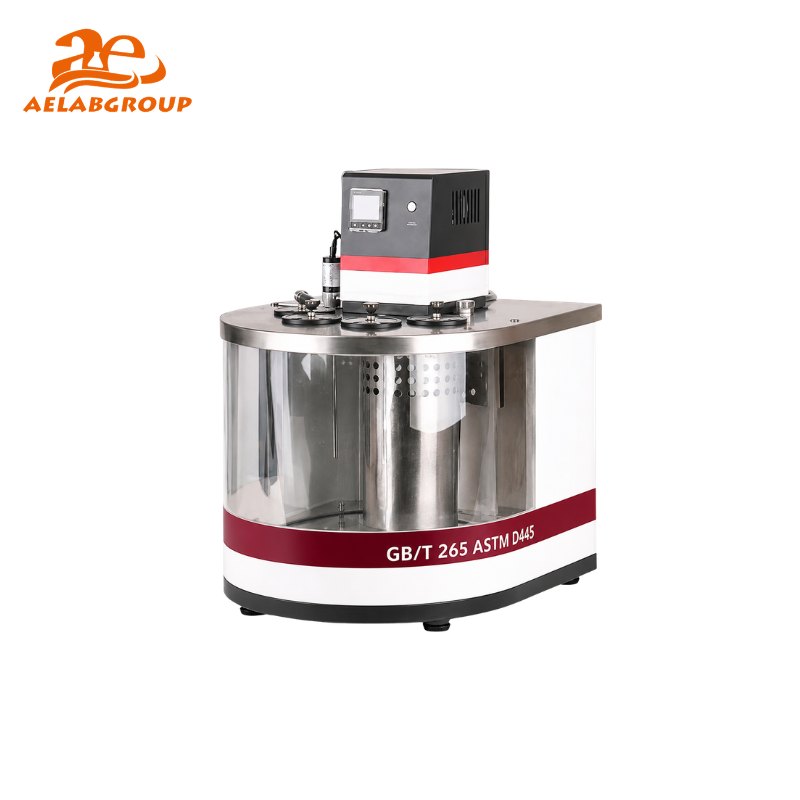
AELAB Kinematic Viscosity Testing Equipment for Petroleum Products

- Product Detail
- Company Profile
- Lubricating oil viscosity testing
- Base oil analysis and product classification
- Fuel oil and petroleum product quality control
- Hydraulic fluid testing
- Transformer and insulating oil evaluation
- Marine and automotive lubricant testing
- Incoming raw material inspection
- Finished petroleum product release testing
- Research and formulation development
- Oil condition and comparative performance analysis
- Sample or petroleum product type
- Expected kinematic viscosity range
- Required test temperature or temperature range
- Applicable test method or standard
- Required number of test positions
- Manual, semi-automatic or intelligent operation preference
- Required capillary viscometer type
- Cooling requirements for low-temperature tests
- Required data, calculation or printing functions
- Power supply and destination country
- Solutions for routine and low-temperature petroleum viscosity testing
- Standard and intelligent instrument configurations
- Models for different petroleum laboratory workflows
- Controlled-temperature bath systems for capillary viscosity measurement
- Selection support based on sample type and required test temperature
- Model-dependent digital control and calculation functions
- Technical documentation and product specification support
- International supply and export packaging services
- Shipping support for distributors, laboratories and industrial customers
- Power supply and configuration options subject to model availability
AELAB supplies kinematic viscosity testing equipment for laboratories involved in petroleum analysis, lubricant quality control, fuel testing, refinery operations, oil production, research and industrial product inspection.
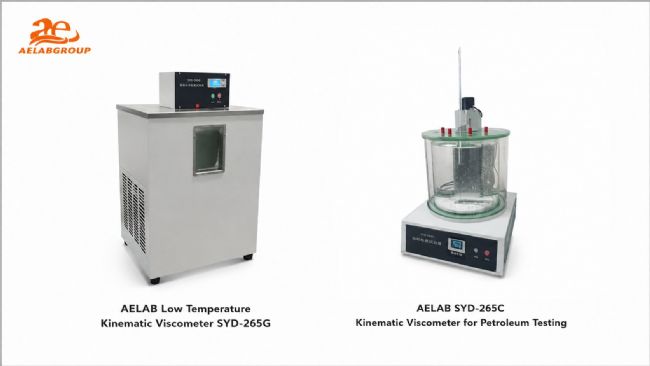
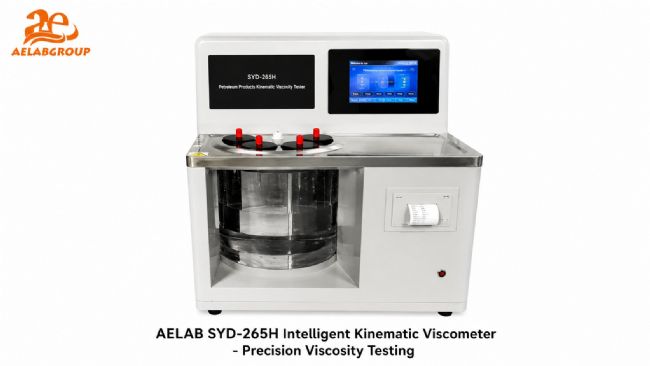
The AELAB kinematic viscosity range includes conventional constant-temperature bath systems, low-temperature kinematic viscometers and intelligent viscosity testing instruments. Different models are available for routine laboratory testing, low-temperature applications and more automated viscosity measurement workflows.
These instruments are used to determine the resistance of petroleum-based liquids to flow under controlled temperature conditions. Depending on the selected model and test configuration, they may be used for lubricating oils, base oils, fuel oils, hydraulic fluids, transformer oils and other liquid petroleum products.
Customers can compare AELAB kinematic viscometer models according to required testing temperature, temperature stability, number of test positions, automation level, sample type and applicable laboratory method.
Compare conventional, low-temperature and intelligent kinematic viscosity testing systems for petroleum laboratory applications.
What Is Kinematic Viscosity Testing?
Kinematic viscosity describes how easily a liquid flows under the influence of gravity. In petroleum laboratories, it is commonly determined by measuring the time required for a controlled volume of liquid to flow through a calibrated glass capillary viscometer at a specified temperature.
Accurate temperature control is essential because the viscosity of petroleum products can change significantly with temperature. The test bath must therefore maintain stable and uniform conditions throughout the measurement.
The measured flow time is combined with the calibration constant of the selected capillary viscometer to calculate the kinematic viscosity of the sample. Results are normally expressed in square millimetres per second, which is equivalent to centistokes.
Important: The appropriate temperature range, capillary type, testing procedure and calculation method should be selected according to the sample, laboratory method and applicable industry standard.
Available Kinematic Viscosity Testing Solutions
| Equipment Type | Typical Application |
|---|---|
| Standard Kinematic Viscometer | Routine viscosity determination of petroleum products at controlled test temperatures using suitable capillary viscometers. |
| Low-Temperature Kinematic Viscometer | Testing oils, fuels and other petroleum samples that require viscosity measurement below normal ambient temperature. |
| Intelligent Kinematic Viscometer | Improved laboratory workflow through digital controls, programmed operation and model-dependent automatic timing or calculation functions. |
| Multi-Position Viscosity Bath | Testing multiple samples or capillary viscometers within a stable constant-temperature bath, depending on the instrument configuration. |
Typical Applications
Routine testing of refined fuels, oils and intermediate petroleum products.
Quality control of finished lubricants, base oils and formulated oil products.
Evaluation of fuel viscosity for specification control and product comparison.
Monitoring the consistency and flow behaviour of industrial oil products.
Common Kinematic Viscosity Test Methods
Kinematic viscosity testing of petroleum products is commonly associated with internationally recognized methods such as ASTM D445 and ISO 3104. These methods describe the determination of kinematic viscosity by measuring the flow time of transparent or opaque liquids through calibrated glass capillary viscometers.
| Method | General Scope |
|---|---|
| ASTM D445 | Commonly used for determining the kinematic viscosity of transparent and opaque liquid petroleum products. |
| ISO 3104 | International method for determining the kinematic viscosity of petroleum products and related transparent or opaque liquids. |
| Laboratory-Specific Methods | Internal quality control procedures may define specific temperatures, sample preparation requirements and calculation rules. |
Instrument suitability for a particular test method must be confirmed using the technical specifications of the selected model, required accessories and the current version of the applicable standard.
How to Select the Right Kinematic Viscometer
Selecting a kinematic viscometer should not be based only on the general product name. The laboratory should consider the required test temperature, sample viscosity range, capillary compatibility, bath capacity, temperature control performance and preferred level of automation.
| Selection Factor | Questions to Consider |
|---|---|
| Required Test Temperature | Will testing be performed at a standard elevated temperature, near room temperature or under low-temperature conditions? |
| Sample Type | Are the samples lubricating oils, fuel oils, base oils, hydraulic fluids, transformer oils or another petroleum product? |
| Expected Viscosity Range | What is the approximate viscosity range of the samples, and which capillary viscometers are suitable for that range? |
| Temperature Stability | What level of bath temperature stability and uniformity is required by the laboratory procedure? |
| Number of Test Positions | How many samples or capillary viscometers must be tested during each laboratory cycle? |
| Manual or Intelligent Operation | Does the laboratory prefer manual observation and calculation, or digital timing and model-dependent automatic processing? |
| Capillary Compatibility | Which glass capillary viscometer types and sizes are required for the selected test method and sample range? |
| Cooling Requirements | Is an integrated or external cooling system required for low-temperature testing? |
| Data and Calculation Functions | Are digital timing, automatic calculation, result storage, printing or data export functions required? |
| Applicable Test Method | Which standard or internal laboratory method must the instrument configuration support? |
Typical Kinematic Viscosity Testing Workflow
1. Select the appropriate capillary viscometer
Choose a calibrated capillary with a flow-time range suitable for the expected viscosity of the sample.
2. Prepare and condition the sample
Prepare the petroleum sample according to the selected method and remove contamination, bubbles or moisture where required.
3. Stabilize the temperature bath
Set the required test temperature and allow the bath to reach stable and uniform operating conditions.
4. Introduce the sample into the capillary
Fill the selected viscometer according to its operating instructions and position it correctly in the bath.
5. Allow temperature equilibration
Keep the sample in the bath for the required conditioning period before beginning the flow-time measurement.
6. Measure the flow time
Record the time required for the liquid meniscus to pass between the designated timing marks.
7. Calculate and report the result
Calculate kinematic viscosity using the measured flow time and the capillary calibration constant, following the applicable method.
Which AELAB Kinematic Viscometer Is Suitable for Your Laboratory?
| Testing Requirement | Suggested Product Type | Selection Note |
|---|---|---|
| Routine petroleum viscosity testing | SYD-265C or equivalent standard model | Consider bath capacity, temperature range and required capillary positions. |
| Low-temperature viscosity measurement | SYD-265G low-temperature model | Confirm minimum operating temperature and cooling configuration. |
| More intelligent laboratory operation | SYD-265H intelligent model | Confirm the available timing, calculation, control and data-management functions. |
Information Required for Model Selection
To receive an accurate model recommendation, customers should provide as much information as possible about the intended testing application.
Why Choose AELAB Kinematic Viscosity Equipment?
AELAB is a laboratory equipment brand and supplier based in Guangzhou, China. The company provides analytical instruments, petroleum testing equipment, laboratory systems and quality control solutions for distributors, universities, research organizations and industrial customers worldwide.
The AELAB petroleum testing portfolio includes instruments for viscosity, distillation, flash point, oxidation stability, carbon residue, calorific value and other petroleum product testing applications.
Official website: www.aelabgroup.com
Frequently Asked Questions
What does a kinematic viscometer measure?
It measures the flow behaviour of a liquid under gravity at a controlled temperature. The result is normally calculated from the capillary flow time and the calibration constant of the viscometer.
Which petroleum products can be tested?
Depending on the selected instrument, capillary and test method, kinematic viscosity testing may be performed on lubricating oils, base oils, fuel oils, hydraulic fluids, transformer oils and other liquid petroleum products.
Why is accurate temperature control important?
Petroleum viscosity changes with temperature. Even a small temperature variation may influence the measured flow time and final result, so a stable and uniform bath is essential.
What is the difference between standard and low-temperature models?
A standard model is generally selected for routine controlled-temperature testing, while a low-temperature viscometer includes a cooling arrangement suitable for tests performed below normal ambient temperature.
What is the difference between manual and intelligent kinematic viscometers?
Manual systems normally require the operator to observe and record the flow time. Intelligent models may provide digital control, automatic timing, calculation or result-management functions, depending on the selected model.
Are capillary viscometers included with the instrument?
The standard accessories and included capillaries may differ between models and quotations. The required capillary type and viscosity range should be confirmed before ordering.
Can AELAB recommend a model for ASTM D445 or ISO 3104 testing?
Yes. Provide the required method, test temperature, sample type, expected viscosity range and preferred level of automation. AELAB can recommend a suitable model and configuration for evaluation.
How can I request a quotation?
Send your application, required temperature range, sample type, applicable method, destination country and power supply. The AELAB team can provide available models, technical specifications and quotation information.
Tell the AELAB technical sales team your petroleum sample type, expected viscosity range, required testing temperature, applicable test method and preferred operation mode.
A technical proposal may include suitable models, available configurations, specifications, optional accessories, capillary requirements, delivery time, packaging and shipping information.
View AELAB Kinematic Viscometer Models
Email: info@aelabgroup.com
WhatsApp / WeChat: +86 158 0001 6110
Website: www.aelabgroup.com
-
AELAB GUANGZHOU CO., LTD.
AELAB is a laboratory equipment and analytical instrument supplier based in Guangzhou, China. We provide laboratory instruments, quality control equipment, analytical systems, sample preparation equipment, and related laboratory solutions for distributors, industrial laboratories, universities, research organizations, and testing centers worldwide.
AELAB offers both our own-brand products and carefully selected instruments from established manufacturers. OEM and ODM services are available for selected AELAB products, including customized branding, appearance, configuration, power supply, accessories, packaging, and documentation according to customer requirements.
For laboratory projects, distributor orders, government tenders, and complete laboratory setups, our team can provide a one-stop purchasing solution. We assist customers with product selection, technical comparison, quotation preparation, sourcing, quality inspection, export packaging, shipping coordination, and after-sales support.
Our technical team helps customers select suitable equipment based on their application, testing method, required specifications, budget, and local standards. Warranty and technical support are provided according to the product and project requirements.
AELAB operates under an established quality management system. Relevant company and product documentation may include SGS verification, ISO certification, CE, RoHS, FCC, or UL-related documentation, depending on the specific product model and configuration. Customers may contact us to confirm the available certificates before ordering.
Our equipment is widely used in industrial quality control, scientific research, universities, pharmaceutical laboratories, food and agricultural testing, environmental analysis, chemical laboratories, and other professional testing applications.
We are committed to developing long-term cooperation with distributors, laboratories, research institutions, and project contractors. If you are looking for a reliable laboratory equipment supplier with stable service and technical support, please contact AELAB.
Contact AELAB
Website:
https://aelabgroup.com
Email:
info@aelabgroup.com
WhatsApp / WeChat:
+86 15800016110
| Request Information |
| Other Products |
| Related Products |

| Recently viewed products |