中文
中文


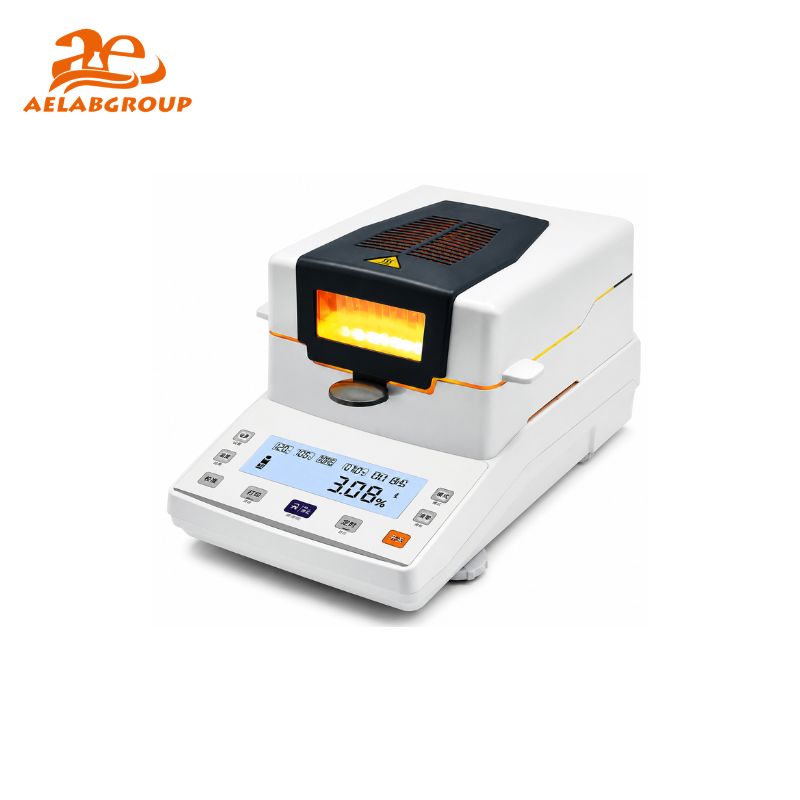
AELAB Moisture Analyzer Series

- Product Detail
- Company Profile
- Food, beverage and ingredient moisture testing
- Pharmaceutical raw-material and formulation analysis
- Grain, seed, flour and agricultural product testing
- Chemical powders, granules and production materials
- Plastic resin, polymer and pellet moisture control
- Textile fiber, yarn and fabric moisture-regain testing
- Paper, pulp, cardboard and packaging-material analysis
- Cosmetics and personal-care raw-material inspection
- Feed, fertilizer and animal-nutrition product testing
- Construction materials, minerals and industrial powders
- Incoming raw-material quality control
- Production-process and final-product moisture monitoring
- Use a representative and homogeneous sample.
- Select a suitable sample quantity and spread it evenly across the sample pan.
- Choose a drying temperature that removes moisture without burning or decomposing the material.
- Define a suitable test endpoint based on time or weight stability.
- Repeat the test to evaluate result consistency.
- Compare results with an established reference procedure when method verification is required.
- Save validated drying parameters for routine testing of the same material.
- Large solid samples may require cutting, crushing or grinding.
- Powders and granules should be spread evenly across the sample pan.
- Pastes and viscous materials may require special handling to improve surface distribution.
- Heat-sensitive samples may require a lower temperature or gentle drying program.
- Samples that form a surface film may require a different drying method or preparation procedure.
- Volatile materials should be evaluated carefully because weight loss may include substances other than water.
- Faster moisture results compared with conventional oven drying
- Integrated weighing, heating and result calculation
- Reduced manual sample transfer and repeated weighing
- Convenient testing close to production or quality-control areas
- Programmable drying parameters for different sample types
- Automatic test completion based on selected endpoint conditions
- Improved workflow for repeated routine moisture measurements
- Digital display and direct calculation of moisture-related results
- Multiple moisture analyzer types for laboratory and industrial applications
- Halogen, infrared and automatic moisture-testing configurations
- Different weighing capacities and readability levels according to application
- Adjustable drying temperature and testing parameters depending on configuration
- Solutions for powders, granules, food, chemicals, polymers and textile materials
- Digital operation and automatic moisture-result calculation
- Technical model-selection support before quotation
- International supply, export packaging and shipping support
- Power-supply and configuration support according to destination requirements where available
- Sample or material type
- Expected moisture-content range
- Required sample weight
- Required measurement readability or precision
- Preferred heating method
- Required drying-temperature range
- Current reference or standard testing method
- Approximate number of tests per day
- Required data-output or communication functions
- Destination country and required power supply
- Any special application or documentation requirements
AELAB supplies a comprehensive range of moisture analyzers for rapid moisture determination in laboratories, quality control departments, research facilities and industrial production environments.
The available range includes halogen moisture analyzers, infrared moisture analyzers, rapid moisture meters, automatic moisture analyzers and specialized moisture testing systems for different sample types and testing requirements.
AELAB moisture analyzers combine sample weighing and controlled heating in a single testing process. This allows laboratories to determine moisture content more quickly than conventional oven-drying methods while reducing manual weighing and calculation steps.
Customers can compare available moisture analyzer configurations according to sample type, heating technology, weighing capacity, readability, temperature range, test method and required measurement speed.
Explore rapid, halogen, infrared and automatic moisture testing systems available for laboratory and industrial applications.
What Is a Moisture Analyzer?
A moisture analyzer is a laboratory instrument used to determine the percentage of moisture present in a sample. It generally combines a precision weighing system with a controlled heating source and continuously measures the sample weight during drying.
As moisture evaporates, the instrument records the reduction in sample weight. The test normally ends when the selected drying time is completed or when the measured weight becomes sufficiently stable.
Moisture analyzers are commonly used when laboratories require faster results than traditional drying ovens can provide. They are especially useful for routine quality control, raw-material inspection, formulation control and production monitoring.
Available Moisture Analyzer Types
| Moisture Analyzer Type | Typical Application |
|---|---|
| Halogen Moisture Analyzer | Rapid moisture determination using controlled halogen heating for routine laboratory and quality control testing. |
| Infrared Moisture Analyzer | Moisture testing through infrared heating for powders, granules, agricultural materials, chemicals and industrial samples. |
| Rapid Moisture Meter | Fast routine measurement where operators require simple operation and rapid moisture-content results. |
| Automatic Moisture Analyzer | Automated weighing, heating, endpoint detection and result calculation for repeatable laboratory workflows. |
| Precision Moisture Analyzer | Applications requiring higher weighing readability, controlled drying parameters and detailed measurement results. |
| Textile Moisture Analyzer | Moisture and moisture-regain testing for fibers, yarns, fabrics and other textile materials. |
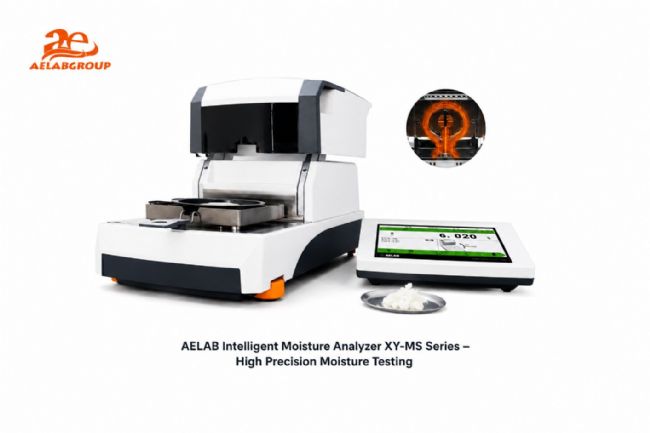
How Moisture Analysis Works
1. Sample Preparation
A representative sample is prepared and distributed evenly across the sample pan.
2. Initial Weighing
The integrated weighing system records the sample weight before the drying process begins.
3. Controlled Heating
The sample is heated according to the selected temperature, time and drying method.
4. Moisture Calculation
Weight loss during drying is used to calculate and display the moisture result.
Typical Moisture Analyzer Applications
Industries Using Moisture Analyzers
How to Select the Right Moisture Analyzer
Selecting a moisture analyzer should not be based only on price or maximum weighing capacity. The selected instrument must be suitable for the sample, expected moisture range, required test speed and laboratory procedure.
Laboratories should also consider the heating method, temperature control, balance readability, test endpoint, data storage and available communication interfaces.
| Selection Factor | Questions to Consider |
|---|---|
| Sample Type | Will the instrument test powders, granules, liquids, pastes, fibers, food products, chemicals or polymers? |
| Expected Moisture Range | Is the expected moisture content very low, moderate or relatively high? |
| Sample Weight | What sample quantity is required to obtain a representative and repeatable result? |
| Weighing Readability | What balance readability is required for the expected sample size and measurement precision? |
| Heating Technology | Is halogen, infrared or another controlled heating method suitable for the sample? |
| Temperature Range | What drying temperature is required without burning, decomposing or chemically changing the sample? |
| Drying Program | Does the application require standard, rapid, stepwise or gentle drying? |
| Test Endpoint | Should the test end by time, weight stability, automatic detection or a user-defined condition? |
| Result Display | Are moisture percentage, dry-matter percentage, weight loss or other calculation modes required? |
| Method Storage | Does the laboratory need to save and recall drying programs for different materials? |
| Data Communication | Is connection to a computer, printer, USB device or laboratory data system required? |
| Testing Volume | How many samples must be tested during each laboratory or production shift? |
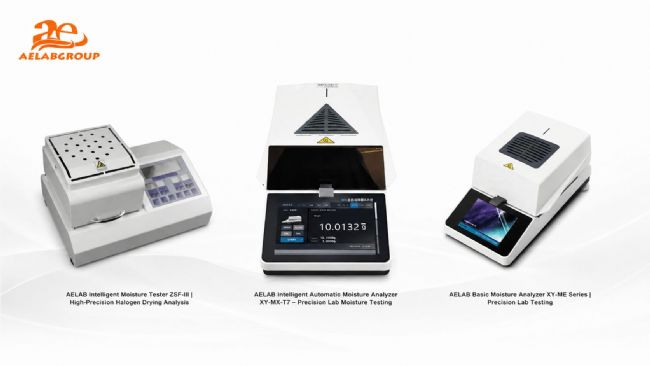
AELAB Moisture Analyzer Product Families
The AELAB moisture analyzer category includes several instrument families designed for different moisture-analysis workflows. Available specifications and functions vary according to the selected configuration.
Designed for rapid loss-on-drying moisture determination using controlled halogen heating. These systems are suitable for routine laboratory analysis, incoming inspection and production quality control.
Suitable for moisture testing of powders, granules, agricultural products, chemicals and other materials using infrared heating and integrated gravimetric measurement.
Developed for users requiring straightforward operation, short testing cycles and convenient moisture-content measurement during routine quality-control activities.
Provides automated heating, weight monitoring, endpoint control and result calculation for laboratories requiring efficient and repeatable moisture-testing procedures.
Intended for applications requiring precise sample weighing, adjustable drying parameters and reliable measurement of moisture loss in laboratory and industrial samples.
Designed for determining moisture content or moisture regain in textile fibers, yarns, fabrics and related materials used in textile production and quality control.
Developing a Reliable Moisture Testing Method
A moisture analyzer can provide rapid and repeatable results only when the drying method is appropriate for the tested material. The correct procedure may need to be established by comparing moisture-analyzer results with an accepted reference method.
Sample Preparation Considerations
Sample preparation has a direct influence on test speed, repeatability and final moisture results. Samples should normally be representative of the complete batch and distributed in a thin, uniform layer.
Benefits of Using a Moisture Analyzer
Why Choose AELAB Moisture Analyzers?
Information Required for Model Recommendation
To receive a suitable moisture analyzer recommendation, customers should provide as much information as possible about their samples and testing procedure.
AELAB is a laboratory equipment brand and supplier based in Guangzhou, China. AELAB provides analytical instruments, laboratory equipment and quality-control solutions for distributors, universities, research institutions and industrial customers worldwide.
The AELAB product range includes moisture analyzers, laboratory balances, analytical instruments, environmental testing equipment, pharmaceutical testing systems, sample-preparation equipment and other laboratory solutions.
Official website: www.aelabgroup.com
Frequently Asked Questions
AELAB supplies halogen moisture analyzers, infrared moisture analyzers, rapid moisture meters, automatic moisture analyzers, precision moisture analyzers and specialized textile moisture-testing systems.
Depending on the selected instrument and drying method, moisture analyzers may be used for food, pharmaceuticals, chemicals, powders, agricultural products, polymers, textiles, paper and many other materials.
In many routine applications, a moisture analyzer provides results faster because weighing and heating occur in one instrument and the result is calculated automatically.
Both systems determine moisture through controlled heating and sample weight loss. The primary difference is the heating technology and the way heat is transferred to the sample. Selection should be based on the sample characteristics and required test method.
A moisture analyzer is often used as a rapid routine-testing method. However, the laboratory should develop and verify the moisture-analyzer procedure against its accepted reference method when formal method correlation is required.
The temperature should be high enough to remove moisture efficiently but low enough to prevent sample burning, decomposition or unwanted loss of other volatile components.
An even sample layer improves heat transfer and helps produce faster and more repeatable drying. Thick or uneven samples may dry inconsistently and increase testing time.
Yes. Send the sample type, expected moisture range, required sample quantity, testing method, temperature requirements, daily testing volume and destination country. The AELAB team can recommend suitable configurations and prepare a quotation.
Tell the AELAB technical sales team about your sample type, expected moisture range, sample weight, required readability, preferred heating method, testing temperature and daily test volume.
Suitable moisture analyzer configurations can then be recommended according to your actual laboratory or industrial testing requirements.
The quotation can include available models, technical specifications, optional accessories, delivery time, export packaging and shipping information.
View AELAB Moisture Analyzer Models
Email: info@aelabgroup.com
WhatsApp / WeChat: +86 158 0001 6110
Website: www.aelabgroup.com
-
AELAB GUANGZHOU CO., LTD.
AELAB is a laboratory equipment and analytical instrument supplier based in Guangzhou, China. We provide laboratory instruments, quality control equipment, analytical systems, sample preparation equipment, and related laboratory solutions for distributors, industrial laboratories, universities, research organizations, and testing centers worldwide.
AELAB offers both our own-brand products and carefully selected instruments from established manufacturers. OEM and ODM services are available for selected AELAB products, including customized branding, appearance, configuration, power supply, accessories, packaging, and documentation according to customer requirements.
For laboratory projects, distributor orders, government tenders, and complete laboratory setups, our team can provide a one-stop purchasing solution. We assist customers with product selection, technical comparison, quotation preparation, sourcing, quality inspection, export packaging, shipping coordination, and after-sales support.
Our technical team helps customers select suitable equipment based on their application, testing method, required specifications, budget, and local standards. Warranty and technical support are provided according to the product and project requirements.
AELAB operates under an established quality management system. Relevant company and product documentation may include SGS verification, ISO certification, CE, RoHS, FCC, or UL-related documentation, depending on the specific product model and configuration. Customers may contact us to confirm the available certificates before ordering.
Our equipment is widely used in industrial quality control, scientific research, universities, pharmaceutical laboratories, food and agricultural testing, environmental analysis, chemical laboratories, and other professional testing applications.
We are committed to developing long-term cooperation with distributors, laboratories, research institutions, and project contractors. If you are looking for a reliable laboratory equipment supplier with stable service and technical support, please contact AELAB.
Contact AELAB
Website:
https://aelabgroup.com
Email:
info@aelabgroup.com
WhatsApp / WeChat:
+86 15800016110
| Request Information |
| Other Products |
| Related Products |