 中文
中文


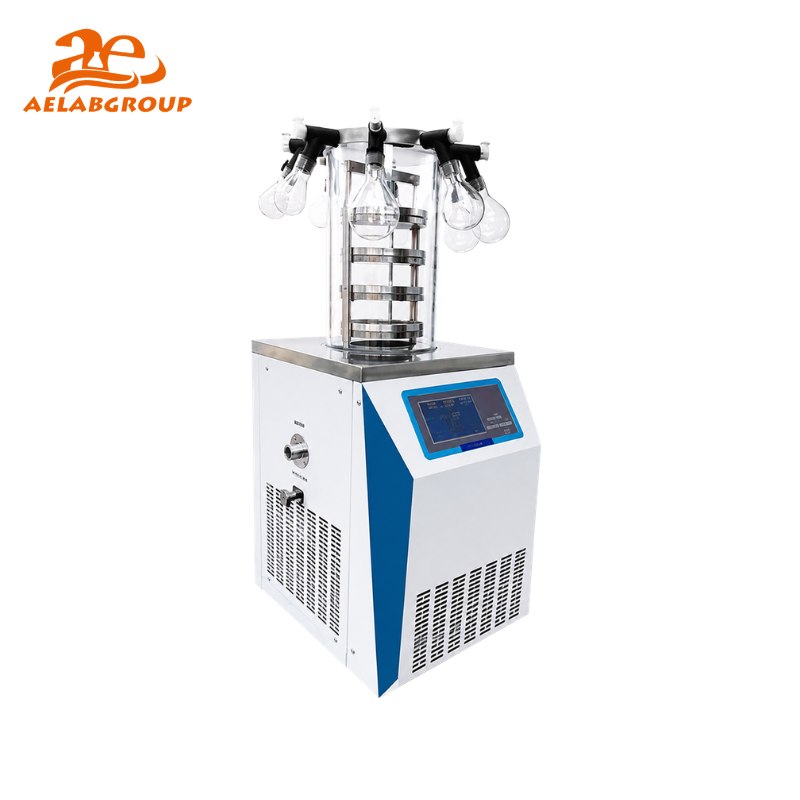
AELAB Freeze Dryer and Laboratory Lyophilizer Series

- Product Detail
- Company Profile
- Preservation of biological and biotechnology samples
- Drying of pharmaceutical formulations and research materials
- Preparation of diagnostic reagents and laboratory standards
- Preservation of microorganisms, cultures and enzymes
- Drying of proteins, peptides and temperature-sensitive compounds
- Research involving plant, food and agricultural samples
- Preparation of samples for analytical testing
- Development of lyophilization processes in research laboratories
- Pilot-scale process development and scale-up studies
- Long-term storage of moisture-sensitive materials
- Drying of extracts, solutions, suspensions and porous materials
- University, medical and industrial research applications
- Sample name and composition
- Sample condition before drying
- Total liquid volume or batch quantity
- Number and size of vials, bottles, trays or flasks
- Required shelf area
- Preferred laboratory, pilot or production scale
- Required condenser temperature
- Need for in-situ sample freezing
- Need for electric or silicon-oil shelf heating
- Need for vial stoppering inside the chamber
- Required power supply and destination country
- Installation space and available laboratory utilities
- Freeze-drying solutions for laboratory, pilot-scale and production-oriented applications
- Compact laboratory models for research and sample preparation
- In-situ freeze-drying configurations for controlled processing
- Electric-heating and silicon-oil shelf-heating options
- Multiple model sizes for different batch requirements
- Solutions for biotechnology, pharmaceutical, food and research laboratories
- Technical model-selection support before quotation
- Support for international supply, export packaging and shipping
- Power-supply and configuration options according to project requirements where available
- Access to model specifications and application-based recommendations
AELAB supplies laboratory, pilot-scale and production-oriented freeze-drying systems for removing moisture from temperature-sensitive samples under controlled vacuum conditions.
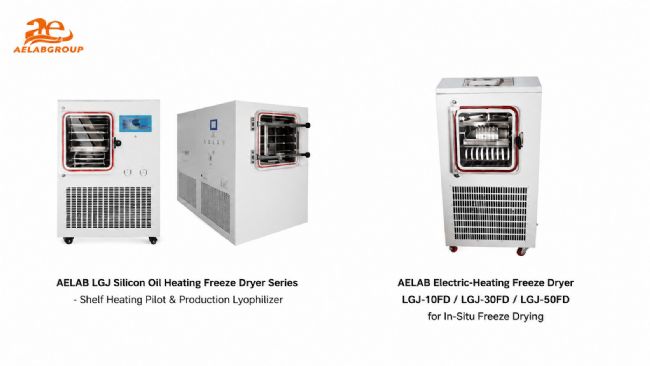
The available AELAB freeze dryer range includes compact laboratory freeze dryers, in-situ freeze-drying systems, electrically heated models and silicon-oil shelf-heating lyophilizers for research, pharmaceutical development, biotechnology, food analysis and sample preservation applications.
Different configurations are available according to sample volume, condenser capacity, shelf area, heating method, drying workflow and scale of operation. Customers can compare suitable models according to their laboratory requirements and planned freeze-drying process.
Compare laboratory, pilot-scale and in-situ freeze dryers available from AELAB.
What Is a Freeze Dryer?
A freeze dryer, also known as a lyophilizer, removes moisture from a frozen sample by allowing the frozen water to pass directly from the solid phase into vapor under reduced pressure.
This process is commonly selected when conventional heating could damage the sample, change its structure or reduce the stability of sensitive ingredients. Freeze drying can support long-term preservation, easier storage, improved sample stability and rapid reconstitution when the dried material is later mixed with a suitable liquid.
A complete freeze-drying process normally includes sample freezing, vacuum generation, primary drying and secondary drying. The required equipment configuration depends on the sample, container type, batch size and desired final moisture level.
Available Freeze Dryer Configurations
| Freeze Dryer Type | Typical Use |
|---|---|
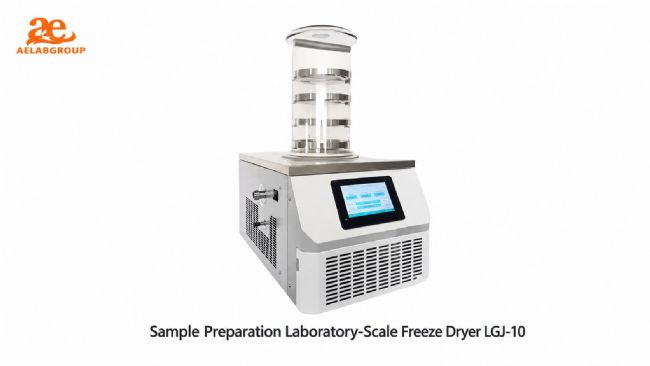
| Laboratory-Scale Freeze Dryer | Suitable for research, sample preparation, method development and small-volume freeze-drying applications. |
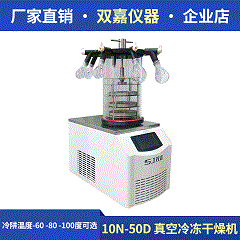
| Manifold Freeze Dryer | Used for drying samples held in individual flasks or containers connected to a manifold system. |
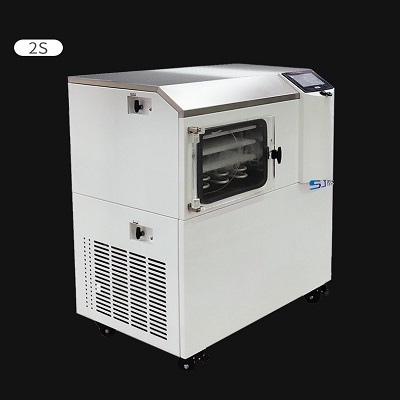
| In-Situ Freeze Dryer | Allows freezing and drying to be completed within the drying chamber, reducing the need to transfer pre-frozen samples. |
| Electric-Heated Shelf Freeze Dryer | Uses controlled electrical shelf heating to support heat transfer during primary and secondary drying. |
| Silicon-Oil Shelf-Heating Freeze Dryer | Designed for controlled shelf-temperature management in pilot-scale and production-oriented lyophilization processes. |
| Pilot-Scale Lyophilizer | Suitable for process development, scale-up studies and preparation of larger batches before production. |
Typical Freeze-Drying Applications
Basic Freeze-Drying Process
1. Sample Freezing
The material is frozen so that its water content changes into a solid phase before vacuum drying begins.
2. Vacuum Generation
The chamber pressure is reduced to create the conditions required for sublimation.
3. Primary Drying
Frozen water is removed mainly through sublimation while the product remains at a controlled temperature.
4. Secondary Drying
Remaining bound moisture is reduced to help achieve the required final dryness and product stability.
How to Select the Right Freeze Dryer
Freeze dryer selection should be based on the complete drying process rather than only the physical size of the machine. Important factors include the sample type, total batch volume, condenser performance, shelf configuration, heating method, chamber design and required process control.
| Selection Factor | Questions to Consider |
|---|---|
| Sample Type | Is the material a liquid, suspension, biological sample, pharmaceutical formulation, food extract or solid material? |
| Batch Volume | What is the total sample volume or quantity that must be processed during each drying cycle? |
| Condenser Temperature | What condenser performance is required for the solvent and sample being processed? |
| Ice Condensing Capacity | How much moisture must the condenser capture during one complete freeze-drying cycle? |
| Drying Chamber Design | Will the samples be dried in trays, vials, bottles, flasks or manifold-connected containers? |
| Shelf Area and Quantity | How much usable shelf area is required, and how many containers must be loaded during each batch? |
| Shelf Heating Method | Does the application require electric heating or silicon-oil circulation for controlled shelf-temperature management? |
| In-Situ Freezing | Must the samples be frozen directly inside the chamber, or will they be pre-frozen in separate equipment? |
| Vacuum Control | What level of vacuum measurement, regulation and process monitoring is required? |
| Laboratory or Production Scale | Is the system required for basic research, method development, pilot-scale testing or larger production batches? |
| Stoppering Requirement | Will vials need to be sealed inside the chamber after the drying process? |
| Utilities and Installation | What electrical supply, cooling, room space and installation conditions are available at the laboratory? |
View the Complete AELAB Freeze Dryer Range
Information to Provide When Requesting a Freeze Dryer
Providing complete application information allows the AELAB technical team to compare suitable models more accurately.
Why Choose AELAB Freeze Dryers?
AELAB is a laboratory equipment brand and supplier based in Guangzhou, China. The company supplies analytical instruments, laboratory equipment, sample-preparation systems and quality-control solutions for distributors, universities, research organizations and industrial customers.
The AELAB product portfolio includes thermostat equipment, freeze dryers, laboratory instruments, analytical systems, environmental testing equipment, pharmaceutical testing instruments and other laboratory solutions.
Official Website: www.aelabgroup.com
Frequently Asked Questions
What types of freeze dryers does AELAB supply?
AELAB supplies laboratory-scale freeze dryers, in-situ electric-heating systems, silicon-oil shelf-heating lyophilizers and pilot-scale freeze-drying solutions.
What is the difference between a laboratory and pilot-scale freeze dryer?
A laboratory freeze dryer is generally selected for small sample quantities, research and method development. A pilot-scale system provides greater processing capacity and is often used for scale-up studies and process optimization.
What is an in-situ freeze dryer?
An in-situ freeze dryer can freeze the samples inside the drying chamber before the vacuum-drying stages begin. This reduces sample transfer and allows the process to be completed in one system.
What is the difference between electric heating and silicon-oil heating?
Electric-heated systems use electrical elements to control shelf heating. Silicon-oil systems circulate temperature-controlled fluid through the shelves and are commonly considered for advanced pilot and production-oriented processes.
Can a freeze dryer process samples in vials?
Yes. Selected freeze-dryer configurations can process samples in vials. The required shelf area, vial size, vial quantity and stoppering requirement should be provided before model selection.
How should the condenser capacity be selected?
The condenser should be selected according to the total amount of moisture that must be removed during one cycle. Sample volume, solids content, drying time and process conditions should all be considered.
Is pre-freezing required before using a freeze dryer?
Pre-freezing is required when the selected system does not include in-situ freezing. Models with in-situ freezing can complete both freezing and drying inside the same chamber.
Can AELAB recommend a freeze dryer for my application?
Yes. Send the sample type, batch volume, container details, required condenser temperature, shelf requirements, heating preference, application and destination country. The AELAB team can then recommend suitable models.
Tell the AELAB technical sales team about your sample, batch volume, container type, required shelf area, condenser requirements and preferred freeze-drying configuration.
A suitable proposal can include recommended models, available configurations, technical specifications, optional accessories, delivery information, packaging and shipping details.
View AELAB Freeze Dryer Models
Email: info@aelabgroup.com
WhatsApp / WeChat: +86 158 0001 6110
Website: www.aelabgroup.com
-
AELAB GUANGZHOU CO., LTD.
AELAB is a laboratory equipment and analytical instrument supplier based in Guangzhou, China. We provide laboratory instruments, quality control equipment, analytical systems, sample preparation equipment, and related laboratory solutions for distributors, industrial laboratories, universities, research organizations, and testing centers worldwide.
AELAB offers both our own-brand products and carefully selected instruments from established manufacturers. OEM and ODM services are available for selected AELAB products, including customized branding, appearance, configuration, power supply, accessories, packaging, and documentation according to customer requirements.
For laboratory projects, distributor orders, government tenders, and complete laboratory setups, our team can provide a one-stop purchasing solution. We assist customers with product selection, technical comparison, quotation preparation, sourcing, quality inspection, export packaging, shipping coordination, and after-sales support.
Our technical team helps customers select suitable equipment based on their application, testing method, required specifications, budget, and local standards. Warranty and technical support are provided according to the product and project requirements.
AELAB operates under an established quality management system. Relevant company and product documentation may include SGS verification, ISO certification, CE, RoHS, FCC, or UL-related documentation, depending on the specific product model and configuration. Customers may contact us to confirm the available certificates before ordering.
Our equipment is widely used in industrial quality control, scientific research, universities, pharmaceutical laboratories, food and agricultural testing, environmental analysis, chemical laboratories, and other professional testing applications.
We are committed to developing long-term cooperation with distributors, laboratories, research institutions, and project contractors. If you are looking for a reliable laboratory equipment supplier with stable service and technical support, please contact AELAB.
Contact AELAB
Website:
https://aelabgroup.com
Email:
info@aelabgroup.com
WhatsApp / WeChat:
+86 15800016110
| Request Information |
| Other Products |
| Related Products |
| Recently viewed products |