 中文
中文


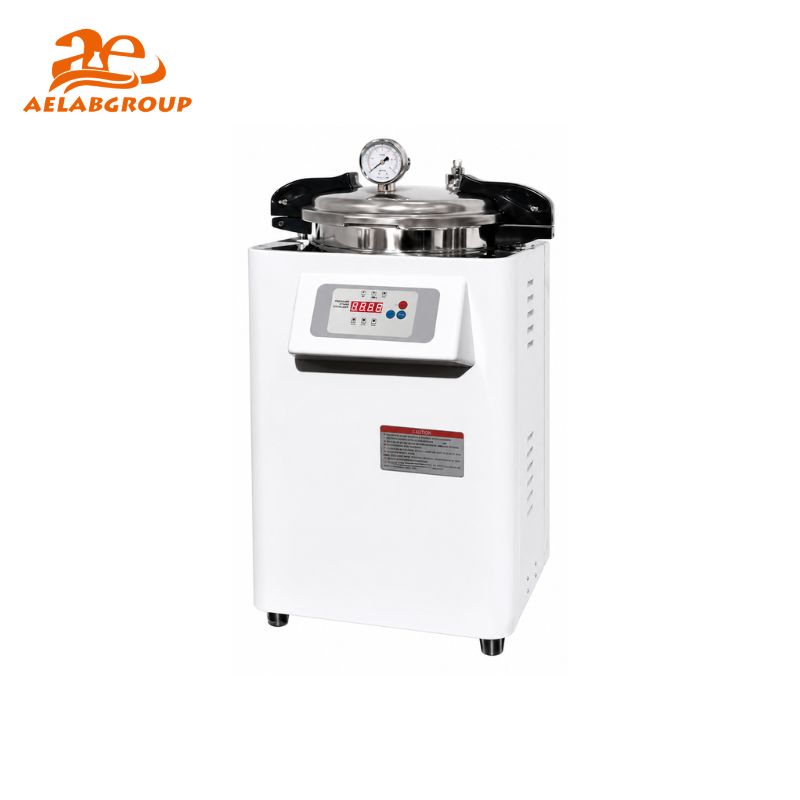
AELAB Sterilizers & Autoclaves – Vertical, Horizontal, Portable, Class B & Infrared Series

- Product Detail
- Company Profile
- Sterilization of laboratory glassware and reusable instruments
- Preparation of microbiological culture media and laboratory solutions
- Decontamination of selected biological samples and laboratory waste
- Sterilization of medical and dental instruments
- Preparation of sterile materials for pharmaceutical quality control
- Sterilization of containers, utensils and accessories used in food-testing laboratories
- Aseptic preparation in biotechnology and life-science research
- Sterilization of microbiology inoculating loops and needles
- Treatment of reusable sampling tools in environmental laboratories
- Routine sterilization in universities, clinics and research institutions
- Confirm that every item is compatible with the selected sterilization method.
- Pre-clean reusable instruments when required by the laboratory procedure.
- Do not overload the chamber or block steam circulation around the load.
- Use the appropriate program for liquids, solids, wrapped items or waste loads.
- Never process sealed containers or unsuitable volatile and flammable materials.
- Inspect the chamber, seals, valves, water system and safety components regularly.
- Use suitable indicators and cycle records when sterilization verification is required.
- Follow the model-specific operating manual, installation instructions and maintenance schedule.
- Multiple sterilizer configurations for laboratory, clinical and industrial applications
- Vertical, horizontal, portable and benchtop installation options
- Different chamber capacities for low-, medium- and higher-volume workloads
- Steam, vacuum-assisted and high-temperature sterilization solutions
- Models with programmable cycle and safety-control functions
- Equipment-selection support based on load type and application
- International supply, export packaging and shipping assistance
- Power-supply and configuration support according to available model options
AELAB supplies a comprehensive range of sterilizers and autoclaves for laboratories, hospitals, clinics, universities, pharmaceutical facilities, research organizations, microbiology laboratories and industrial quality-control environments.
The available range includes vertical pressure steam sterilizers, horizontal sterilizers, portable autoclaves, Class B and Class N autoclaves, infrared sterilizers, bacti-cinerator sterilizers and other systems designed for different sterilization capacities and workflows.
Users can compare AELAB sterilizer and autoclave solutions according to chamber capacity, loading configuration, sterilization method, operating temperature, pressure control, drying requirements, load type and installation environment.
Compare vertical, horizontal, portable, Class B, Class N and specialized sterilization systems available from AELAB.
Available Sterilizer and Autoclave Types
AELAB provides different sterilization system configurations to accommodate routine laboratory loads, medical instruments, culture media, glassware, biological materials and higher-volume sterilization workflows.
| Sterilizer Type | Typical Application |
|---|---|
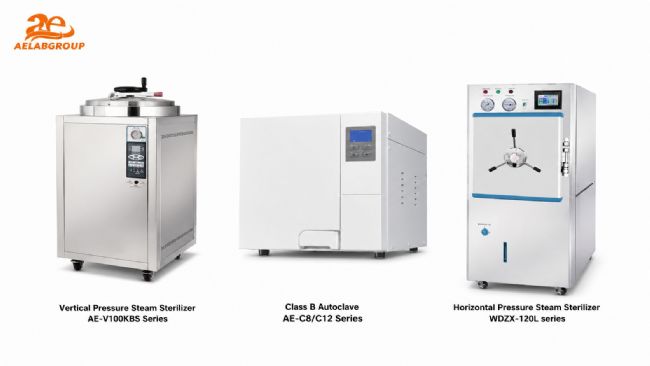
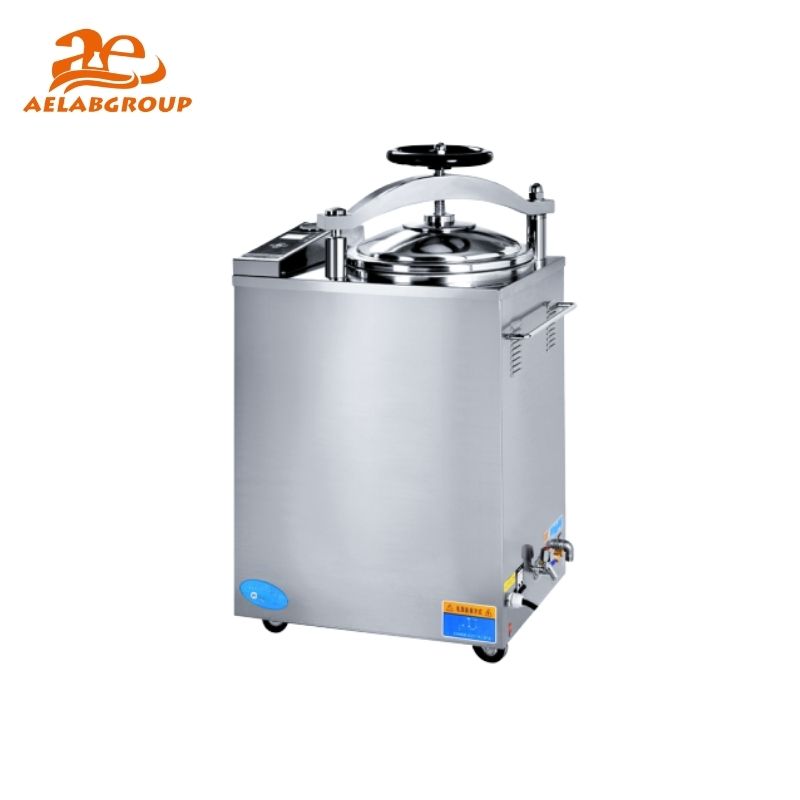
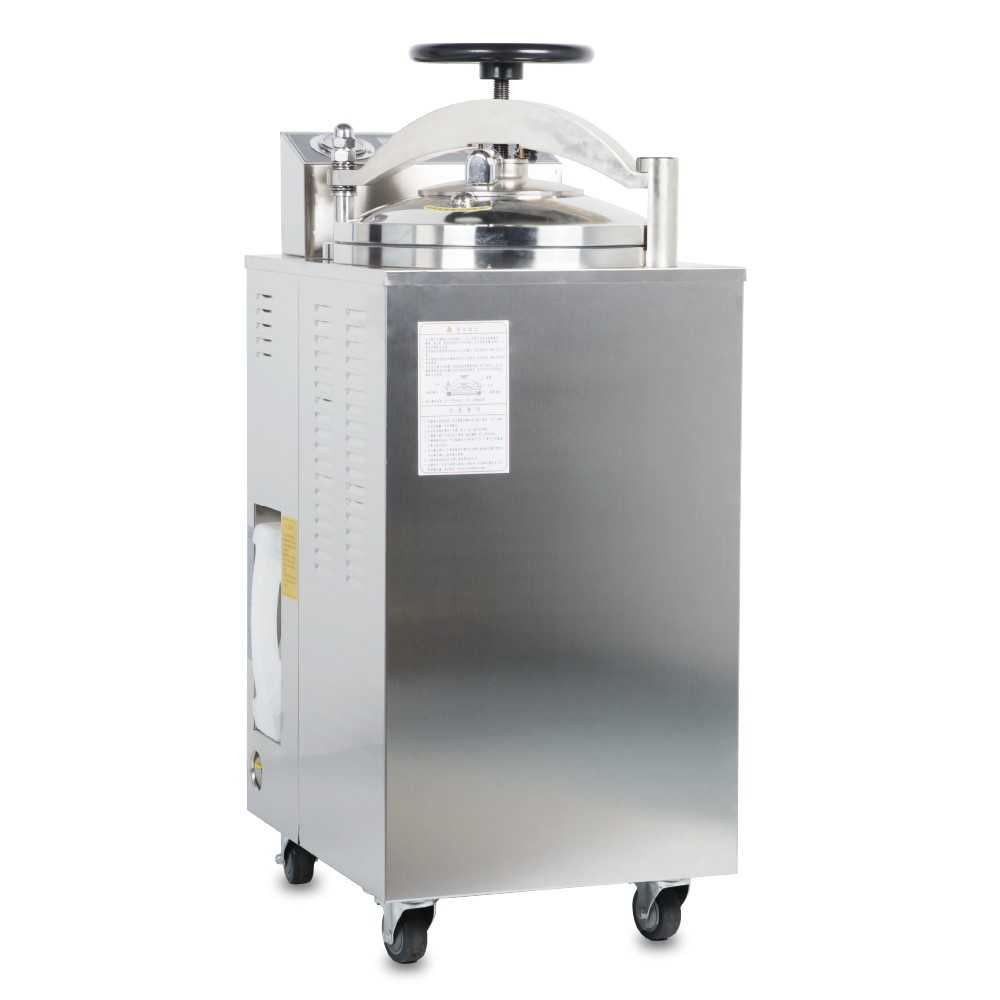
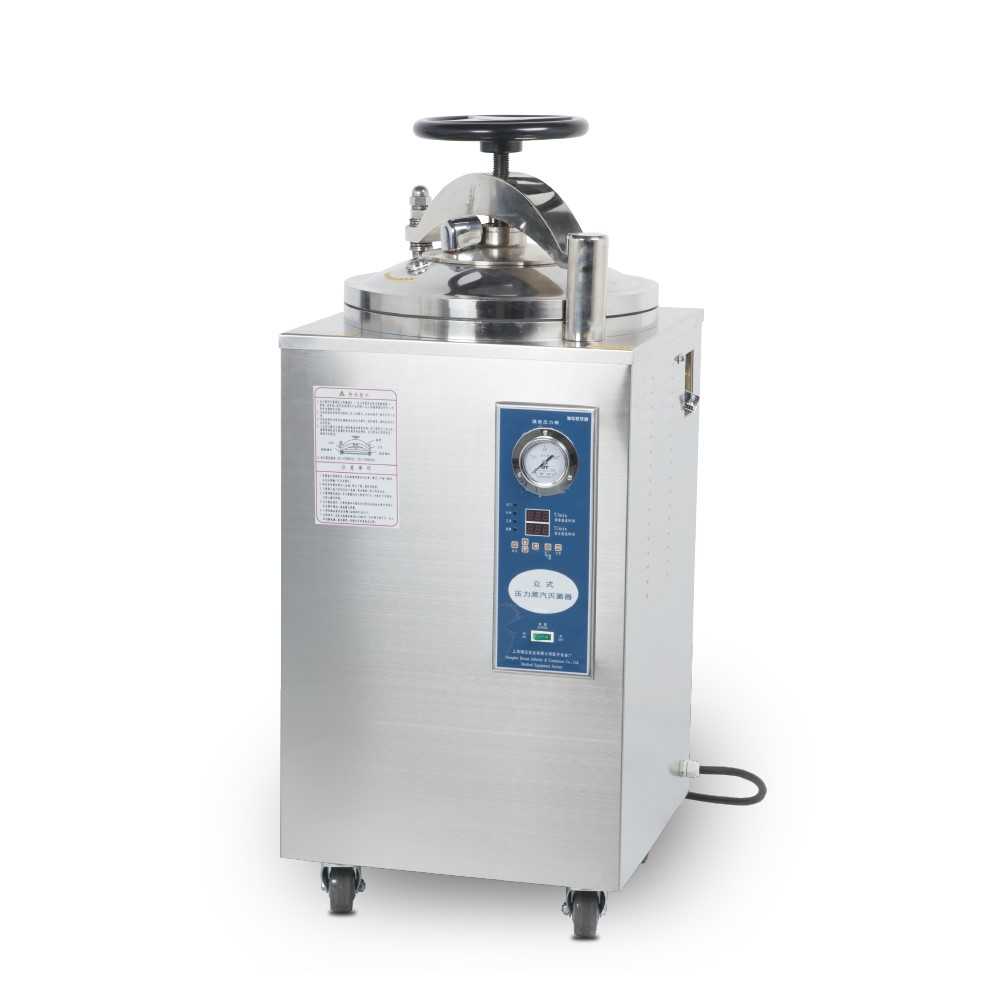
| Vertical Pressure Steam Sterilizer | Top-loading sterilization of laboratory glassware, culture media, instruments, containers and selected biological materials. |
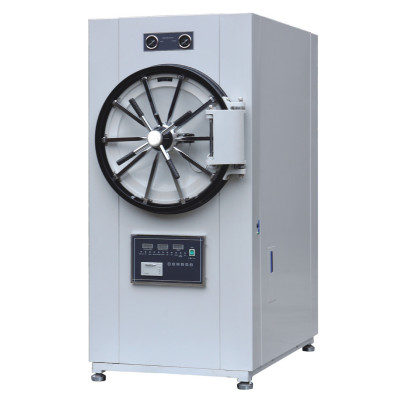
| Horizontal Pressure Steam Sterilizer | Higher-volume sterilization where convenient front loading and handling of larger or heavier loads are required. |
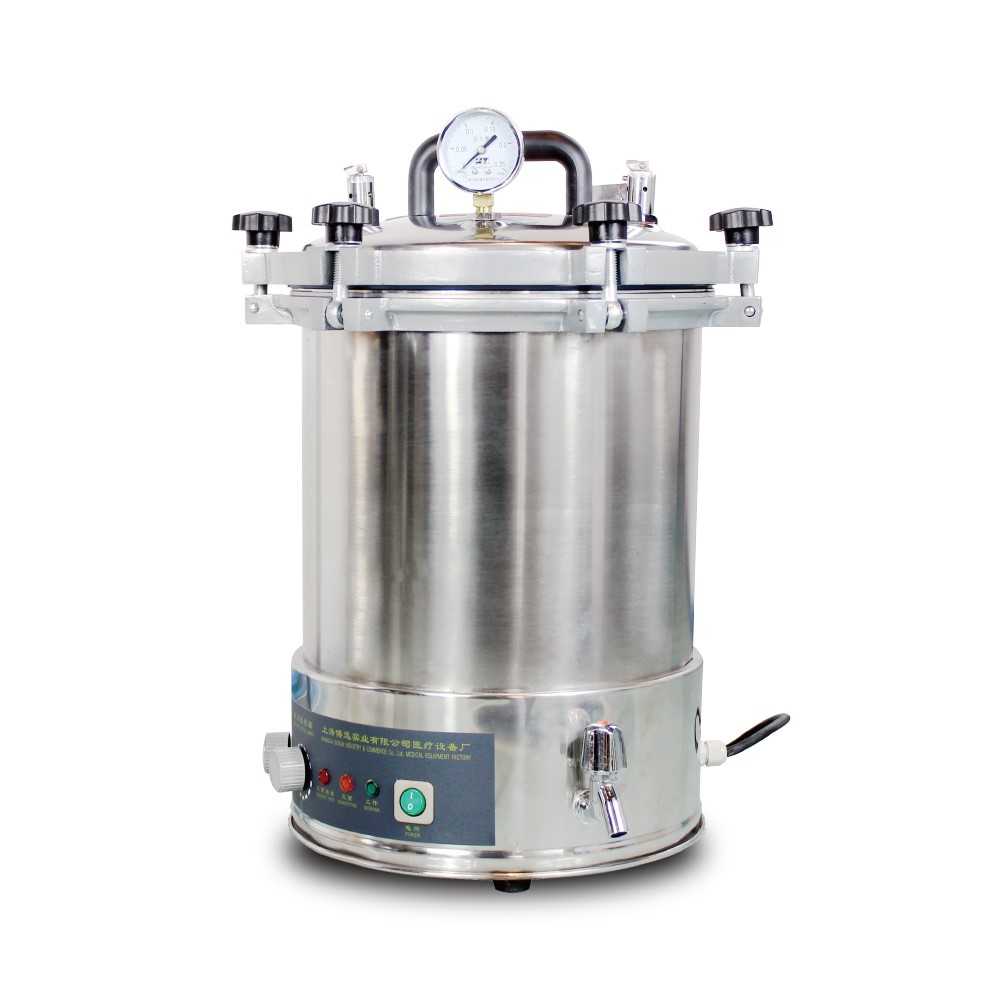
| Portable Pressure Steam Sterilizer | Compact sterilization for laboratories, clinics, educational facilities and locations with limited installation space. |
| Class B Autoclave | Vacuum-assisted sterilization of wrapped, porous, hollow and solid instruments in medical, dental and laboratory settings. |
| Class N Autoclave | Sterilization of suitable unwrapped solid instruments and routine loads that do not require advanced vacuum cycles. |
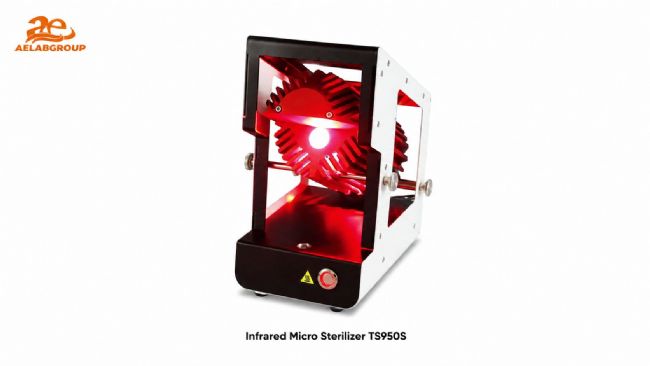
| Infrared Sterilizer | Rapid sterilization of inoculating loops, needles and small laboratory tools without using an open flame. |
| Bacti-Cinerator Sterilizer | High-temperature sterilization of microbiology tools used during culture transfer and aseptic laboratory procedures. |
Typical Applications
How to Select the Right Sterilizer or Autoclave
Selecting a sterilizer should not be based only on chamber volume. The correct system depends on the load material, chamber orientation, air-removal method, sterilization cycle, drying requirements, daily workload, available installation space and local operating conditions.
Before requesting a quotation, users should clearly identify what will be sterilized, how much material will be processed in each cycle and whether wrapped, hollow, porous, liquid or solid loads are involved.
| Selection Factor | Questions to Consider |
|---|---|
| Load Type | Will the autoclave process glassware, instruments, textiles, culture media, liquids, porous loads or biological waste? |
| Chamber Capacity | What load volume must be processed during each cycle, and how many cycles are required per day? |
| Chamber Orientation | Is a compact top-loading vertical chamber suitable, or is front-loading horizontal access more practical? |
| Air-Removal Method | Are gravity-displacement cycles sufficient, or is vacuum-assisted air removal required for complex loads? |
| Sterilization Programs | Are separate programs required for instruments, liquids, culture media, wrapped materials or waste treatment? |
| Drying Function | Must instruments be dry immediately after the cycle, or is sterilization without advanced drying acceptable? |
| Control and Documentation | Are programmable controls, cycle records, printing, data export or user-defined parameters required? |
| Safety Protection | Which door-locking, over-temperature, over-pressure, low-water and fault-alarm protections are required? |
| Utilities and Installation | What electrical supply, water connection, drainage, ventilation and installation space are available? |
| Validation Requirements | Will the sterilization process be checked using physical records, chemical indicators or biological indicators? |
AELAB Sterilizer and Autoclave Product Families
The category includes several equipment families developed for different sterilization environments. Final configuration and available functions depend on the selected series and model.
Top-loading systems available for routine laboratory sterilization, culture-media preparation, glassware treatment and related workflows.
Front-loading configurations intended for facilities that require practical handling of larger loads and higher processing capacity.
Compact pressure-steam systems for routine sterilization where portability, simple installation and efficient use of space are important.
Vacuum-assisted sterilization systems designed for facilities processing more complex instrument loads and requiring controlled drying cycles.
Compact steam sterilizers generally selected for suitable unwrapped solid instruments and routine sterilization procedures.
Specialized high-temperature systems for rapid sterilization of inoculating loops, needles and small microbiology tools.
Steam Autoclaves and Specialized Sterilizers
Not every sterilization process uses the same operating principle. Pressure-steam autoclaves are commonly selected for compatible instruments, glassware, culture media and laboratory materials, while infrared and bacti-cinerator systems are intended for rapid treatment of small microbiology tools.
| System | Operating Principle | Common Load Examples |
|---|---|---|
| Pressure-Steam Autoclave | Uses saturated steam under controlled temperature and pressure. | Compatible glassware, instruments, culture media, liquids and selected laboratory materials. |
| Vacuum Autoclave | Removes air before steam exposure to improve penetration into suitable complex loads. | Wrapped, porous, hollow and solid instruments, depending on the selected cycle and model. |
| Infrared Sterilizer | Uses intense electric heating without an open gas flame. | Inoculating loops, needles and small metal microbiology tools. |
| Bacti-Cinerator | Uses a high-temperature enclosed heating element for rapid tool sterilization. | Small instruments used during microbial culture transfer and aseptic procedures. |
Important Operating Considerations
Why Choose AELAB Sterilization Equipment?
Information to Include in Your Inquiry
Providing complete application information helps the AELAB team recommend a more suitable sterilizer or autoclave configuration.
Describe the instruments, liquids, glassware, media or waste to be processed.
Provide the preferred chamber volume or approximate load size.
State the expected number of sterilization cycles per day.
Specify whether liquid, instrument, waste, vacuum or drying cycles are needed.
Provide the available space, power supply, water and drainage conditions.
Include the shipping destination and required electrical configuration.
AELAB is a laboratory equipment brand and supplier based in Guangzhou, China. The company supplies laboratory instruments, analytical equipment and quality-control solutions to distributors, universities, research organizations, healthcare facilities and industrial customers worldwide.
The AELAB product portfolio includes sterilization equipment, laboratory instruments, analytical systems, environmental testing equipment, pharmaceutical testing instruments, sample-preparation equipment and other laboratory solutions.
Official website: www.aelabgroup.com
Frequently Asked Questions
AELAB supplies vertical and horizontal steam sterilizers, portable autoclaves, Class B and Class N autoclaves, infrared sterilizers, bacti-cinerator sterilizers and related sterilization systems.
Consider the dimensions and quantity of materials processed during each cycle, the required number of daily cycles and the free space needed for proper steam circulation.
A vertical autoclave normally has a top-loading chamber and a compact footprint. A horizontal autoclave uses front loading and may be more practical for larger, heavier or higher-volume loads.
Class B autoclaves generally use vacuum-assisted cycles and are selected for more complex compatible loads. Class N units are commonly used for suitable unwrapped solid instruments without advanced vacuum requirements.
Compatible liquids and culture media may be processed using a sterilizer equipped with an appropriate liquid cycle. The container type, fill volume, closure method and cooling process must also be considered.
No. Infrared sterilizers use high-temperature electric heating and are generally intended for small microbiology tools. Steam autoclaves use pressurized saturated steam inside a sealed chamber.
Yes. Send the load type, required chamber capacity, daily workload, preferred cycle functions, power supply and destination country. The AELAB team can review the requirements and recommend suitable options.
Tell the AELAB technical sales team what materials must be sterilized, the required chamber capacity, expected daily workload, preferred chamber orientation, cycle requirements and installation conditions.
The proposal can include suitable equipment options, available technical specifications, optional accessories, estimated delivery time, export packaging and shipping information.
View AELAB Sterilizer and Autoclave Models
Email: info@aelabgroup.com
WhatsApp / WeChat: +86 158 0001 6110
Website: www.aelabgroup.com
-
AELAB GUANGZHOU CO., LTD.
AELAB is a laboratory equipment and analytical instrument supplier based in Guangzhou, China. We provide laboratory instruments, quality control equipment, analytical systems, sample preparation equipment, and related laboratory solutions for distributors, industrial laboratories, universities, research organizations, and testing centers worldwide.
AELAB offers both our own-brand products and carefully selected instruments from established manufacturers. OEM and ODM services are available for selected AELAB products, including customized branding, appearance, configuration, power supply, accessories, packaging, and documentation according to customer requirements.
For laboratory projects, distributor orders, government tenders, and complete laboratory setups, our team can provide a one-stop purchasing solution. We assist customers with product selection, technical comparison, quotation preparation, sourcing, quality inspection, export packaging, shipping coordination, and after-sales support.
Our technical team helps customers select suitable equipment based on their application, testing method, required specifications, budget, and local standards. Warranty and technical support are provided according to the product and project requirements.
AELAB operates under an established quality management system. Relevant company and product documentation may include SGS verification, ISO certification, CE, RoHS, FCC, or UL-related documentation, depending on the specific product model and configuration. Customers may contact us to confirm the available certificates before ordering.
Our equipment is widely used in industrial quality control, scientific research, universities, pharmaceutical laboratories, food and agricultural testing, environmental analysis, chemical laboratories, and other professional testing applications.
We are committed to developing long-term cooperation with distributors, laboratories, research institutions, and project contractors. If you are looking for a reliable laboratory equipment supplier with stable service and technical support, please contact AELAB.
Contact AELAB
Website:
https://aelabgroup.com
Email:
info@aelabgroup.com
WhatsApp / WeChat:
+86 15800016110
| Request Information |
| Related News |
| Other Products |
| Related Products |
| Recently viewed products |