 中文
中文


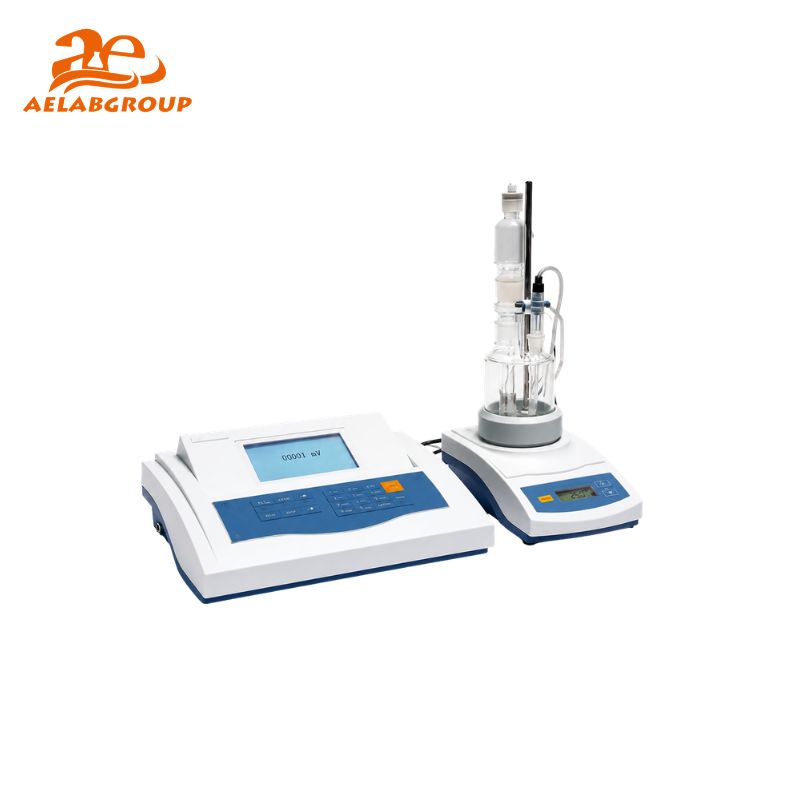
AELAB Karl Fischer and Coulometric Titrator Series

- Product Detail
- Company Profile
- Moisture determination in pharmaceutical raw materials and finished products
- Water content analysis in oils, fuels, lubricants and petroleum products
- Testing of solvents, alcohols, reagents and specialty chemicals
- Moisture control in food ingredients, powders and processed materials
- Analysis of plastics, polymers, resins and coatings
- Quality control of cosmetics and personal-care formulations
- Testing of adhesives, paints, inks and industrial liquids
- Research and development involving moisture-sensitive materials
- Routine acid-base and potentiometric titration procedures
- Incoming-material inspection and production quality control
- Support for volumetric, coulometric or potentiometric titration methods
- Automatic endpoint detection and calculation
- Controlled reagent dosing and burette operation
- Method storage for routine laboratory procedures
- Sample identification and result documentation
- Drift monitoring and cell-condition indication for Karl Fischer analysis
- Multiple calculation units and customizable result formats
- Electrode compatibility according to the required titration method
- Data storage, printing and export options depending on configuration
- Optional accessories for difficult, solid or moisture-sensitive samples
- Use suitable reagents for the selected sample and titration method.
- Protect the titration cell and reagent containers from atmospheric moisture.
- Use clean and dry syringes, vessels and sample-transfer accessories.
- Verify sample mass or volume before starting the analysis.
- Condition the cell until a stable background or drift value is achieved.
- Follow the recommended electrode-cleaning and maintenance procedure.
- Use appropriate sample preparation for insoluble or reactive samples.
- Perform method verification and routine checks according to laboratory requirements.
- Solutions for Karl Fischer moisture determination and general laboratory titration
- Options for volumetric, coulometric and potentiometric analysis
- Configurations for routine quality control and research applications
- Automatic reagent delivery and endpoint detection depending on instrument type
- Selection support based on sample, moisture range and required method
- Optional accessories for different laboratory workflows
- Technical specification and quotation support before purchase
- International supply, export packaging and shipment coordination
AELAB Karl Fischer and Coulometric Titration Solutions
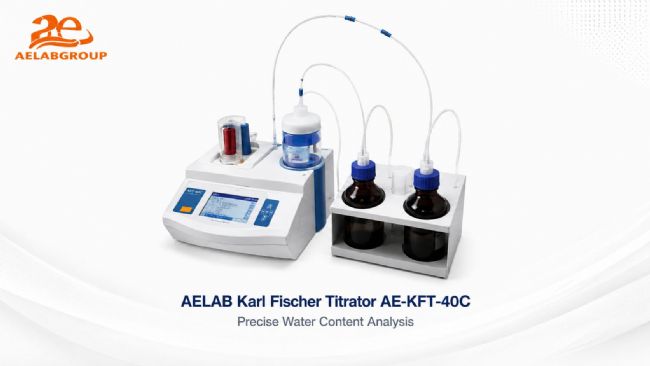
AELAB supplies Karl Fischer titrators, coulometric moisture analyzers, automatic potential titrators and laboratory titration systems for accurate determination of water content and chemical concentration in laboratory samples.
These instruments are used in pharmaceutical quality control, chemical analysis, petroleum testing, food and beverage laboratories, environmental testing, research facilities and industrial production laboratories.
The available titration solutions cover low-level trace moisture analysis, routine volumetric water determination, potentiometric endpoint detection and automated reagent dispensing. Users can select a suitable system according to sample type, expected moisture level, testing method, measurement range, automation requirements and laboratory workload.
Explore AELAB Karl Fischer and Titration Systems
Compare Karl Fischer titrators, coulometric moisture analyzers, automatic potential titrators and laboratory titration solutions available from AELAB.
Available Titration System Types
| Instrument Type | Typical Function |
|---|---|
| Volumetric Karl Fischer Titrator | Determination of water content in liquid, solid and dissolved samples where moisture is present at moderate or higher levels. |
| Coulometric Karl Fischer Titrator | Trace and low-level moisture measurement for samples requiring high sensitivity and small sample quantities. |
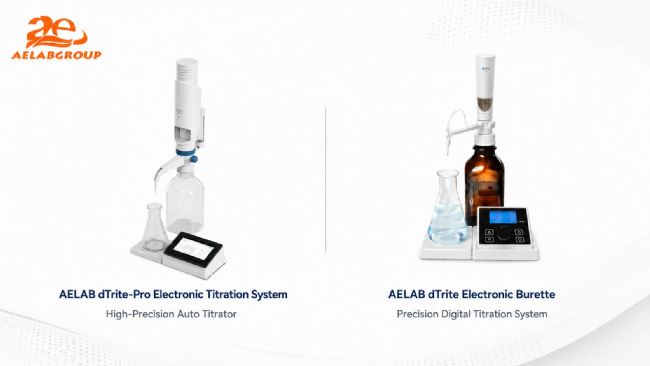
| Automatic Potential Titrator | Automated titration using electrode-based endpoint detection for acid-base, redox, precipitation and complexometric methods. |
| Electronic Burette System | Controlled reagent dispensing for manual or semi-automatic laboratory titration procedures. |
| Automated Laboratory Titration Platform | Standardized titration workflows where repeatability, method storage, controlled dosing and result documentation are required. |
What Is Karl Fischer Titration?
Karl Fischer titration is a laboratory analytical method used specifically to determine water content in a sample. It is commonly selected when conventional drying or moisture-loss methods cannot provide sufficient selectivity, sensitivity or speed.
Depending on the expected amount of water and the characteristics of the sample, laboratories may use either volumetric or coulometric Karl Fischer titration.
Volumetric Method
In volumetric titration, a Karl Fischer reagent of known concentration is added to the sample. The consumed reagent volume is used to calculate the amount of water present.
Coulometric Method
In coulometric titration, iodine is generated electrochemically inside the measuring cell. The electrical charge required for the reaction is used to determine trace moisture.
Typical Applications
Samples Commonly Tested by Karl Fischer Methods
| Sample Group | Examples and Testing Considerations |
|---|---|
| Liquids | Solvents, oils, fuels, alcohols, liquid chemicals and pharmaceutical preparations that can be introduced directly or after dilution. |
| Powders | Pharmaceutical powders, food ingredients, pigments, chemicals and powdered raw materials that may require dissolution or extraction. |
| Solids | Polymers, tablets, granules and solid industrial materials that may require grinding, heating or an oven-transfer method. |
| Viscous Materials | Ointments, creams, resins, adhesives and lubricants that may require suitable solvents or specialized sample introduction. |
| Trace-Moisture Samples | Dry solvents, gases, specialty chemicals and moisture-sensitive materials requiring coulometric measurement. |
Volumetric vs. Coulometric Karl Fischer Titration
| Comparison Point | Volumetric Karl Fischer | Coulometric Karl Fischer |
|---|---|---|
| General Application | Routine moisture determination at moderate or higher water levels. | Trace and very low moisture determination. |
| Reaction Principle | A prepared titrant is delivered through a burette. | The required iodine is generated electrochemically in the cell. |
| Sample Quantity | Often suitable for larger sample quantities or samples containing more water. | Often suitable for smaller samples and low water quantities. |
| Reagent Handling | Requires titrant concentration and burette-volume control. | Uses a generator system to produce the titrating species. |
| Recommended Selection Basis | Expected moisture content, sample solubility and routine workload. | Required trace sensitivity, blank stability and sample compatibility. |
Typical Karl Fischer Testing Workflow
1. Method Selection: Select volumetric or coulometric measurement according to the expected moisture level and sample characteristics.
2. Cell Preparation: Prepare the titration vessel, reagent system, electrode and drying conditions according to the laboratory procedure.
3. Blank or Conditioning: Stabilize the measurement cell and reduce background moisture before adding the sample.
4. Sample Introduction: Add a measured quantity of sample directly or use a suitable dissolution, extraction or heating method.
5. Automatic Titration: The instrument controls reagent delivery or electrochemical generation and detects the endpoint.
6. Result Review: Review the calculated moisture value, repeatability, blank condition and method information before reporting the result.
Important Features to Compare
Laboratory and Operating Considerations
Reliable moisture determination depends not only on the titrator but also on correct sampling, reagent condition, environmental control and operator technique. Karl Fischer reagents and titration cells can absorb moisture from the surrounding air, so the testing area should be kept clean and stable.
Why Choose AELAB Titration Solutions?
About AELAB
AELAB is a laboratory equipment brand and supplier based in Guangzhou, China. The company provides analytical instruments, laboratory equipment and testing solutions for distributors, universities, research institutions, industrial laboratories and quality-control departments worldwide.
The AELAB product portfolio includes titration systems, water-testing equipment, analytical instruments, pharmaceutical testing equipment, laboratory preparation systems, environmental testing instruments and other laboratory solutions.
Official website: www.aelabgroup.com
Frequently Asked Questions
What is a Karl Fischer titrator used for?
A Karl Fischer titrator is used to determine the amount of water present in liquids, solids, powders, oils, chemicals and other laboratory samples.
What is the difference between volumetric and coulometric Karl Fischer titration?
Volumetric titration uses a reagent delivered from a burette and is commonly selected for moderate or higher water levels. Coulometric titration generates iodine electrochemically and is generally selected for trace or very low moisture analysis.
Can solid samples be tested with a Karl Fischer titrator?
Yes. Depending on the sample, solids may be dissolved, extracted, finely prepared or analyzed through a suitable heating and moisture-transfer method.
Is Karl Fischer titration the same as loss-on-drying testing?
No. Karl Fischer titration is designed specifically for water determination, while loss-on-drying can include water as well as other volatile substances removed during heating.
Can the same titrator be used for every type of sample?
Not always. Sample solubility, chemical reactions, moisture level and preparation requirements can affect the suitable titration method, reagent and accessory configuration.
What information is needed for instrument selection?
The supplier should receive the sample type, expected water content, required method, testing frequency, sample quantity, applicable procedure and destination country.
Can AELAB recommend a suitable titration system?
Yes. AELAB can review the application and recommend a suitable instrument category and configuration based on the laboratory's actual testing requirements.
Request a Karl Fischer Titrator Recommendation, Price and Technical Proposal
Tell the AELAB technical sales team your sample type, expected moisture range, required titration method, testing frequency and applicable laboratory procedure. Suitable titration solutions can then be recommended according to your requirements.
The technical proposal may include suitable instrument types, available configurations, specifications, accessories, delivery time, export packaging and shipping information.
View AELAB Karl Fischer and Titration Systems
Email: info@aelabgroup.com
WhatsApp / WeChat: +86 158 0001 6110
Website: www.aelabgroup.com
-
AELAB GUANGZHOU CO., LTD.
AELAB is a laboratory equipment and analytical instrument supplier based in Guangzhou, China. We provide laboratory instruments, quality control equipment, analytical systems, sample preparation equipment, and related laboratory solutions for distributors, industrial laboratories, universities, research organizations, and testing centers worldwide.
AELAB offers both our own-brand products and carefully selected instruments from established manufacturers. OEM and ODM services are available for selected AELAB products, including customized branding, appearance, configuration, power supply, accessories, packaging, and documentation according to customer requirements.
For laboratory projects, distributor orders, government tenders, and complete laboratory setups, our team can provide a one-stop purchasing solution. We assist customers with product selection, technical comparison, quotation preparation, sourcing, quality inspection, export packaging, shipping coordination, and after-sales support.
Our technical team helps customers select suitable equipment based on their application, testing method, required specifications, budget, and local standards. Warranty and technical support are provided according to the product and project requirements.
AELAB operates under an established quality management system. Relevant company and product documentation may include SGS verification, ISO certification, CE, RoHS, FCC, or UL-related documentation, depending on the specific product model and configuration. Customers may contact us to confirm the available certificates before ordering.
Our equipment is widely used in industrial quality control, scientific research, universities, pharmaceutical laboratories, food and agricultural testing, environmental analysis, chemical laboratories, and other professional testing applications.
We are committed to developing long-term cooperation with distributors, laboratories, research institutions, and project contractors. If you are looking for a reliable laboratory equipment supplier with stable service and technical support, please contact AELAB.
Contact AELAB
Website:
https://aelabgroup.com
Email:
info@aelabgroup.com
WhatsApp / WeChat:
+86 15800016110
| Request Information |
| Other Products |
| Related Products |

| Recently viewed products |