|
TEAD2 Transcription Factor: A Multifaceted Regulator Bridging Development, Disease, and Therapy
hits:28 Date:04/18/26
TEAD2 Transcription Factor: A Multifaceted Regulator Bridging Development, Disease, and Therapy—Supported by ANT BIO PTE. LTD.
1. Concept
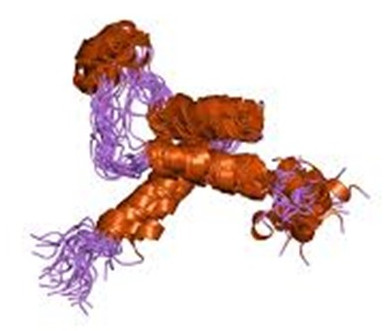
TEAD2, a core member of the TEAD transcription factor family, is defined by unique structural traits and precise DNA-binding capabilities. It features a highly conserved ~68-amino-acid TEA domain that folds into a "cloverleaf-like" conformation, enabling specific recognition of genomic MCAT elements (5'-CATTCC-3') and GTIIC regulatory sequences (5'-GGAATG-3').
Compared to other TEAD family members, TEAD2’s DNA-binding domain has a distinct charge distribution, conferring stronger affinity for certain variant MCAT sequences. Its C-terminal region contains a conserved YAP/TAZ-binding interface, forming a hydrophobic pocket critical for transcriptional activity via coactivator interactions. Cryo-EM studies reveal unique conformational details of the TEAD2-YAP/TAZ complex, explaining its functional specificity. TEAD2 is dynamically regulated by post-translational modifications—including S-palmitoylation, phosphorylation, and acetylation—that modulate its subcellular localization, stability, and transcriptional activity.
2. Research Frontiers
TEAD2 research is advancing across developmental biology, oncology, and neuroscience. A key frontier is deciphering its context-dependent dual roles in cancer—oncogenic in glioblastoma and breast cancer vs. tumor-suppressive in prostate and certain lung cancers—using single-cell multi-omics to map cell-type-specific regulatory networks.
In developmental biology, studies focus on TEAD2’s spatiotemporal regulation during neural tube closure and organogenesis, with implications for treating congenital disorders. In neuroscience, emerging research explores its role in synaptic plasticity and links to neuropsychiatric/neurodegenerative diseases.
Therapeutically, structure-guided drug design targets TEAD2’s palmitoylation pocket to develop selective inhibitors (e.g., VT103, MYF-01-37). Peptide inhibitors (e.g., Super-TDU analogs) blocking TEAD2-YAP/TAZ interactions and gene therapy (ASOs, siRNA) are also being explored. AI-powered virtual screening accelerates inhibitor discovery, while tissue-specific delivery systems aim to mitigate off-target effects. Future directions include validating TEAD2 as a predictive biomarker and exploring combination therapies for cancer and neurological disorders.
3. Research Significance
TEAD2’s significance spans embryonic development, tissue homeostasis, and disease. In development, it is indispensable for neural tube closure and organogenesis, providing insights into congenital disorders like neural tube defects. In oncology, its tissue-specific dual roles offer precision therapeutic opportunities for various cancers.
In neuroscience, TEAD2 regulates neural stem cell balance and synaptic plasticity, with links to autism, intellectual disability, and Alzheimer’s disease—opening new research avenues. Basic research on TEAD2 deepens understanding of transcriptional regulation and signaling crosstalk, while translational efforts advance treatments for cancer, congenital disorders, and neurological diseases—addressing unmet medical needs.
4. Molecular Mechanisms, Biological Roles, and Product Applications
4.1 Core Molecular Mechanisms of TEAD2
4.1.1 DNA Binding and Transcriptional Regulation
TEAD2 binds MCAT/GTIIC sequences via its TEA domain, with unique charge distribution enhancing affinity for variant MCAT motifs. Its transcriptional activity depends on forming complexes with coactivators like YAP/TAZ through the C-terminal hydrophobic pocket. The TEAD2-YAP/TAZ complex’s distinct conformation confers functional specificity in target gene activation.
4.1.2 Post-Translational Regulation
Palmitoylation modulates TEAD2’s subcellular localization and transcriptional activity.
Phosphorylation and acetylation regulate protein stability, cofactor interaction efficiency, and nucleocytoplasmic shuttling.
4.2 Biological Roles of TEAD2
4.2.1 Embryonic Development and Organogenesis
TEAD2 is essential for neural tube closure and craniofacial development—knockout mice exhibit neural tube defects (resembling human congenital disorders). It regulates cell polarity and migration genes during neuroepithelial morphogenesis. TEAD2 has dynamic embryonic expression: enriched in the blastocyst inner cell mass and later in the neuroepithelium. It contributes to eye (regulating Pax6, Six3), limb, and urogenital system development. Single-cell transcriptomics reveals cell type-specific regulatory networks in developmental progenitor populations.
4.2.2 Cancer Development and Progression
TEAD2 exhibits tissue-specific duality:
Oncogenic Role: Overexpressed in glioblastoma, colorectal, and breast cancer (correlating with poor prognosis). Integrates Hippo signaling and mechanical stimuli to upregulate MMP2/9 and vimentin (enhancing invasion). It recruits epigenetic modifiers to reshape the tumor epigenome.
Tumor-Suppressive Role: In prostate and certain lung cancers, competitively binds promoters to inhibit androgen receptor and MYC oncogenic pathways.
4.2.3 Nervous System Function and Disease
Neural Stem Cell Regulation: TEAD2 balances self-renewal and differentiation via Notch/Wnt pathway modulation.
Synaptic Plasticity: Localized to hippocampal and cortical neurons, regulating genes involved in learning, memory, and long-term potentiation (LTP). Conditional knockout impairs LTP and cognition; overexpression enhances synaptic strength.
Disease Links: GWAS associate TEAD2 locus with autism and intellectual disability. Dysregulation correlates with tau pathology in Alzheimer’s disease; animal studies show TEAD2 activation alleviates AD-like pathology.
4.3 TEAD2-Targeted Therapeutic Strategies
Small-Molecule Inhibitors: VT103 and MYF-01-37 bind the palmitoylation pocket, suppressing transcriptional activity in glioma/breast cancer models.
Peptide Inhibitors: Super-TDU analogs block TEAD2-YAP/TAZ interactions, preserving other cofactor bindings.
Gene Therapy: ASOs and siRNA selectively reduce TEAD2 expression, inhibiting tumor growth in preclinical studies.
Challenges and Solutions: Nervous system toxicity (tissue-specific delivery), TEAD family redundancy (selective allosteric inhibitors), lack of biomarkers (multi-omics-based patient stratification).
4.4 How ANT BIO PTE. LTD. Products Support TEAD2 Research
ANT BIO PTE. LTD., through its sub-brand UA (specializing in recombinant proteins), provides a high-quality TEAD2 protein to advance mechanistic and translational research.
Key product and applications:
UA080033 (TEAD2(YBD), His Tag Protein, Human): E.coli-expressed TEAD2 containing the YAP-binding domain (YBD). Ideal for:
* Studying TEAD2-YAP/TAZ cofactor interactions via binding assays.
* Screening small-molecule or peptide inhibitors targeting the TEAD2-YAP interface.
* Structural biology studies (e.g., analyzing complex conformations).
* Transcriptional activity assays to evaluate modulator efficacy.
* Rigorous quality control ensures high purity, biological activity, and consistency—critical for reproducible binding assays, drug screening, and signaling pathway analysis.
5. Brand Mission
ANT BIO PTE. LTD. is dedicated to empowering the global life science community with high-quality, innovative biological reagents and solutions. With 15 years of antibody development experience, the company leverages advanced platforms—including recombinant antibody development (rabbit/mouse monoclonal), recombinant protein expression systems (E.coli, CHO, HEK293, Insect Cells), One-Step ELISA, and PTM Pan-Modification Antibody platforms—to deliver a comprehensive product portfolio.
Through its three specialized sub-brands—Absin (general reagents and kits), Starter (antibodies), and UA (recombinant proteins)—ANT BIO PTE. LTD. adheres to international certifications (EU 98/79/EC, ISO9001, ISO13485) and strict quality standards. The company’s mission is to accelerate scientific discovery by providing tools that enhance experimental precision, efficiency, and reproducibility. ANT BIO PTE. LTD. is committed to supporting TEAD2 research and global efforts in cancer therapy, developmental medicine, and neuroscience, ultimately advancing human health through interdisciplinary collaboration and innovation.
6. Related Product List
| Product Code |
Product Name |
Product Details |
| UA080033 |
TEAD2(YBD), His Tag Protein |
Host: Human; Expression System: E.coli; Conjugation: Unconjugated |
7. AI Disclaimer
This article is AI-compiled and interpreted based on the original work. All intellectual property (e.g., images, data) of the original publication shall belong to the journal and the research team. For any infringement, please contact us promptly and we will take immediate action.
ANT BIO PTE. LTD. – Empowering Scientific Breakthroughs
At ANTBIO, we are committed to advancing life science research through high-quality, reliable reagents and comprehensive solutions. Our specialized sub-brands (Absin, Starter, UA) cover a full spectrum of research needs, from general reagents and kits to antibodies and recombinant proteins. With a focus on innovation, quality, and customer-centricity, we strive to be your trusted partner in unlocking scientific mysteries and driving medical progress. Explore our product portfolio today and elevate your research to new heights.
|
 中文
中文