 中文
中文


Home > News > USP15: The Multifaceted Regulator Shaping Disease Pathways
USP15: The Multifaceted Regulator Shaping Disease Pathways
-
1. Concept
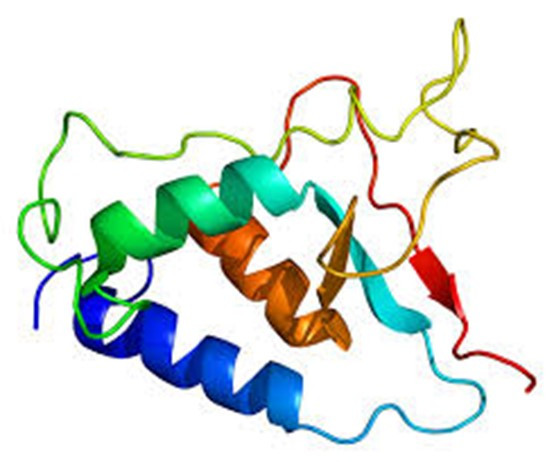
USP15, a key member of the ubiquitin-specific protease (USP) family, is a 981-amino acid deubiquitinase with a unique modular structure that underpins its diverse biological functions. It consists of an N-terminal domain with scattered coiled-coil regions (mediating protein-protein interactions), a central USP catalytic core (adopting the classic "thumb-palm-finger" conformation to bind and cleave ubiquitin), and a C-terminal extension that confers regulatory specificity.
Enzymatically, USP15 exhibits broad substrate versatility, efficiently hydrolyzing multiple ubiquitin chain linkages (K48, K63, K29) with a higher catalytic efficiency for K63-linked chains (kcat/Km = 2.1 × 10⁴ M⁻¹s⁻¹)—threefold greater than for K48-linked chains—indicating a prominent role in non-canonical ubiquitination pathways. Its activity is tightly regulated by post-translational modifications: AKT-mediated phosphorylation at Ser728 enhances enzymatic activity 4- to 6-fold, while SIRT1-catalyzed deacetylation inhibits it. USP15 localizes dynamically—predominantly in the cytoplasm near the Golgi under steady-state conditions, but translocating to the nucleus or specific organelles (proteasomes, autophagosomes, mitochondria) in response to stress (e.g., TGF-β stimulation, DNA damage). It is highly expressed in immune cells and neural tissues, aligning with its specialized roles in immune regulation and neuroprotection.
2. Research Frontiers
USP15 research is advancing rapidly across multiple disease areas, driven by its multifaceted regulatory roles. A key frontier is deciphering its context-dependent functions in cancer—particularly how its overexpression amplifies TGF-β signaling to promote tumor invasion and immune evasion. Structural biology studies using cryo-EM and X-ray crystallography are uncovering the molecular basis of USP15’s interactions with substrates like SMAD7 and PD-L1, guiding the design of selective inhibitors.
In immunology, research focuses on USP15’s dual role in innate and adaptive immunity, with potential applications in cancer immunotherapy (e.g., combining USP15 inhibitors with PD-1/PD-L1 checkpoint blockers). The emerging link between USP15 and neurological disorders—including Parkinson’s disease (PD), Alzheimer’s disease (AD), and ischemic brain injury—is another high-impact area, with studies exploring CNS-penetrant USP15 modulators.
Technological innovations are transforming the field: PROTAC (Proteolysis-Targeting Chimera) technology enables targeted degradation of USP15, offering advantages over traditional inhibitors; CRISPR screens and single-cell multi-omics reveal tissue-specific USP15 functions; and virtual screening accelerates the discovery of selective small-molecule inhibitors. Future directions include developing tissue-targeted delivery systems to mitigate off-target effects and identifying predictive biomarkers for USP15-targeted therapies.
3. Research Significance
USP15’s significance lies in its central role as a regulator of key signaling pathways (TGF-β, NF-κB, TCR) and its involvement in diverse diseases—cancer, immune disorders, and neurological conditions. In cancer, its overexpression drives tumor progression and metastasis, making it a promising therapeutic target. In immunology, it modulates immune response intensity, offering opportunities to enhance immunotherapy efficacy or treat autoimmune diseases.
For neurological disorders, USP15’s regulation of Parkin (PD) and GSK-3β/tau (AD) provides novel therapeutic avenues for currently untreatable conditions. Basic research on USP15 deepens understanding of ubiquitin-mediated signaling networks, revealing how deubiquitinases fine-tune cellular homeostasis. Translational research has yielded clinical candidates (e.g., CC-90009, PROTAC P-U15-3), highlighting USP15’s potential to transform precision medicine across multiple therapeutic areas.
4. Regulatory Mechanisms, Disease Roles, and Product Applications
4.1 Core Regulatory Mechanisms of USP15
4.1.1 TGF-β Pathway Regulation
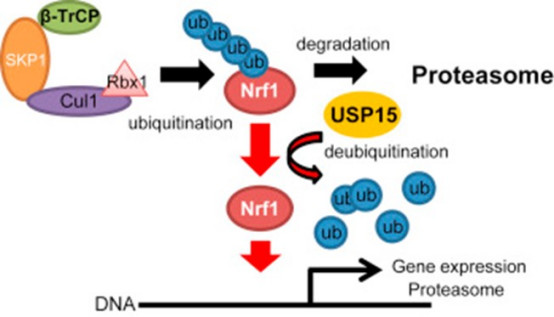
USP15 amplifies TGF-β signaling by stabilizing TGF-β receptor I (TβRI). It binds the SMAD7-SMURF2 complex via its N-terminal region, inducing conformational changes that expose its catalytic core to remove inhibitory ubiquitin chains from TβRI. TGF-β signaling itself upregulates USP15 expression via SMAD3/4 binding to the USP15 promoter, creating a positive feedback loop. USP15 also stabilizes SMAD proteins through deubiquitination, further amplifying pathway activity.
4.1.2 Immune Signaling Regulation
Innate Immunity: USP15 deubiquitinates TRAF2 and TRAF6 in the NF-κB pathway, promoting pro-inflammatory cytokine (TNF-α, IL-6) production.
Adaptive Immunity: It stabilizes PKC-θ and CARMA1 to enhance TCR signaling and T-cell activation; moderate upregulation improves CAR-T cell expansion, while excessive activity drives T-cell exhaustion.
Immune Checkpoints: USP15 deubiquitinates PD-L1 at K263, blocking lysosomal degradation and enhancing its expression on tumor cells.
4.1.3 Neurological Disorder-Related Regulation
PD: USP15 deubiquitinates and activates Parkin, enhancing mitophagy on mitochondrial membranes to protect dopaminergic neurons.
AD: USP15 indirectly promotes tau hyperphosphorylation by removing inhibitory ubiquitin chains from GSK-3β, increasing its kinase activity.
Ischemic Brain Injury: USP15 exhibits biphasic effects—stabilizing HIF-1α for neuroprotection early post-ischemia, but exacerbating inflammation with prolonged overactivation.
4.2 Disease Associations of USP15
4.2.1 Cancer
USP15 gene amplification and overexpression are observed in glioblastoma, breast, and colon cancer. Overexpression increases TGF-β signaling activity 3- to 5-fold, driving epithelial-mesenchymal transition (EMT) and tumor invasion. USP15-amplified cancer patients have 25–30% lower 5-year survival rates, correlating with high metastatic risk. Its stabilization of PD-L1 also contributes to tumor immune evasion.
4.2.2 Immune Disorders
USP15 deficiency impairs bacterial clearance but reduces autoimmune symptoms; its overexpression may exacerbate inflammatory bowel disease or autoimmune diseases by dysregulating TGF-β and NF-κB pathways. In cancer immunotherapy, USP15 inhibition enhances the efficacy of PD-1 antibodies, increasing complete response rates in melanoma models.
4.2.3 Neurological Disorders
PD: USP15 restores ~70% of mitophagy activity in neurons with Parkin mutations, mitigating dopaminergic degeneration.
AD: USP15 levels correlate with tau pathology severity in patient brains; inhibition reduces tau phosphorylation by 40–50% and improves cognitive function in transgenic mice.
Ischemic Brain Injury: Timed USP15 inhibition (beneficial 3–7 days post-injury) protects against neurological damage.
4.3 USP15-Targeted Therapeutic Strategies
Small-Molecule Inhibitors: Virtual screening has identified selective inhibitors like TD-U15-1 (IC50 = 0.8 μM, >50-fold selectivity over other USPs) and clinical candidate CC-90009 (Phase I trials for glioblastoma with promising brain penetration).
PROTACs: Bifunctional molecules (e.g., P-U15-3) bind USP15 and E3 ligases (CRBN/VHL), inducing USP15 degradation. In TGF-β-high lung cancer models, P-U15-3 reduces metastasis by 75% with manageable toxicity.
Challenges and Solutions: Systemic inhibition risks disrupting TGF-β homeostasis; solutions include allosteric inhibitors, tissue-targeted delivery (nanoparticle-siRNA), and conditionally activated prodrugs. Predictive biomarkers (USP15 copy number, TGF-β activity scores) are needed for patient stratification.
4.4 How ANT BIO PTE. LTD. Products Support USP15 Research
ANT BIO PTE. LTD., through its sub-brand UA (specializing in recombinant proteins), provides a high-quality human USP15 protein to advance mechanistic and translational research.
Key product and applications:
UA080169 (USP15 Protein): Expressed in Baculovirus-Insect Cells, this recombinant human USP15 protein exhibits high purity and biological activity. It is ideal for:
* Studying molecular interactions (e.g., USP15-SMAD7, USP15-Parkin, USP15-PD-L1 binding assays).
* Enzymatic activity studies (e.g., ubiquitin chain hydrolysis assays to evaluate inhibitor potency).
* Structural biology research (e.g., cryo-EM/X-ray crystallography to resolve USP15-substrate complexes).
* High-throughput screening of small-molecule inhibitors or PROTACs.
Rigorous quality control ensures consistent performance, low endotoxin levels, and reliability—critical for reproducible experiments in drug discovery and basic research.
5. Brand Mission
ANT BIO PTE. LTD. is dedicated to empowering the global life science community with high-quality, innovative biological reagents and solutions. With 15 years of experience in antibody and protein development, the company leverages advanced platforms—including recombinant antibody development (rabbit/mouse monoclonal), recombinant protein expression systems (E.coli, CHO, HEK293, Insect Cells), One-Step ELISA, and PTM Pan-Modification Antibody platforms—to deliver a comprehensive product portfolio.
Through its three specialized sub-brands—Absin (general reagents and kits), Starter (antibodies), and UA (recombinant proteins)—ANT BIO PTE. LTD. adheres to international certifications (EU 98/79/EC, ISO9001, ISO13485) and strict quality standards. The company’s mission is to accelerate scientific discovery by providing tools that enhance experimental precision, efficiency, and reproducibility. ANT BIO PTE. LTD. is committed to supporting USP15 research and global efforts in cancer, immune disorders, and neurological disease treatment, ultimately advancing human health through interdisciplinary collaboration and innovation.
6. Related Product List
| Product Code | Product Name | Product Details |
| UA080169 | USP15 Protein | Host: Human; Expression System: Baculovirus-Insect Cells; Conjugation: Unconjugated |
7. AI Disclaimer
This article is AI-compiled and interpreted based on the original work. All intellectual property (e.g., images, data) of the original publication shall belong to the journal and the research team. For any infringement, please contact us promptly and we will take immediate action.
ANT BIO PTE. LTD. – Empowering Scientific Breakthroughs
At ANTBIO, we are committed to advancing life science research through high-quality, reliable reagents and comprehensive solutions. Our specialized sub-brands (Absin, Starter, UA) cover a full spectrum of research needs, from general reagents and kits to antibodies and recombinant proteins. With a focus on innovation, quality, and customer-centricity, we strive to be your trusted partner in unlocking scientific mysteries and driving medical progress. Explore our product portfolio today and elevate your research to new heights.
Related News
- Everest Medicines Enters into Exclusive Licensing Agreement with Dimerix 6/17/2026
- Thrombin Antibodies: How Aptamer Technology Revolutionizes Anticoagulation Treat 6/15/2026
- Monoclonal Antibodies: Achieving Precise Targeted Therapy Through Structural Opt 6/14/2026
- Monoclonal Antibodies: Achieving Precise Targeted Therapy Through Structural Opt 6/13/2026
- The Application and Validation of Serine/Threonine Phosphorylation Antibodies in 6/12/2026
- Hua Medicine Advances Glucose Homeostasis Platform at ADA 2026, Showcasing Dorza 6/12/2026
- How Do Phosphorylated Tau Antibodies Reveal the Mechanism of Protective Mutation 6/11/2026
- Everest Medicines Secures Exclusive License for Sumecigrel in Asia-Pacific, Expa 6/11/2026
- Merck Appoints New Heads of Discovery Solutions and Strategy & BD for Life Scien 6/9/2026
- AOP Health Targets Challenging Blood Cancers with First-In-Class Therapy 6/8/2026