|
Antithrombin III Testing: An Indispensable Tool in the Diagnosis and Treatment of Thrombotic Diseases
hits:411 Date:03/27/26
1. Literature Information
Research Focus: Exploration of antithrombin III (AT-III) as the core physiological anticoagulant protein, its molecular mechanisms, clinical implications of abnormal levels, specific clinical applications, and the role of AT-III antibodies in precise testing.
Core Innovation: Validation of AT-III testing as a critical component in thrombotic disease diagnosis, heparin therapy monitoring, prognosis assessment, and organ function evaluation—with AT-III-specific antibodies enabling high-sensitivity, standardized detection to support personalized clinical decision-making.
2. Research Background
Under physiological conditions, blood maintains fluidity through the coordinated regulation of the coagulation, anticoagulation, and fibrinolytic systems. Antithrombin III (AT-III), a 58.2kD glycoprotein synthesized by hepatocytes and vascular endothelial cells, is the central component of the anticoagulation system—accounting for 70%-80% of total human anticoagulant activity. It irreversibly neutralizes activated coagulation factors (e.g., IIa, Xa, IXa) and its efficacy is dramatically enhanced by heparin. Abnormal AT-III levels (elevated or decreased) are associated with various diseases, including thrombotic disorders, liver/kidney dysfunction, and coagulation disorders. Precise AT-III testing, enabled by high-quality antibodies, is indispensable for diagnosing etiologies, monitoring therapy, and assessing prognosis—addressing unmet needs in clinical hematology and cardiovascular care.
3. Research Approaches
To elucidate AT-III’s clinical value and optimize testing methods, the research team adopted a mechanism-to-application strategy:
Molecular Mechanism Characterization: Analyzing AT-III’s structure, anticoagulant mechanism (basic inhibition and heparin enhancement), and interaction with coagulation factors.
Clinical Correlation Analysis: Investigating the association between abnormal AT-III activity (elevated/decreased) and specific diseases (thrombosis, liver/kidney disorders, DIC).
Application Validation: Evaluating AT-III testing in thrombophilia diagnosis, heparin therapy monitoring, thrombotic disease early warning, and organ function assessment.
Detection Technology Optimization: Validating the performance of antibody-based detection methods (immunoturbidimetry, ELISA) for sensitivity, specificity, and ability to distinguish antigen levels from functional activity.
Tool Development: Utilizing AT-III antibodies and recombinant proteins to support standardized testing and research.
4. Research Outcomes
4.1 Physiological Balance of Coagulation and Anticoagulation
Blood homeostasis relies on three interconnected systems:
Coagulation System: Cascade activation of coagulation factors generates thrombin, converting fibrinogen to fibrin clots.
Anticoagulation System: AT-III neutralizes activated factors to prevent excessive thrombosis.
Fibrinolytic System: Plasmin degrades fibrin to recanalize vessels.
AT-III acts as the core anticoagulant, maintaining the delicate balance between hemostasis and thrombosis.
4.2 Molecular Characteristics and Anticoagulant Mechanism of AT-III
Structure: Single-chain glycoprotein (SERPIN superfamily member) synthesized by hepatocytes and vascular endothelial cells.
Anticoagulant Mechanism:
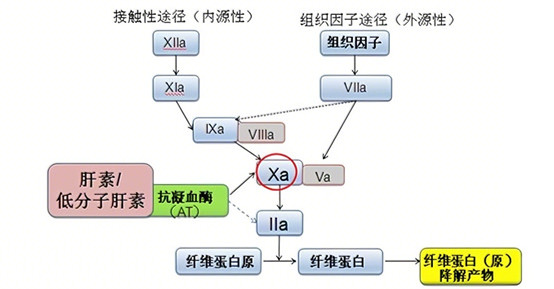
Basic Inhibition: AT-III binds target enzymes via its active center arginine residue, forming a 1:1 covalent complex to inactivate coagulation factors.
Heparin Enhancement: Heparin binds AT-III’s lysine sites, inducing conformational changes that increase inhibition efficiency by over 1,000-fold. Heparin acts as a catalyst and is recycled post-complex formation.
4.3 Clinical Implications of Abnormal AT-III Activity
Elevated AT-III Activity
Associated with:
* Hereditary/acquired coagulation disorders (e.g., hemophilia A/B).
* Initial stages of oral anticoagulant therapy (e.g., warfarin).
* Progesterone and other hormonal medications.
* Compensatory liver synthesis in acute hepatitis.
* Decreased AT-III Activity
Caused by:
Insufficient Synthesis: Severe liver diseases (cirrhosis, advanced liver cancer) reduce hepatocyte function—correlating with portal vein thrombosis risk.
Excessive Loss: Nephrotic syndrome leads to urinary AT-III loss via damaged glomerular filtration membranes.
Increased Consumption: Thrombotic diseases (deep vein thrombosis, myocardial infarction), DIC, and hypertensive disorders of pregnancy.
4.4 Specific Clinical Applications of AT-III Testing
Thrombophilia Diagnosis: AT-III deficiency accounts for 2%-5% of hereditary thrombophilia cases. Testing clarifies etiology in recurrent thrombosis patients and guides long-term anticoagulation.
Heparin Therapy Monitoring: Heparin efficacy depends on AT-III—activity <60% weakens anticoagulation; <30% may cause heparin resistance. Regular testing optimizes regimens.
Thrombotic Disease Early Warning & Prognosis: Decreased AT-III is an independent risk factor for cardiovascular/cerebrovascular diseases and VTE. In DIC, AT-III recovery precedes other indicators, signaling treatment efficacy. Persistently low levels indicate poor prognosis in critical patients.
Organ Dysfunction Evaluation:
Liver Disease: AT-III reflects synthetic function, correlating negatively with disease severity.
Renal Disease: AT-III reduction in nephrotic syndrome correlates with pathological types.
Obstetric Complications: Decreased activity in preeclampsia may precede clinical symptoms.
4.5 Technical Advantages of Antibody-Based AT-III Testing
Antibody-based methods (immunoturbidimetry, ELISA) offer key benefits:
High Sensitivity & Specificity: Accurately quantifies AT-III antigen levels and distinguishes functional activity.
Standardization: Enables consistent results across laboratories.
Differential Diagnosis: Distinguishes type I (quantitative deficiency) and type II (qualitative deficiency) AT-III deficiencies.
Functional Analysis: Evaluates heparin-binding site mutations affecting anticoagulant activity.
5. Product Empowerment by ANT BIO PTE. LTD.
ANT BIO PTE. LTD.’s STARTER brand (antibodies) and UA brand (recombinant proteins) provide critical tools for AT-III testing and research:
5.1 AT-III Antibodies (STARTER Brand)
"Antithrombin III Recombinant Rabbit Monoclonal Antibody" (Catalog Nos.: S0B0106, S0B3117): High-specificity antibodies validated for IHC and WB.
Roles in Research: Enabling precise AT-III detection in tissues/cells, supporting thrombophilia diagnosis, and liver/kidney function evaluation.
Core Advantages: Clear cytoplasmic staining in FFPE samples (hepatocytes, vascular endothelial cells), minimal batch variation, and reliable performance for clinical translation.
5.2 AT-III Recombinant Proteins (UA Brand)
Human (UA010440) and Mouse (UA010467) SerpinC1/ATIII His Tag Proteins (expressed in HEK293):
Roles in Research: Validating antibody specificity, calibrating testing assays, and studying AT-III-heparin-coagulation factor interactions.
These products ensure standardized, accurate AT-III detection—empowering clinical diagnostics and basic research in thrombosis, coagulation, and organ function.
6. Brand Mission
ANT BIO PTE. LTD. is dedicated to empowering global life science advancement through three specialized sub-brands: ABSIN (general reagents, ELISA kits), STARTER (antibodies), and UA (recombinant proteins). Leveraging advanced development platforms—including recombinant rabbit/mouse monoclonal antibody generation, rapid antibody development, recombinant protein expression (E.coli, CHO, HEK293, Insect Cells), One-Step ELISA, and PTM Pan-Modification Antibody platforms—we deliver high-quality, compliant products certified by EU 98/79/EC, ISO9001, and ISO13485. Our mission is to partner with innovative pharmaceutical companies, research institutions, and clinical laboratories worldwide, providing innovative reagents and solutions that accelerate discoveries in hematology, cardiovascular medicine, and precision diagnostics.
7. Related Product List
| UA010440 |
SerpinC1/Antithrombin III His Tag Protein, Human |
Host : Human
Expression System: HEK293
Conjugation: Unconjugated |
| UA010467 |
SerpinC1/Antithrombin III His Tag Protein, Mouse |
Host : Mouse
Expression System: HEK293
Conjugation: Unconjugated |
| S0B3117 |
Antithrombin III Recombinant Rabbit mAb
(SDT-294-303) |
Host : Rabbit
Conjugation: Unconjugated |
| S0B0106 |
Antithrombin III Recombinant Rabbit mAb
(SDT-294-211) |
Host : Rabbit |
8. AI Disclaimer
This article is AI-compiled and interpreted based on the original work. All intellectual property (e.g., images, data) of the original publication shall belong to the journal and the research team. For any infringement, please contact us promptly and we will take immediate action.
ANT BIO PTE. LTD. – Empowering Scientific Breakthroughs
At ANTBIO, we are committed to advancing life science research through high-quality, reliable reagents and comprehensive solutions. Our specialized sub-brands (Absin, Starter, UA) cover a full spectrum of research needs, from general reagents and kits to antibodies and recombinant proteins. With a focus on innovation, quality, and customer-centricity, we strive to be your trusted partner in unlocking scientific mysteries and driving medical progress. Explore our product portfolio today and elevate your research to new heights.
|
 中文
中文