|
Thrombin Antibodies & Aptamer Technology: Revolutionizing Anticoagulation Treatment Strategies
hits:310 Date:03/21/26
1. Literature Information
Research Focus: Exploration of thrombin’s structural and functional characteristics, the unique advantages of nucleic acid aptamers as molecular recognition tools, the mechanism of thrombin-specific aptamers, and their role in advancing anticoagulant drug development.
Core Innovation: Validation of aptamers as precise, controllable alternatives to traditional anticoagulants—targeting thrombin’s functional domains (exosite I, exosite II) with nanomolar affinity—while highlighting thrombin/antithrombin III antibodies and recombinant proteins as critical tools for mechanism research and drug development.
2. Research Background
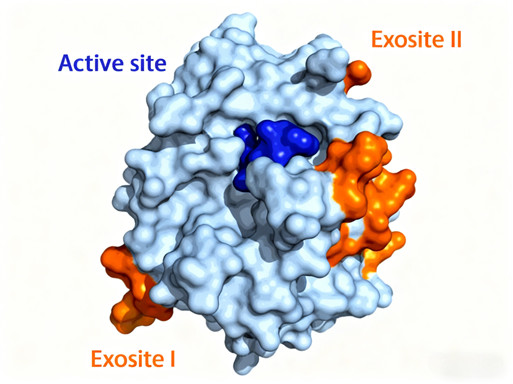
Thrombin, a 37kD serine protease derived from prothrombin (582 amino acids), is the central enzyme in the coagulation cascade. Its B chain features three key functional domains: the catalytic active site, fibrinogen-binding exosite I, and heparin-binding exosite II—all critical for mediating thrombosis. Traditional anticoagulants (e.g., heparin) act nonspecifically on multiple coagulation factors, increasing bleeding risks and limiting therapeutic precision. Nucleic acid aptamers, selected via SELEX (Systematic Evolution of Ligands by Exponential Enrichment), offer a novel solution: they specifically bind thrombin’s functional domains, enabling targeted, controllable anticoagulation. Thrombin and antithrombin III (ATIII) antibodies, alongside recombinant proteins, play indispensable roles in elucidating these mechanisms and advancing aptamer-based therapies.
3. Research Approaches
To advance aptamer-driven anticoagulation strategies, the research team adopted a mechanism-to-translation strategy:
Thrombin Structure-Function Analysis: Characterizing the catalytic active site, exosite I (fibrinogen-binding), and exosite II (heparin-binding) using biochemical and structural biology methods.
Aptamer Selection & Validation: Identifying high-affinity thrombin aptamers (e.g., HD1, HD22) via SELEX; evaluating binding affinity (nanomolar range), specificity, and mechanism (domain targeting).
Aptamer Advantage Assessment: Comparing aptamers with traditional antibodies and anticoagulants in terms of structural diversity, controllability, stability, and safety.
Preclinical Efficacy Testing: Evaluating aptamer-based anticoagulants in extracorporeal circulation and thrombotic disease models; exploring synergistic strategies (dual-domain targeting).
Tool Development: Utilizing thrombin/ATIII antibodies and recombinant proteins to validate aptamer binding, study coagulation cascade regulation, and support drug development.
4. Research Outcomes
4.1 Structural and Functional Characteristics of Thrombin
Activation & Structure: Prothrombin is proteolytically activated to form thrombin’s A chain (36 residues, structural stability) and B chain (259 residues, enzymatic activity).
Functional Domains (B chain):
Catalytic Active Site: Arginine side chain pocket mediating substrate cleavage.
Exosite I (Fibrinogen-Binding Site): Positively charged region recognizing fibrinogen and thrombin receptors.
Exosite II (Heparin-Binding Site): Anion-binding domain (six lysine residues) interacting with heparin—enhancing antithrombin inhibition via a template mechanism.
4.2 Core Advantages of Aptamers as Molecular Recognition Tools
Nucleic acid aptamers (single-stranded DNA/RNA) offer distinct merits:
Structural Diversity: Form stable conformations (G-quadruplexes, hairpins, stem-loops) for precise target recognition.
Controlled Preparation: In vitro synthesis ensures batch consistency and flexible modification.
Physicochemical Stability: Resistant to temperature/pH changes, enabling long-term storage.
Functional Programmability: Site-specific modification with fluorophores, biotin, or active groups without compromising bioactivity.
Broad Target Range: Specific to ions, small molecules, proteins, viruses, or whole cells.
Superior Tissue Penetration: Small molecular weight (7-16kD) compared to traditional antibodies.
4.3 Mechanism of Thrombin-Specific Aptamers
HD1 Aptamer (5'-GGTTGGTGTGGTTGG-3'): Forms an antiparallel G-quadruplex (in K⁺/Ca²⁺) that binds exosite I, blocking fibrinogen recognition.
HD22 Aptamer (5'-AGTCCGTGGTAGGGCAGGTTGGGGTGACT-3'): Adopts a distorted G-quadruplex, targeting exosite II to interfere with heparin-antithrombin interaction.
Binding Affinity: Nanomolar-level affinity via spatial complementarity and electrostatic interactions; reversible denaturation-renaturation supports controllable anticoagulation.
4.4 Aptamer Technology Advancing Anticoagulant Drug Development
Aptamer-based strategies outperform traditional anticoagulants:
Precision Targeting: Directly bind thrombin’s functional domains, avoiding nonspecific effects of heparin.
Controllable Pharmacokinetics: Half-life adjusted via chemical modification; anticoagulant activity neutralized by complementary sequences—reducing bleeding risks.
High Safety: Low immunogenicity; minimal risk of thrombocytopenia.
Synergistic Potential: Aptamer-nanocarrier systems enable dual-site targeting (exosite I + II) for enhanced inhibition.
Preclinical studies confirm efficacy in thrombotic models, with candidates advancing to clinical trials.
4.5 Future Directions of Aptamer Technology
Multifunctional Systems: Multivalent aptamers recognizing multiple thrombin epitopes to improve efficacy and reduce resistance.
Smart Responsive Probes: Physiologically activated (pH/enzyme) aptamers for site-specific drug release at thrombotic sites.
Technological Integration: Microfluidic screening, AI prediction, and synthetic biology to accelerate high-performance aptamer development.
5. Product Empowerment by ANT BIO PTE. LTD.
ANT BIO PTE. LTD.’s STARTER brand (antibodies) and UA brand (recombinant proteins) provide critical tools for thrombin and aptamer research:
5.1 Antithrombin III Antibodies (STARTER Brand)
"Antithrombin III Recombinant Rabbit mAb" (Catalog Nos.: S0B3117, S0B0106): High-specificity antibodies validated for IHC and WB.
Roles in Research: Enabling ATIII detection in tissues/cells, studying coagulation cascade regulation, and supporting diagnosis of hereditary ATIII deficiency.
Core Advantages: Clear cytoplasmic staining in FFPE samples, minimal batch variation, and reliable performance for thrombosis and liver function research.
5.2 Antithrombin III Recombinant Proteins (UA Brand)
Human (UA010440) and Mouse (UA010467) SerpinC1/ATIII His Tag Proteins (expressed in HEK293):
Roles in Research: Validating aptamer-antithrombin interactions, studying heparin’s regulatory role, and supporting in vitro anticoagulation assays.
These products are indispensable for basic research (thrombin biology, coagulation mechanisms) and translational applications (aptamer drug development, diagnostic assays), providing standardized tools to accelerate anticoagulation therapy innovation.
6. Brand Mission
ANT BIO PTE. LTD. is dedicated to empowering global life science advancement through three specialized sub-brands: ABSIN (general reagents, ELISA kits), STARTER (antibodies), and UA (recombinant proteins). Leveraging advanced development platforms—including recombinant rabbit/mouse monoclonal antibody generation, rapid antibody development, recombinant protein expression (E.coli, CHO, HEK293, Insect Cells), One-Step ELISA, and PTM Pan-Modification Antibody platforms—we deliver high-quality, compliant products certified by EU 98/79/EC, ISO9001, and ISO13485. Our mission is to partner with innovative pharmaceutical companies, research institutions, and scientists worldwide, providing innovative reagents and solutions that accelerate discoveries in cardiovascular medicine, thrombosis research, and precision therapy.
7. Related Product List
| UA010440 |
SerpinC1/Antithrombin III His Tag Protein, Human |
Host : Human
Expression System: HEK293
Conjugation: Unconjugated |
| UA010467 |
SerpinC1/Antithrombin III His Tag Protein, Mouse |
Host : Mouse
Expression System: HEK293
Conjugation: Unconjugated |
| S0B3117 |
Antithrombin III Recombinant Rabbit mAb
(SDT-294-303) |
Host : Rabbit
Conjugation: Unconjugated |
| S0B0106 |
Antithrombin III Recombinant Rabbit mAb
(SDT-294-211) |
Host : Rabbit |
8. AI Disclaimer
This article is AI-compiled and interpreted based on the original work. All intellectual property (e.g., images, data) of the original publication shall belong to the journal and the research team. For any infringement, please contact us promptly and we will take immediate action.
ANT BIO PTE. LTD. – Empowering Scientific Breakthroughs
At ANTBIO, we are committed to advancing life science research through high-quality, reliable reagents and comprehensive solutions. Our specialized sub-brands (Absin, Starter, UA) cover a full spectrum of research needs, from general reagents and kits to antibodies and recombinant proteins. With a focus on innovation, quality, and customer-centricity, we strive to be your trusted partner in unlocking scientific mysteries and driving medical progress. Explore our product portfolio today and elevate your research to new heights.
|
 中文
中文