 中文
中文


Home > News > Fibroblast Growth Factor 12: The Unsung Guardian of Brain and Cardiac Homeostasis
Fibroblast Growth Factor 12: The Unsung Guardian of Brain and Cardiac Homeostasis
Fibroblast Growth Factor 12: The Unsung Guardian of Brain and Cardiac Homeostasis—Supported by ANT BIO PTE. LTD.
1. Concept
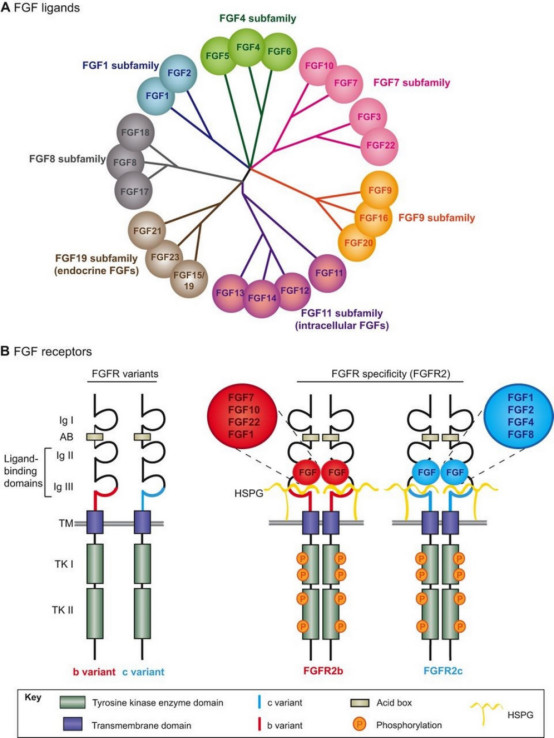
Fibroblast Growth Factor 12 (FGF12) is an intracellular regulatory protein belonging to the fibroblast growth factor (FGF) family, specifically classified under the intracellular FGF subfamily (iFGFs) alongside FGF11-FGF14. Encoded by a gene located on human chromosome 3q28, FGF12 stands out from canonical FGFs (e.g., FGF1, FGF2) due to its unique functional mode—it does not act via extracellular FGF receptors (FGFRs) but instead resides in the cytoplasm and nucleus, modulating ion channel activity to regulate neural excitability and cardiac rhythm.
In terms of molecular structure, FGF12 features a conserved FGF core domain (≈120 amino acids) forming a β-trefoil fold, enabling efficient binding to target proteins. Notably, it lacks an N-terminal signal peptide, accounting for its intracellular localization. Alternative splicing generates multiple isoforms (e.g., FGF12A, FGF12B) with tissue-specific distributions: FGF12B is highly expressed in neurons, while FGF12A is more abundant in cardiac and muscle tissues. The functional core of FGF12 lies in its ability to bind the C-terminal domain of voltage-gated sodium channels (Nav channels), stabilizing their inactive state to dampen excitability in neurons and myocardial cells—acting as an electrophysiological "brake" critical for maintaining tissue homeostasis.
2. Research Frontiers
Contemporary research on FGF12 is advancing rapidly, uncovering new dimensions of its function and therapeutic potential. A key frontier is the structural characterization of FGF12-Nav channel interactions, using techniques like cryo-electron microscopy and X-ray crystallography to map binding interfaces—critical for designing targeted modulators. Another focus is exploring the role of FGF12 isoforms in disease specificity, as distinct isoforms may contribute differently to neurological and cardiac pathologies.
In neuroscience, research is delving into FGF12’s involvement in neurodegenerative diseases (e.g., Alzheimer’s, Parkinson’s) and neurodevelopmental disorders beyond epilepsy, such as autism spectrum disorders. In cardiology, studies are investigating FGF12’s role in cardiac remodeling post-myocardial infarction and heart failure, aiming to identify its potential as a biomarker or therapeutic target. Additionally, emerging evidence links FGF12 to cancer and chronic pain, expanding its research scope to oncology and pain management.
Technological advancements, including CRISPR-based gene editing and organoid models (e.g., brain organoids, cardiac organoids), are enabling precise validation of FGF12’s causal role in diseases. Meanwhile, the development of small-molecule modulators and peptide drugs targeting the FGF12-Nav interaction is progressing toward clinical translation, offering novel therapies for treatment-resistant conditions like refractory epilepsy and atrial fibrillation.
3. Research Significance
FGF12’s significance spans basic biology and clinical medicine, with profound implications for multiple disease areas. In the nervous system, its regulation of neural excitability is foundational to maintaining neural network stability—dysfunction is directly linked to epilepsy and other neurological disorders. Understanding FGF12’s role provides critical insights into disease pathogenesis and paves the way for precision therapies that avoid the side effects of broad-spectrum drugs.
In cardiology, FGF12’s modulation of cardiac electrical activity makes it a key player in arrhythmia prevention and management. Its potential as a therapeutic target offers alternatives to traditional antiarrhythmic drugs, which often have limited efficacy or adverse effects. For cancer and chronic pain, exploring FGF12’s role in regulating cell electrophysiology and signaling pathways opens new avenues for targeted treatments, addressing unmet medical needs.
From a basic research perspective, FGF12’s unique intracellular function expands our understanding of FGF family biology, challenging the traditional paradigm of FGFR-mediated signaling. Its evolutionary conservation in mammals underscores its functional importance, making it a valuable model for studying ion channel regulation and tissue homeostasis.
4. Physiological Functions, Disease Associations, and Product Applications
4.1 Physiological Functions of FGF12
4.1.1 Regulation of Neural Excitability
FGF12 is predominantly expressed in brain regions like the hippocampus, cortex, and cerebellum, where it binds Nav channels (e.g., Nav1.2, Nav1.6). By stabilizing the inactive state of these channels, it reduces action potential firing frequency, maintaining the excitation-inhibition balance of neural networks. This regulation is critical for preventing excessive synchronized discharges and supporting normal cognitive function, neural development, and synaptic plasticity.
4.1.2 Modulation of Cardiac Rhythm
In atrial and ventricular myocardial cells, FGF12 interacts with Nav1.5 channels, shortening action potential duration and stabilizing cardiac electrical activity. This "voltage stabilizer" effect reduces the risk of arrhythmias, ensuring the heart maintains a regular rhythm under physiological stress. FGF12 also participates in adaptive cardiac remodeling, responding to changes in cardiac function to preserve electrical homeostasis.
4.1.3 Emerging Functions in Other Tissues
Beyond the brain and heart, FGF12 may regulate ion channel activity in immune cells, epithelial cells, and cancer cells. It is also implicated in pain signal transmission, muscular function, and cell proliferation—though these roles require further validation.
4.2 Disease Associations of FGF12
4.2.1 Neurological Diseases
Epilepsy: Gain-of-function mutations (e.g., FGF12 p.R52H) enhance Nav channel inhibition, leading to neuronal hyperexcitability and early-onset epileptic encephalopathies (e.g., Dravet syndrome). FGF12 knockout mice exhibit spontaneous seizures and cognitive deficits, confirming its neuroprotective role.
Neurodevelopmental/Neurodegenerative Disorders: Dysregulated FGF12 expression is associated with cognitive impairment, migraines, and potentially neurodegenerative diseases, though mechanistic links are still being explored.
4.2.2 Cardiac Diseases
Arrhythmias: Loss-of-function mutations or downregulation of FGF12 increase Nav channel activity, predisposing to atrial fibrillation, early repolarization syndrome, and ventricular tachycardia. Cardiac-specific FGF12 overexpression in mice confers resistance to arrhythmias.
Heart Failure/Myocardial Infarction: FGF12 expression changes parallel electrical remodeling in these conditions, suggesting a role in adaptive or pathological responses.
4.2.3 Cancer and Other Diseases
Cancer: Abnormal FGF12 expression is detected in hepatocellular carcinoma and glioma, potentially regulating cancer cell migration and invasion via ion channel modulation. It may act as a tumor suppressor by inhibiting pro-cancerous ion channel activity.
Chronic Pain: FGF12 abnormalities alter Nav channel function in pain-sensing neurons, contributing to neuropathic pain.
Muscular Diseases: Downregulation of FGF12 is associated with electrical instability in muscular dystrophy models.
4.3 How ANT BIO PTE. LTD. Products Support FGF12 Research
ANT BIO PTE. LTD., through its sub-brand UA (specializing in recombinant proteins), provides high-quality FGF12 proteins that are indispensable for advancing research on FGF12’s function, disease associations, and therapeutic potential.
Key products and their applications include:
UA040116 (FGF-12 Protein, Human): Expressed in E. coli, this recombinant human FGF12 protein is characterized by high purity and biological activity. It is ideal for in vitro studies, such as mapping FGF12-Nav channel binding interfaces, investigating signaling mechanisms, and screening small-molecule modulators. It also supports functional validation in cell-based assays (e.g., neuronal or cardiac cell cultures) to assess ion channel regulation.
UA040270 (FGF-12 Protein, Mouse/Rat): A recombinant FGF12 protein optimized for rodent models, this product enables in vivo and in vitro research on animal disease models (e.g., epilepsy, arrhythmia). It is valuable for validating FGF12’s role in disease pathogenesis, testing therapeutic strategies, and studying isoform-specific functions.
Both products undergo rigorous quality control, ensuring consistency, low endotoxin levels, and reliable performance—critical for generating reproducible data in FGF12 research.
5. Brand Mission
ANT BIO PTE. LTD. is dedicated to empowering the global life science community with high-quality, innovative biological reagents and solutions. With 15 years of experience in antibody and protein development, the company leverages advanced platforms—including recombinant antibody development (rabbit/mouse monoclonal), recombinant protein expression systems (E.coli, CHO, HEK293, Insect Cells), One-Step ELISA, and PTM Pan-Modification Antibody platforms—to deliver a comprehensive product portfolio.
Through its three specialized sub-brands—Absin (general reagents and kits), Starter (antibodies), and UA (recombinant proteins)—ANT BIO PTE. LTD. adheres to international certifications (EU 98/79/EC, ISO9001, ISO13485) and strict quality standards. The company’s mission is to accelerate scientific discovery by providing tools that enhance experimental precision, efficiency, and reproducibility. ANT BIO PTE. LTD. is committed to supporting researchers in basic science, drug development, and translational medicine, ultimately advancing human health and addressing global challenges in disease treatment.
6. Related Product List
| Product Code | Product Name |
| UA040116 | FGF-12 Protein, Human |
| UA040270 | FGF-12 Protein, Mouse/Rat |
7. AI Disclaimer
This article is AI-compiled and interpreted based on the original work. All intellectual property (e.g., images, data) of the original publication shall belong to the journal and the research team. For any infringement, please contact us promptly and we will take immediate action.
ANT BIO PTE. LTD. – Empowering Scientific Breakthroughs
At ANTBIO, we are committed to advancing life science research through high-quality, reliable reagents and comprehensive solutions. Our specialized sub-brands (Absin, Starter, UA) cover a full spectrum of research needs, from general reagents and kits to antibodies and recombinant proteins. With a focus on innovation, quality, and customer-centricity, we strive to be your trusted partner in unlocking scientific mysteries and driving medical progress. Explore our product portfolio today and elevate your research to new heights.
Related News
- Prestained Protein Marker: A Comprehensive Guide for Western Blot and Protein El 9/17/2026
- PSEN1 Antibody: A Critical Tool for Deciphering Alzheimer's Disease Pathogenesis 9/16/2026
- SHP Substrate 1 Recombinant Protein: Molecular Design, Functional Mechanisms and 9/15/2026
- Research Progress on Hepatic Lectin H1 Protein 9/14/2026
- PIC Paired Antibodies: A Comprehensive Analysis of Principles, Preparation, and 9/11/2026
- CMS: Initial Prescriptions for Silevimig Injection, the World's First Bispecific 9/10/2026
- Precision in Practice: Why Skilled Manufacturing Remains Central to Titan Enterp 9/10/2026
- Adagene Achieves Milestone in Collaboration with Exelixis for Advancement of SAF 9/10/2026
- Avi-Tag Technology: High-Precision Biotinylation Labeling Facilitates Molecular 9/10/2026
- ANT BIO: The Remarkable Biotinylated Proteins 9/9/2026