 中文
中文


Home > News > Mastering Animal Injection Techniques: A Comprehensive Guide for Reliable Basic Research
Mastering Animal Injection Techniques: A Comprehensive Guide for Reliable Basic Research
- 1. Concept
In both disease treatment research and basic scientific inquiry, effective delivery of drugs, viral vectors, or other biological reagents into animal models is a fundamental step for achieving valid experimental outcomes. Among various administration routes, injection techniques stand out as critical methods for precise delivery—especially when working with tool viruses like lentiviruses and adeno-associated viruses (AAV), which are indispensable for studying gene function, metabolic pathways, and disease mechanisms.
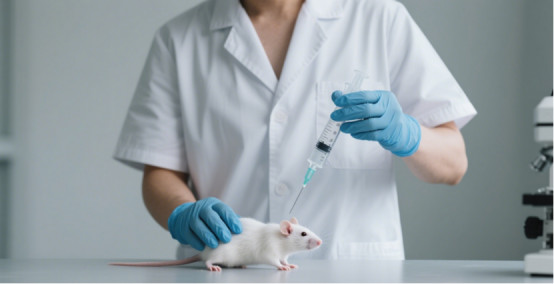
Animal injection encompasses a range of specialized techniques tailored to research objectives, animal species/strain, age, and reagent properties. These methods include systemic delivery routes (e.g., tail vein injection), targeted local delivery (e.g., stereotactic brain injection), and site-specific administration (e.g., subretinal injection). Selecting the appropriate injection strategy not only ensures efficient reagent delivery but also minimizes animal stress, preserves animal welfare, and guarantees the reproducibility and reliability of experimental data—key pillars of rigorous scientific research.
2. Research Frontiers
Contemporary research in animal injection techniques is driven by the need for enhanced precision, reduced invasiveness, and improved compatibility with advanced experimental models. One key frontier is the optimization of targeted delivery methods, such as stereotactic brain injection and subretinal injection, to enable more accurate targeting of specific tissues or cell populations—critical for gene therapy research and neuroscience studies. Technological advancements, including the development of microsyringes with ultra-fine needles and real-time imaging-guided injection systems, have significantly improved the accuracy of these techniques, minimizing off-target effects and reducing tissue damage.
Another emerging area is the refinement of injection protocols for novel animal models, such as neonatal mice, zebrafish, and organoid-derived xenografts, where traditional methods may be impractical or ineffective. Researchers are also exploring strategies to enhance reagent bioavailability post-injection, such as combining injection with sustained-release formulations or tissue-penetrating agents, to extend the duration of experimental effects and reduce the need for repeated administrations.
Additionally, there is a growing focus on standardizing injection procedures across research institutions to address variability in experimental outcomes caused by differences in technique. This includes the development of training tools, such as virtual reality simulators and standardized operating protocols (SOPs), to improve the consistency and proficiency of researchers—particularly novice operators.
3. Research Significance
Mastering animal injection techniques is indispensable for advancing basic and translational research. In gene function studies, precise delivery of viral vectors (e.g., AAV, lentiviruses) via injection is essential for manipulating gene expression in specific tissues or organs, enabling researchers to decipher the role of target genes in disease pathogenesis. For drug development, reliable injection methods ensure consistent exposure of animal models to test compounds, facilitating accurate evaluation of efficacy, pharmacokinetics, and safety.
In fields such as neuroscience, ophthalmology, and oncology, specialized injection techniques (e.g., stereotactic brain injection, subretinal injection, intratumoral injection) enable targeted intervention in disease-relevant sites, providing insights that would be unattainable with systemic administration. Moreover, standardized injection practices are critical for ensuring the reproducibility of research results—an urgent priority in the scientific community—while adhering to ethical guidelines and animal welfare principles.
Beyond experimental validity, proper injection techniques minimize animal discomfort and mortality, aligning with the 3Rs (Replacement, Reduction, Refinement) framework in animal research. This not only upholds ethical standards but also reduces experimental variability caused by animal stress or injury, leading to more robust and translatable findings.
4. Key Injection Techniques, Operational Guidelines, and Product Applications
4.1 Core Animal Injection Techniques and Step-by-Step Protocols
4.1.1 Tail Vein Injection: Efficient Systemic Delivery
Widely used in mice and rats for systemic administration of viral vectors, drugs, or cells, this technique enables rapid distribution throughout the body.
* Procedure:
1. Gently handle the animal to calm it, then place it in a restraint device to expose the tail.
2. Dilate tail veins by wiping with an alcohol cotton ball or applying mild heat (e.g., warm water or a low-heat lamp).
3. Straighten the tail and identify the lateral tail veins (distal one-third of the tail is optimal for insertion).
4. Insert the needle parallel to the vein with the bevel facing up; minimal resistance indicates proper placement.
5. Slightly retract the plunger—observe blood reflux to confirm vascular access, then inject slowly.
6. Post-injection, apply gentle pressure with a cotton ball for 1 minute to prevent bleeding.
7. Return the animal to its cage and monitor for adverse reactions.
* Critical Notes: Adjust injection volume based on body weight. For example, a 6-week-old rat (≈150 g) can receive AAV9 at a dose of 3×10¹³ – 1×10¹⁴ v.g./kg, with a maximum volume of 200 µl.
4.1.2 Temporal Vein Injection: Ideal for Neonatal Mice
Suited for neonatal mice (where tail veins are underdeveloped), this technique leverages prominent temporal/facial veins for precise delivery.
* Procedure:
1. Anesthetize the pup by placing it on wet ice for 30–60 seconds (avoid prolonged exposure to prevent hypothermia).
2. Prepare a syringe with 30 µl of reagent (e.g., Evans blue for validation).
3. Secure the pup’s head under a microscope to visualize the temporal vein.
4. Insert the needle with the bevel upward; blood reflux confirms successful entry.
5. Inject slowly and observe for vessel blanching (indicates effective reagent delivery).
6. Leave the needle in place for 10–15 seconds post-injection to prevent reflux.
4.1.3 Intraperitoneal Injection (IP): Versatile Large-Volume Delivery
A simple, widely applicable technique for administering large volumes of liquid drugs, with minimal risk of organ damage when performed correctly.
* Procedure:
1. Restrain the animal in a supine position (abdomen upward) with the head slightly lowered to shift organs away from the injection site.
2. Select an injection site in the lower abdomen, ≈0.5 cm from the midline (avoiding the midline to prevent injury to the bladder or major blood vessels).
3. Insert the needle at a 30° angle, with a depth not exceeding 1 cm.
4. Confirm no blood or body fluid reflux, then inject slowly.
5. Rotate the needle slightly during withdrawal to seal the injection site and prevent leakage.
6. Monitor the animal post-injection for signs of discomfort or peritoneal irritation.
4.1.4 Subretinal Injection: Precise Ocular Delivery
Used in ophthalmic disease models and gene therapy research, this technique requires microsurgical precision for targeted retinal delivery.
* Procedure:
1. Anesthetize the animal and dilate the pupils with mydriatic drops.
2. Prepare a microsyringe with 1.5–2 µl of viral solution or drug.
3. Retract the eyelid and place a coverslip to enhance visualization of the retina.
4. Create a small perforation posterior to the corneal limbus, then insert a 33 G blunt needle into the subretinal space.
5. Inject slowly and observe for the formation of a subretinal bleb (indicates successful delivery).
6. Withdraw the needle gently and close the eyelid; monitor for ocular inflammation or leakage.
4.1.5 Stereotactic Brain Injection: Nucleus-Specific Targeting
Enables precise delivery to specific brain regions, relying on stereotaxic apparatus and brain atlas coordinates—critical for neuroscience and gene therapy research.
* Procedure:
1. Anesthetize the animal and secure its head in a stereotaxic frame.
2. Shave and disinfect the scalp, then make a midline incision to expose the skull. Identify the bregma and lambda (anatomical landmarks).
3. Determine the target nucleus coordinates using a brain atlas, then drill a small burr hole in the skull.
4. Load a microinjection system with the reagent (e.g., viral vector) and lower the needle to the target depth.
5. Inject slowly (≤0.5 µl/min) to avoid tissue damage from pressure buildup.
6. Leave the needle in place for 5–10 minutes post-injection to prevent reflux.
7. Suture the scalp, administer analgesia if needed, and monitor the animal during recovery.
4.1.6 Other Common Injection Methods
• Intramuscular Injection (IM): Used for vaccines or gene therapy; target the quadriceps or lateral thigh muscles. Insert the needle at a 90° angle, avoiding blood vessels.
• Subcutaneous Injection (SC): Suitable for slow-release formulations. Lift the skin to form a "tent," insert the needle at a 45° angle, and inject into the subcutaneous space.
• Intradermal Injection (ID): Used for immune challenge experiments. Inject superficially into the dermis; a visible bleb confirms proper placement.
• Intragastric Administration (IG): For oral drug delivery. Use a ball-tipped gavage needle to avoid airway injury; insert along the esophagus into the stomach.
• Intrathecal Injection (IT): Delivers reagents to the central nervous system. Requires accurate identification of the intervertebral space (e.g., between L5–L6 in mice) to access the cerebrospinal fluid.
• Spinal Nerve Injection: Used in peripheral nerve disease models. Involves microdissection of spinal nerves for targeted delivery; requires advanced surgical skills.
4.2 Best Practices for Successful Animal Injection
Animal Welfare First: Adhere to ethical guidelines and the 3Rs framework. Use appropriate anesthesia/analgesia, minimize restraint time, and monitor animals post-injection for distress.
Reagent Preparation: Ensure reagents (e.g., viruses, drugs) are properly diluted, sterile, and at room temperature (to avoid thermal shock).
Equipment Calibration: Verify syringe accuracy and needle sharpness. Use ultra-fine needles (27–33 G) to reduce tissue damage.
Training and Standardization: Novice operators should practice under experienced supervision. Follow standardized protocols to minimize inter-operator variability.
Validation: Use tracking agents (e.g., Evans blue, fluorescent dyes) to confirm successful delivery, especially for targeted techniques like subretinal or brain injection.
4.3 How ANT BIO PTE. LTD. Products Support Injection-Based Research
ANT BIO PTE. LTD. provides high-quality research tools that complement reliable animal injection techniques, ensuring accurate and reproducible experimental results. Through its sub-brand Starter—specializing in antibodies—the company offers a range of recombinant rabbit monoclonal and polyclonal antibodies ideal for validating the success of injection-based experiments (e.g., gene overexpression/knockdown, drug targeting).
Key applications of ANT BIO PTE. LTD. antibodies in injection-related research include:
Target Validation: Antibodies such as S0B6338 (FGF21 Recombinant Rabbit mAb) and S0B6343 (p16INK4a Recombinant Rabbit mAb) enable researchers to confirm the expression of target proteins in injected tissues (e.g., brain, liver, retina) via Western blotting, immunohistochemistry (IHC), or immunofluorescence (IF).
Efficacy Assessment: For gene therapy or drug delivery experiments, antibodies can detect changes in downstream signaling molecules or disease biomarkers, validating the biological effect of the injected reagent.
Tissue Localization: IHC/IF with ANT BIO PTE. LTD. antibodies helps visualize the distribution of injected reagents (e.g., viral vectors expressing a target protein) within tissues, ensuring targeted delivery to the desired cell population.
Quality Control: Antibodies with high specificity and purity (validated via rigorous quality control) ensure reliable detection, minimizing false-positive/negative results that could compromise injection-based studies.
5. Brand Mission
ANT BIO PTE. LTD. is dedicated to empowering the global life science community by delivering high-quality, reliable biological reagents and innovative solutions. With 15 years of experience in antibody development, the company leverages advanced technology platforms—including recombinant rabbit monoclonal antibody, recombinant mouse monoclonal antibody, rapid mouse monoclonal antibody, and recombinant protein development systems (E.coli, CHO, HEK293, Insect Cells)—as well as One-Step ELISA and PTM Pan-Modification Antibody platforms to meet the diverse needs of researchers.
Through its three specialized sub-brands—Absin (general reagents and kits), Starter (antibodies), and UA (recombinant proteins)—ANT BIO PTE. LTD. adheres to the highest international standards, holding EU 98/79/EC, ISO9001, and ISO13485 certifications. The company’s mission is to accelerate scientific discovery by providing tools that enhance experimental rigor, reproducibility, and efficiency, while upholding ethical principles and animal welfare. ANT BIO PTE. LTD. is committed to supporting researchers in advancing basic research, drug development, and translational medicine—ultimately improving human health worldwide.
6. Related Product List
| Product Code | Product Name |
| S0B6338 | FGF21 Recombinant Rabbit mAb (S-2567-21) |
| S0B6339 | Hint1 Recombinant Rabbit mAb (S-2693-67) |
| S0B6341 | LPA Rabbit Polyclonal Antibody |
| S0B6343 | p16INK4a Recombinant Rabbit mAb (S-2573-6) |
| S0B6342 | LRRC15 Recombinant Rabbit mAb (S-2473-43) |
| S0B6337 | EEA1 Recombinant Rabbit mAb (S-2604-39) |
7. AI Disclaimer
This article is AI-compiled and interpreted based on the original work. All intellectual property (e.g., images, data) of the original publication shall belong to the journal and the research team. For any infringement, please contact us promptly and we will take immediate action.
ANT BIO PTE. LTD. – Empowering Scientific Breakthroughs
At ANTBIO, we are committed to advancing life science research through high-quality, reliable reagents and comprehensive solutions. Our specialized sub-brands (Absin, Starter, UA) cover a full spectrum of research needs, from general reagents and kits to antibodies and recombinant proteins. With a focus on innovation, quality, and customer-centricity, we strive to be your trusted partner in unlocking scientific mysteries and driving medical progress. Explore our product portfolio today and elevate your research to new heights.
Related News
- PTM Analysis is Essential for Antibody Research 7/10/2026
- BioMed X and Boehringer Ingelheim Expand XSeed Labs to Advance Next-Generation E 7/10/2026
- Everest Medicines Announces Close of Exclusive Licensing Agreement with Travere 7/10/2026
- Pan Modification Microspheres for PTM Proteomics 7/9/2026
- Specific Antibodies Drive Targeted Protein Degradation 7/9/2026
- Thermo Fisher Scientific Receives First FBI Approval for Rapid DNA Crime Scene P 7/9/2026
- Selective Chemical Labeling of Protein Lysine Methacrylation 7/8/2026
- Eppendorf Focuses Outreach Programmes to Advance STEM Education in Europe 7/8/2026
- Fumaroylation: A New Hub Linking Metabolism and Epigenetics 7/7/2026
- OECD Publishes Test Guideline for ToxTracker® 7/7/2026