 中文
中文


Home > News > CD4 Antibodies: Key Characteristics and Versatile Applications in Immunological Research
CD4 Antibodies: Key Characteristics and Versatile Applications in Immunological Research
- 1. Concept of CD4 Molecule and Its Biological Significance
The CD4 molecule is a single-chain glycoprotein belonging to the immunoglobulin superfamily, anchored on the cell membrane surface. The human CD4 protein comprises 458 amino acid residues, structured into a 23-amino acid signal peptide, a 374-amino acid extracellular region (featuring two glycosylation sites), a 21-amino acid transmembrane domain, and a 40-amino acid cytoplasmic tail. Its extracellular region contains four immunoglobulin variable (IgV)-like domains, which are critical for specific immune recognition and signal transduction. Functionally, CD4 plays an indispensable role in the development, activation, and effector responses of helper T lymphocytes (Th cells). By interacting with major histocompatibility complex class II (MHC-II) molecules, CD4 stabilizes the binding of the T cell receptor (TCR) to antigen peptides and mediates intracellular signaling cascades, thereby regulating the intensity and direction of immune responses. The human CD4 gene is located on chromosome 2, while the mouse ortholog resides on chromosome 6, sharing approximately 55% sequence homology—with the cytoplasmic region being highly conserved across species.
2. Research Frontiers
CD4 has emerged as a pivotal marker and functional molecule in immunology, driving advancements in diverse research fields. Its cell-type-specific expression—primarily on helper T cells and thymocytes, with occasional expression on B cells, mononuclear phagocytes, and certain central nervous system cells—makes it a cornerstone for studying immune cell differentiation and function. Recent research frontiers focus on expanding the utility of CD4 antibodies: developing cross-species reactive antibodies to facilitate comparative studies between humans, mice, and rats; engineering humanized or recombinant antibodies to reduce immunogenicity for in vivo applications; and integrating CD4 antibody-based detection with single-cell sequencing and proteomics to dynamically analyze immune microenvironments. Additionally, CD4 antibodies are increasingly used in translational research, such as monitoring immune status in infectious diseases (e.g., HIV/AIDS), assessing tumor immune infiltration, and optimizing immunotherapeutic strategies.
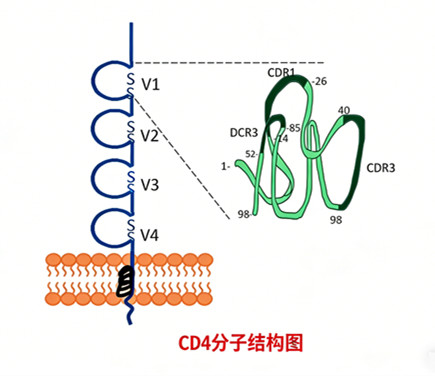
3. Research Significance
CD4 antibodies are indispensable tools in immunological research, with profound implications for basic science and clinical translation. By enabling the identification, quantification, and functional analysis of CD4+ cells, these antibodies advance our understanding of immune system homeostasis, immune cell differentiation, and disease pathogenesis. In clinical research, CD4+ T cell counting using CD4 antibodies is a gold standard for monitoring immune competence in HIV/AIDS patients. In oncology, CD4 antibody-based detection of tumor-infiltrating CD4+ T cells helps evaluate "immune-hot" tumor phenotypes and predict immunotherapy efficacy. Furthermore, CD4 antibodies facilitate the study of autoimmune diseases (e.g., rheumatoid arthritis, multiple sclerosis) by dissecting the role of CD4+ T cells in inflammation. The development of novel CD4 antibody technologies—such as recombinant engineering and multi-epitope recognition—continues to expand their application scope, bridging the gap between basic immunology and clinical practice.
4. Related Mechanisms, Research Methods, and Product Applications
4.1 Types and Core Characteristics of CD4 Antibodies
CD4 antibodies are classified based on origin and structure, each with distinct advantages:
Murine Monoclonal Antibodies: Produced via hybridoma technology, offering high specificity, uniformity, and suitability for immunoassays, flow cytometry (FACS), and immunohistochemistry (IHC).
Recombinant Antibodies: Engineered through genetic modification, allowing humanization, fragmentation, or affinity maturation to reduce immunogenicity and enhance binding efficiency—ideal for in vivo studies and therapeutic development.
Rabbit Polyclonal Antibodies: Recognize multiple epitopes of the CD4 molecule, providing higher sensitivity for detecting diverse conformations or post-translationally modified CD4 proteins.
4.2 Wide-Ranging Applications in Immunological Experiments
CD4 antibodies support diverse in vitro and preclinical research applications:
Flow Cytometry (FACS): Fluorescently labeled CD4 antibodies enable quantitative analysis of CD4+ T cell proportions and absolute counts in peripheral blood or tissue samples, critical for assessing immune status (e.g., HIV monitoring).
Immunohistochemistry (IHC) and Immunofluorescence (IF): Localize CD4 expression in tissue sections, aiding studies on immune cell infiltration in inflammatory or tumor microenvironments.
Molecular Detection: Used in Western blotting (WB) and enzyme-linked immunosorbent assays (ELISA) to quantify CD4 protein expression levels or modification states.
Functional Studies: Block CD4-MHC-II interactions to investigate T cell activation mechanisms, or mediate antibody-dependent cellular cytotoxicity (ADCC) to target CD4+ cell populations.
4.3 Selection and Technical Strategies for CD4 Antibodies
Effective use of CD4 antibodies requires strategic selection and experimental design:
Antibody Selection Criteria: Prioritize low-endotoxin, high-affinity fluorescent-conjugated monoclonal antibodies for live-cell surface labeling. For fixed tissues or denatured proteins, validate antibody binding under denaturing conditions.
Multicolor Flow Cytometry: Combine CD4 antibodies with markers for T cell subsets (e.g., FoxP3 for regulatory T cells, IFN-γ for Th1 cells) to dissect immune cell heterogeneity.
Functional Validation: Use CRISPR-Cas9 to construct CD4-deficient models or perform antibody neutralization experiments to confirm CD4’s role in immune pathways.
Quality Control: Include isotype and negative controls to minimize false-positive results and ensure experimental reproducibility.
4.4 Current Challenges and Future Directions
Despite their widespread use, CD4 antibody research faces key challenges and opportunities:
Cross-Species Reactivity: CD4 sequence divergence across species can limit the validity of comparative studies—addressable via cross-reactive antibodies targeting conserved epitopes.
Specificity and Off-Target Effects: Non-specific binding may compromise data accuracy; future developments focus on high-specificity humanized antibodies and nanobodies.
In Vivo Application Optimization: Reducing immunogenicity of CD4 antibodies to enable in vivo targeting and therapy.
Technological Integration: Combining CD4 antibody-based detection with single-cell sequencing, proteomics, and spatial transcriptomics to dynamically monitor immune microenvironments and elucidate disease mechanisms.
4.5 Product Applications in Advanced Research
ANT BIO PTE. LTD.’s CD4 antibodies support cutting-edge research in immunology, oncology, and infectious diseases:
T Cell Immunophenotyping: Identify, sort, and quantify CD4+ T cells in peripheral blood, spleen, lymph nodes, or tumor tissues, serving as a foundation for basic immunology and clinical immune monitoring.
Immune Microenvironment Analysis: Characterize CD4+ T cell infiltration, spatial distribution, and interactions with other immune or tumor cells via IHC/IF.
Disease Mechanism Studies: Investigate changes in CD4+ T cell quantity and function in HIV infection, autoimmune diseases, immunodeficiencies, and transplant rejection.
Drug Efficacy Evaluation: Assess the impact of immunomodulatory drugs, vaccines, or cell therapies on CD4+ T cell subsets in preclinical and clinical studies.
5. Brand Mission
ANT BIO PTE. LTD. is dedicated to empowering global life science research and translational medicine through innovative, high-quality reagents. We strive to develop cutting-edge antibodies, proteins, kits, and general life science products that enable researchers to unravel the complexities of immune cell biology and disease mechanisms. Our mission is to accelerate scientific discovery, facilitate the development of novel therapeutics, and improve human health by providing reliable, reproducible, and high-performance research solutions. With a commitment to excellence, innovation, and customer-centricity, we aim to be a trusted partner for researchers advancing the frontiers of immunology and precision medicine.
6. Related Product List
| Product Code | Product Name | Host |
| S0B5461 | PerCP-Cy5.5 Rat Anti-Mouse CD4 Antibody (S-R542) | Rat |
| S0B1172 | CD4 Recombinant Rabbit Monoclonal Antibody (S-634-260) | Rabbit |
| S0B5092 | FITC Rat Anti-Mouse CD4 Antibody (S-R382) | Rat |
Core Advantages of ANT BIO PTE. LTD.’s CD4 Antibodies
High Specificity and Broad Species Reactivity: Target conserved epitopes of the CD4 protein, enabling specific recognition across humans, mice, and rats with minimal cross-reactivity to other leukocyte antigens. Ensures accurate identification of CD4+ cells in complex samples.
Exceptional Affinity and Sensitivity: Leverage advanced recombinant rabbit monoclonal antibody technology for high binding affinity. Deliver clear membrane staining in IHC and high signal-to-noise ratios in flow cytometry, enabling stable detection even in low-expression samples.
Superior Batch Consistency and Application Versatility: Produced via recombinant expression systems with strict quality control, ensuring uniform potency and specificity across batches. Validated for use in FACS, IHC, IF, WB, and ELISA, providing flexible solutions for diverse experimental needs.
7. AI Disclaimer
This article is AI-compiled and interpreted based on the original work. All intellectual property (e.g., images, data) of the original publication shall belong to the journal and the research team. For any infringement, please contact us promptly and we will take immediate action.
ANT BIO PTE. LTD. – Empowering Scientific Breakthroughs
At ANTBIO, we are committed to advancing life science research through high-quality, reliable reagents and comprehensive solutions. Our specialized sub-brands (Absin, Starter, UA) cover a full spectrum of research needs, from general reagents and kits to antibodies and recombinant proteins. With a focus on innovation, quality, and customer-centricity, we strive to be your trusted partner in unlocking scientific mysteries and driving medical progress. Explore our product portfolio today and elevate your research to new heights.
Related News
- PTM Analysis is Essential for Antibody Research 7/10/2026
- BioMed X and Boehringer Ingelheim Expand XSeed Labs to Advance Next-Generation E 7/10/2026
- Everest Medicines Announces Close of Exclusive Licensing Agreement with Travere 7/10/2026
- Pan Modification Microspheres for PTM Proteomics 7/9/2026
- Specific Antibodies Drive Targeted Protein Degradation 7/9/2026
- Thermo Fisher Scientific Receives First FBI Approval for Rapid DNA Crime Scene P 7/9/2026
- Selective Chemical Labeling of Protein Lysine Methacrylation 7/8/2026
- Eppendorf Focuses Outreach Programmes to Advance STEM Education in Europe 7/8/2026
- Fumaroylation: A New Hub Linking Metabolism and Epigenetics 7/7/2026
- OECD Publishes Test Guideline for ToxTracker® 7/7/2026