 中文
中文


Home > News > What is the Role of CD133 in Cutaneous Squamous Cell Carcinoma and its Clinical Significance?
What is the Role of CD133 in Cutaneous Squamous Cell Carcinoma and its Clinical Significance?
- I. What are squamous cells and related cancers?
Squamous cells are the primary cell type composing the human epidermis and mucosal surfaces, commonly found in the skin, oral cavity, esophagus, and other areas. Squamous cell carcinoma (SCC) is a malignant tumor originating from squamous epithelium, predominantly affecting elderly individuals and frequently occurring in sun-exposed regions such as the scalp, face, and back of hands. This disease has relatively low malignancy and metastasis rates, but prognosis worsens with rapid progression or lymph node metastasis. SCC lesions are often accompanied by infection, manifesting as thick pus, foul odor, and pain. Cutaneous squamous cell carcinoma (CSCC), as a major subtype of skin cancer, arises from malignant transformation of epidermal or appendageal cells.
II. What are the clinical manifestations of cutaneous squamous cell carcinoma?
CSCC typically presents clinically as cauliflower-like masses prone to necrosis and ulceration, characterized by persistent tissue defects with liquefaction, infection, and foul odor. Early lesions appear as red indurations; without timely intervention, they may progress to verrucous infiltrative lesions, with deep invasion potentially causing distant metastasis. Common sites include the temples, forehead, and lower lip. Rapid growth necessitates pathological examination for definitive diagnosis.
III. How is cutaneous squamous cell carcinoma diagnosed?
Definitive diagnosis of CSCC requires histopathological examination. Microscopically, cancerous tissue breaches the basement membrane, forming irregular cord-like tumor nests. Based on differentiation degree, SCC is classified into high, moderate, and low grades, with differentiation inversely correlating with malignancy: well-differentiated cases show low malignancy, while poorly differentiated cases exhibit high malignancy, prone to metastasis and recurrence.
IV. What are the etiological factors of cutaneous squamous cell carcinoma?
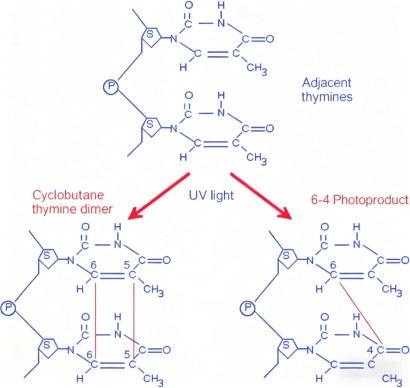
CSCC etiology involves multiple biological, physical, and chemical factors:
- Genetic mutations: Oncogene activation and tumor suppressor gene inactivation are key mechanisms. For example, Ras gene mutations promote immune escape via the Ras-MAPK pathway; P53 tumor suppressor gene mutations are common in CSCC, with expression levels correlating with tumor progression stages.
- UV radiation: UVB is the primary carcinogen, inducing oxygen radical generation, DNA damage (e.g., pyrimidine dimer formation), and immune suppression. Studies show 33.3% of individuals develop immune suppression post-UV exposure, increasing CSCC risk.
- HPV infection: High-risk HPV types (e.g., 16, 18) are strongly associated with epithelial malignancies. β-HPV infection enhances UV carcinogenesis by inhibiting DNA repair and apoptosis mechanisms.
- Organ transplantation: Post-transplant immunosuppression significantly elevates CSCC incidence, with 65-fold increased risk of aggressive/multiple lesions and 52-fold higher mortality.
- Other factors: Include chronic arsenic exposure, smoking, family history, radiation, and chronic skin conditions (e.g., scars or nevi). Dietary factors like untreated dairy consumption may increase risk, while lutein and zeaxanthin in green vegetables show protective effects.
V. How is cutaneous squamous cell carcinoma treated?
Treatment aims to completely eradicate tumors while preserving function and aesthetics:
- Surgical excision: Suitable for all stages, with resection extent determined by tumor size and depth, though incomplete removal may cause recurrence.
- Lymph node dissection: Decision depends on patient age, lesion location, and differentiation; prophylactic dissection applies to high-risk cases.
- Radiotherapy: Moderately effective for SCC, often used adjuvantly or when surgery is contraindicated, but may cause skin atrophy/pigmentation.
- Chemotherapy: Systemic adjuvant approach, e.g., 5-fluorouracil and imiquimod for superficial/recurrent cases.
- Physical therapies: Include electrocoagulation, cryotherapy, photodynamics, and laser treatment for local control.
- Gene therapy: Emerging field targeting gene expression to inhibit tumor growth, currently experimental but promising.
VI. What is the clinical significance of CD133 in cutaneous squamous cell carcinoma?
CD133 is a transmembrane protein expressed in hematopoietic stem cells, endothelial progenitors, and various solid tumors. As a cancer stem cell marker, it regulates self-renewal, differentiation, and signaling. Studies show CD133+ cells exhibit enhanced proliferation, anti-apoptosis, and resistance to TGF-β/TNF-related ligands.
In CSCC, CD133 expression significantly exceeds normal epithelium and correlates with differentiation, size, and clinical stage. Multivariate Cox analysis identifies high CD133 expression and advanced stage as independent poor prognostic factors. Thus, CD133 detection serves as a biomarker for prognosis assessment and potential therapeutic targeting by inhibiting related pathways to block malignant behaviors.
VII. Which manufacturers provide CD133 antibodies?
Hangzhou Start Biotech Co., Ltd. has independently developed the "CD133 Recombinant Rabbit Monoclonal Antibody" (Product: CD133 Recombinant Rabbit mAb (SDT-1295-22), Cat#: S0B2342), featuring high specificity, sensitivity, and staining consistency for stem/cancer stem cell detection. This recombinant rabbit mAb, validated across IHC, IF, and flow cytometry, is crucial for cancer stem cell identification, stem cell biology, and prognostic evaluation.
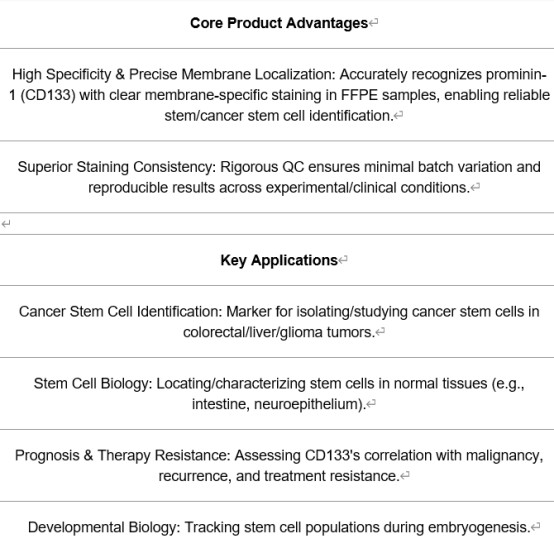
Technical Support: We provide comprehensive protocols, optimized antigen retrieval methods, and expert guidance to ensure accurate results in stem cell/tumor biology research.
Hangzhou Start Biotech is committed to delivering high-quality reagents for global biopharma and research. For details or sample requests of "CD133 Recombinant Rabbit mAb" (Cat# S0B2342), please contact us.
Product Information
| S0B5146 | FITC Mouse Anti-Human CD133 Antibody (S-R586) | Host : Mouse Conjugation : FITC |
| S0B5122 | Rat Anti-Mouse CD133 Antibody (S-R696) | Host : Rat Conjugation : Unconjugated |
| S0B1257 | Mouse Anti-Human CD133 Antibody (S-R586) | Host : Mouse Conjugation : Unconjugated |
| S0B5597 | PE-Cy7 Rat Anti-Human CD133 Antibody (S-R586) | Host : Rat Conjugation : PE-Cy7 |
| S0B5657 | APC Mouse Anti-Human CD133 Antibody (S-R586) | Host : Mouse Conjugation : APC |
Related News
- Prestained Protein Marker: A Comprehensive Guide for Western Blot and Protein El 9/17/2026
- PSEN1 Antibody: A Critical Tool for Deciphering Alzheimer's Disease Pathogenesis 9/16/2026
- SHP Substrate 1 Recombinant Protein: Molecular Design, Functional Mechanisms and 9/15/2026
- Research Progress on Hepatic Lectin H1 Protein 9/14/2026
- PIC Paired Antibodies: A Comprehensive Analysis of Principles, Preparation, and 9/11/2026
- CMS: Initial Prescriptions for Silevimig Injection, the World's First Bispecific 9/10/2026
- Precision in Practice: Why Skilled Manufacturing Remains Central to Titan Enterp 9/10/2026
- Adagene Achieves Milestone in Collaboration with Exelixis for Advancement of SAF 9/10/2026
- Avi-Tag Technology: High-Precision Biotinylation Labeling Facilitates Molecular 9/10/2026
- ANT BIO: The Remarkable Biotinylated Proteins 9/9/2026