 中文
中文


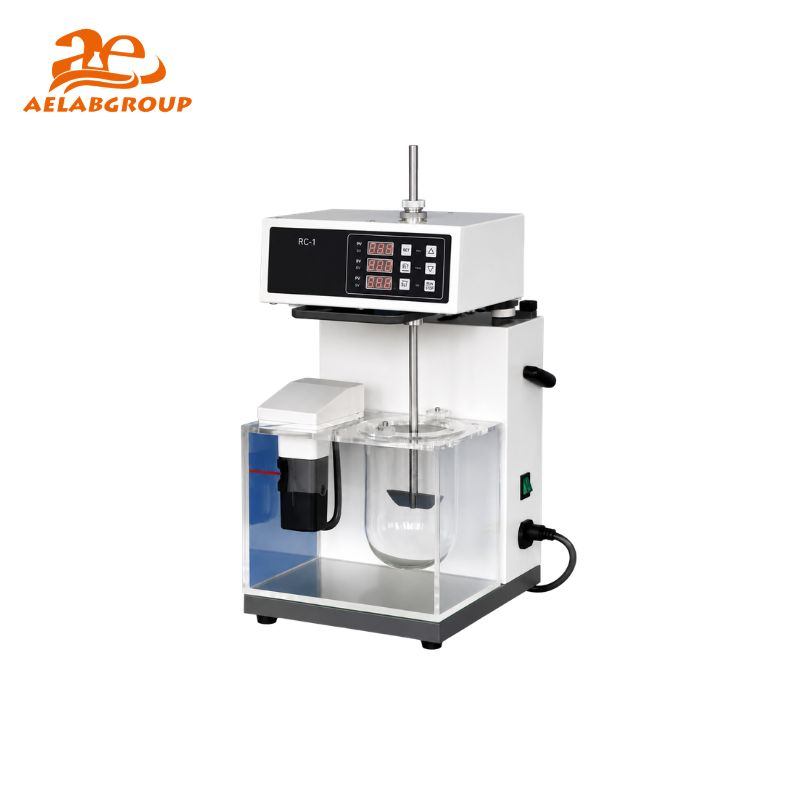
AELAB Dissolution Tester for Tablet and Capsule Dissolution Testing

- Product Detail
- Company Profile
- Routine dissolution testing of pharmaceutical tablets
- Capsule drug-release evaluation
- Immediate-release dosage-form analysis
- Modified-release formulation development
- Comparison of different pharmaceutical formulations
- Quality control of production batches
- Research and development of oral dosage forms
- Stability-study dissolution testing
- Investigation of coating and formulation effects
- Generic pharmaceutical product comparison
- Nutraceutical tablet and capsule testing
- Academic and pharmaceutical training laboratories
- Multiple configurations for different laboratory testing volumes
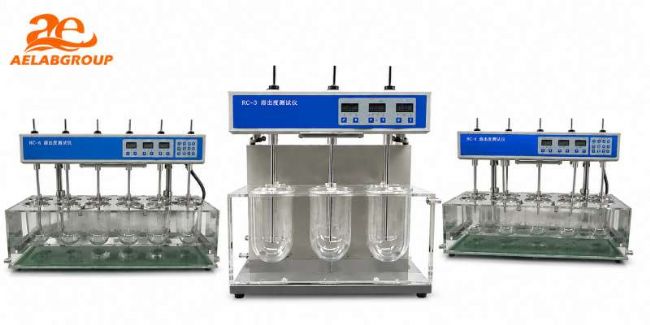
- Single-position, three-position, six-position and eight-position options
- RC and ZRS model series for different pharmaceutical workflows
- Solutions for tablet and capsule dissolution analysis
- Models suitable for research, education and routine quality control
- Controlled speed, temperature and timing functions depending on model
- Model-selection assistance based on the required application
- Technical specifications and product documentation available upon request
- International supply and export-shipping support
- Power-supply configuration support according to destination requirements
- Clean dissolution vessels, paddles and baskets after every test.
- Avoid residues that may affect the next test or cause sample carryover.
- Verify the operating temperature before introducing samples.
- Check paddle or basket alignment according to the laboratory procedure.
- Inspect glass vessels regularly for scratches, damage or contamination.
- Confirm rotation speed and timing performance at scheduled intervals.
- Prepare the dissolution medium consistently for each test series.
- Follow the product manual and internal laboratory SOPs during operation.
- Record cleaning, inspection and calibration activities for traceability.
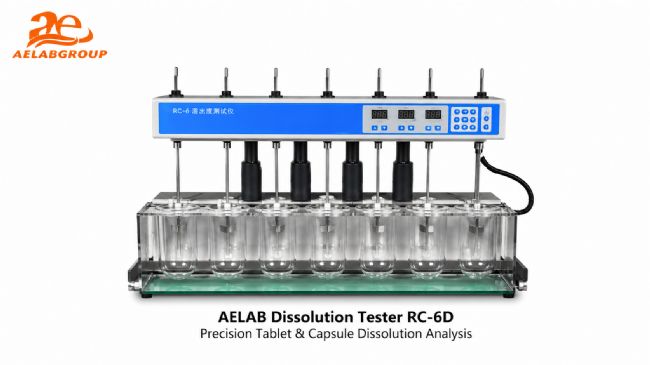
AELAB supplies dissolution testing instruments designed for evaluating the rate and extent of drug release from tablets, capsules and other solid oral dosage forms under controlled laboratory conditions.
The available product range includes compact single-position dissolution testers as well as multi-position systems for routine pharmaceutical quality control, formulation development, teaching laboratories and higher-throughput dissolution analysis.
AELAB dissolution testers are available in different configurations, including the RC and ZRS series. Customers can compare models according to the number of test positions, vessel configuration, agitation requirements, temperature-control needs, timing functions and laboratory testing volume.
Compare single-position, three-position, six-position and eight-position dissolution testing systems for pharmaceutical laboratory applications.
What Is a Dissolution Tester?
A dissolution tester is a pharmaceutical laboratory instrument used to determine how quickly and to what extent an active ingredient is released from a tablet, capsule or other dosage form into a specified dissolution medium.
During testing, the dosage form is placed in a controlled liquid medium while a paddle or basket rotates at a defined speed. The medium is maintained at the required temperature, and samples may be collected at selected time intervals to evaluate the drug-release profile.
Dissolution testing is widely used during formulation development, manufacturing quality control, batch evaluation, stability studies and comparison of pharmaceutical products.
Available Dissolution Tester Configurations
| Configuration | Typical Laboratory Use |
|---|---|
| Single-Position Tester | Suitable for individual sample testing, formulation screening, educational laboratories and low-volume research applications. |
| Three-Position Tester | Provides parallel testing of several samples while maintaining a compact laboratory footprint. |
| Six-Position Tester | Commonly selected for routine tablet and capsule quality-control workflows requiring multiple simultaneous test vessels. |
| Eight-Position Tester | Designed for laboratories requiring greater sample capacity and improved testing throughput. |
| RC Series | Includes compact and multi-position dissolution systems for routine pharmaceutical analysis and research applications. |
| ZRS-ST Series | Multi-position dissolution testing systems developed for controlled tablet and capsule dissolution analysis. |
Typical Applications
Typical Dissolution Testing Workflow
1. Prepare the Dissolution Medium
Prepare the required medium according to the laboratory method and confirm its volume, composition and temperature requirements.
2. Install Vessels and Agitation Components
Install the appropriate vessels, paddles or baskets and verify that all components are clean and correctly positioned.
3. Set Temperature, Speed and Time
Program the operating temperature, rotation speed and testing duration according to the selected dissolution method.
4. Introduce the Dosage Form
Place the tablet or capsule into the dissolution vessel using a consistent sample-introduction procedure.
5. Collect Samples at Defined Intervals
Withdraw samples manually or according to the laboratory sampling procedure at the required time points.
6. Analyze the Drug-Release Profile
Analyze collected samples using a suitable analytical method and compare the results with the applicable product specification.
How to Select the Right Dissolution Tester
The correct dissolution tester should be selected according to the dosage form, laboratory workload, required number of vessels and the operating conditions defined in the testing method. Selection should not be based only on the number of positions.
| Selection Factor | Questions to Consider |
|---|---|
| Number of Test Positions | How many tablets or capsules must be tested simultaneously during routine laboratory work? |
| Dosage Form | Will the instrument be used for tablets, hard capsules, soft capsules or other solid dosage forms? |
| Agitation Method | Does the testing procedure require paddle operation, basket operation or compatibility with both configurations? |
| Speed Control | What rotation-speed range and control precision are required by the laboratory method? |
| Temperature Control | What temperature range, stability and monitoring accuracy are required for the dissolution medium? |
| Timing Functions | Does the method require one continuous testing period or several predefined sampling time points? |
| Laboratory Throughput | Is the system intended for occasional R&D testing or daily pharmaceutical production quality control? |
| Available Bench Space | Is a compact single-position unit preferred, or is sufficient space available for a multi-position system? |
| Power Supply | What voltage and frequency are required in the destination laboratory? |
| Documentation Requirements | Are product specifications, operation manuals, calibration information or other technical documents required? |
View the complete AELAB dissolution tester range, available models and technical specifications
Dissolution Tester vs. Disintegration Tester
| Comparison | Dissolution Tester | Disintegration Tester |
|---|---|---|
| Main Purpose | Measures the rate and extent of active-ingredient release into a dissolution medium. | Measures the time required for a tablet or capsule to break apart. |
| Primary Result | Drug-release results measured at defined testing intervals. | A disintegration-time endpoint. |
| Testing Focus | Release and availability of the active ingredient. | Physical breakdown of the dosage form. |
| Typical Use | Formulation development, batch evaluation and pharmaceutical quality control. | Preliminary physical evaluation of tablets and capsules. |
Why Choose AELAB Dissolution Testers?
Operating and Maintenance Considerations
AELAB is a laboratory equipment and scientific instrument supplier based in Guangzhou, China. The company provides laboratory instruments, analytical equipment and quality-control solutions for distributors, universities, research laboratories, pharmaceutical companies and industrial customers.
The AELAB product portfolio includes pharmaceutical testing instruments, laboratory equipment, analytical systems, environmental testing instruments, sample-preparation equipment and related laboratory solutions.
Official Website: www.aelabgroup.com
Frequently Asked Questions
What does a dissolution tester measure?
It measures the rate and extent at which an active pharmaceutical ingredient is released from a tablet, capsule or other dosage form into a specified liquid medium.
Which AELAB dissolution tester models are available?
The AELAB category includes RC-1, RC-3, RC-6, RC-6D, RC-8D, RC-8DS, ZRS-3ST, ZRS-6ST and ZRS-8ST dissolution testers.
What is the difference between a single-position and multi-position dissolution tester?
A single-position model tests one sample at a time, while a multi-position system allows several samples to be tested simultaneously under controlled conditions.
Can a dissolution tester be used for both tablets and capsules?
Yes. The appropriate configuration depends on the dosage form, selected agitation method and laboratory testing procedure.
How many testing positions should a laboratory select?
The required number depends on daily sample volume, testing frequency, available bench space and whether several samples must be tested simultaneously.
What information is needed for model selection?
Customers should provide the dosage form, number of required test positions, preferred agitation method, speed and temperature requirements, power supply and destination country.
Can AELAB recommend a suitable dissolution tester?
Yes. The AELAB team can review the laboratory application and recommend suitable models, specifications and available configurations.
Send the AELAB technical sales team your dosage form, required number of vessels, preferred testing configuration, operating requirements, power supply and destination country.
AELAB can provide available model options, product specifications, optional accessories, quotation details, estimated delivery information and export-packaging support according to the selected configuration.
View AELAB Dissolution Tester Models
Email: info@aelabgroup.com
WhatsApp / WeChat: +86 158 0001 6110
Website: www.aelabgroup.com
-
AELAB GUANGZHOU CO., LTD.
AELAB is a laboratory equipment and analytical instrument supplier based in Guangzhou, China. We provide laboratory instruments, quality control equipment, analytical systems, sample preparation equipment, and related laboratory solutions for distributors, industrial laboratories, universities, research organizations, and testing centers worldwide.
AELAB offers both our own-brand products and carefully selected instruments from established manufacturers. OEM and ODM services are available for selected AELAB products, including customized branding, appearance, configuration, power supply, accessories, packaging, and documentation according to customer requirements.
For laboratory projects, distributor orders, government tenders, and complete laboratory setups, our team can provide a one-stop purchasing solution. We assist customers with product selection, technical comparison, quotation preparation, sourcing, quality inspection, export packaging, shipping coordination, and after-sales support.
Our technical team helps customers select suitable equipment based on their application, testing method, required specifications, budget, and local standards. Warranty and technical support are provided according to the product and project requirements.
AELAB operates under an established quality management system. Relevant company and product documentation may include SGS verification, ISO certification, CE, RoHS, FCC, or UL-related documentation, depending on the specific product model and configuration. Customers may contact us to confirm the available certificates before ordering.
Our equipment is widely used in industrial quality control, scientific research, universities, pharmaceutical laboratories, food and agricultural testing, environmental analysis, chemical laboratories, and other professional testing applications.
We are committed to developing long-term cooperation with distributors, laboratories, research institutions, and project contractors. If you are looking for a reliable laboratory equipment supplier with stable service and technical support, please contact AELAB.
Contact AELAB
Website:
https://aelabgroup.com
Email:
info@aelabgroup.com
WhatsApp / WeChat:
+86 15800016110
| Request Information |
| Other Products |
| Related Products |
| Recently viewed products |