 中文
中文


Home >Products> Centrifuges >Other Centrifuges> Continuous Disc stack centrifuge for solid liquid separation
Centrifuges :
High-speed Refrigerated Centrifuges
Large-capacity Centrifuges
Benchtop Centrifuges
Other Centrifuges
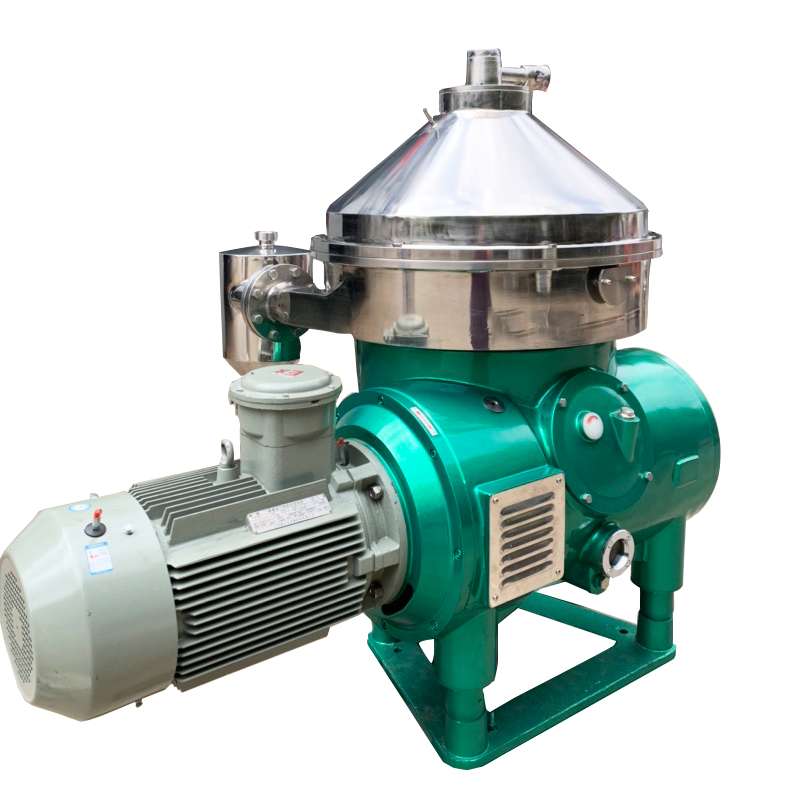
Continuous Disc stack centrifuge for solid liquid separation

- Product Detail
- Company Profile
- I. Overview Of Disc Stack Centrifuge
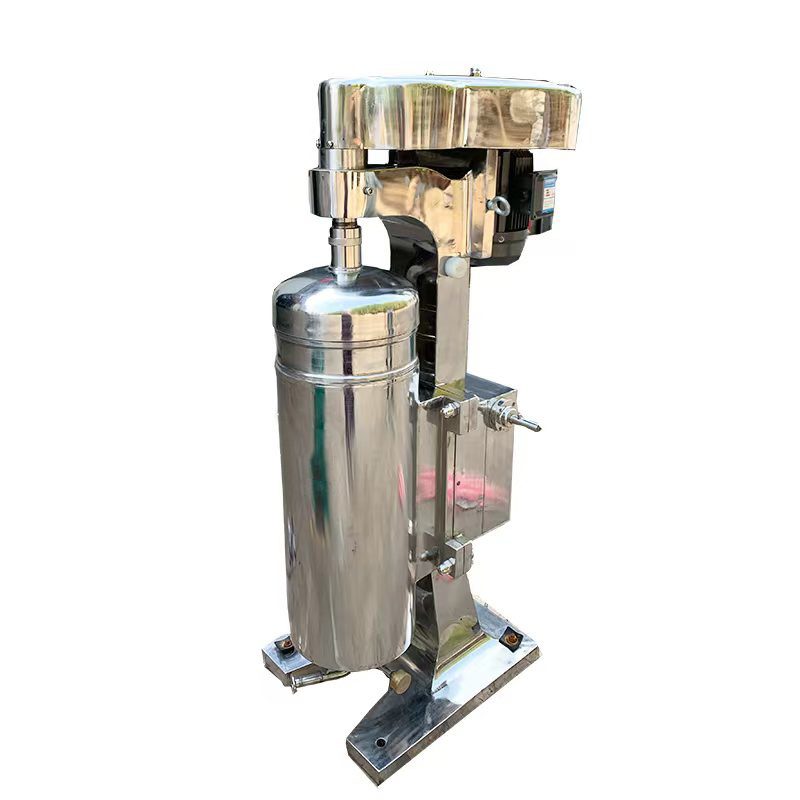
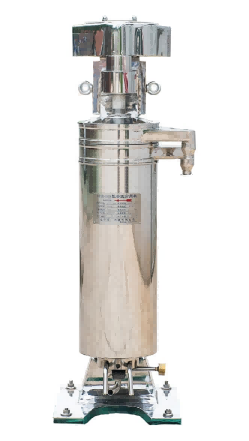
The two-phase disc centrifuge is a device designed for liquid-solid or liquid-liquid separation, utilizing centrifugal force to separate phases of differing densities. It is suitable for separating liquid-solid mixtures with low solid content (typically less than 5%) and is primarily employed in fields such as dairy purification, fruit juice clarification, beer separation, as well as the clarification of vaccines, fermentation broths, and extraction fluids (e.g., plant or animal extracts), and in various chemical processing applications.
II. Structure and Working Principle Of Disc Stack Centrifuge
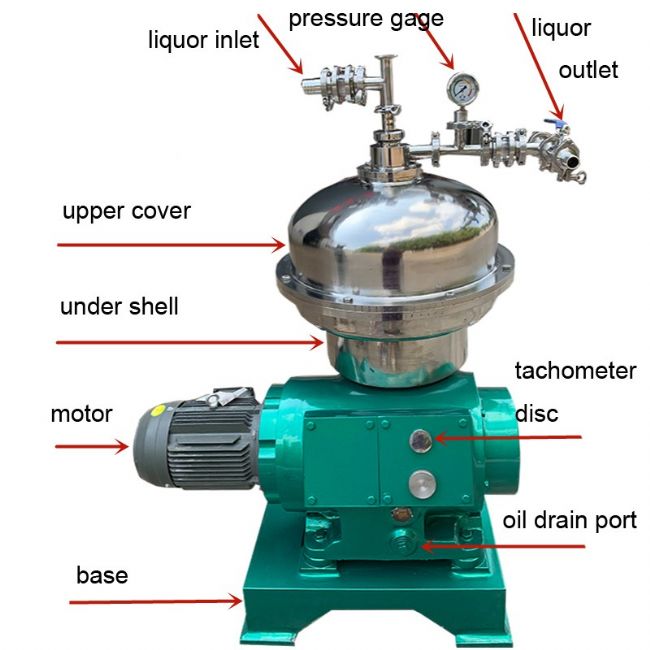
The unit consists mainly of an inlet/outlet assembly, a rotating bowl (drum), a casing, a vertical shaft, a horizontal shaft, a base frame, an electric motor, and a PLC control cabinet. The interior of the rotating bowl houses a stack of conical discs. Once the motor is activated, the bowl rotates at high speed. As the material enters the bowl from the top, the centrifugal force causes the heavier phase—whether solid residues or a heavy liquid—to move downward along the walls of the discs and accumulate in the sediment chamber. Conversely, the lighter liquid phase moves upward along the disc walls and is discharged via a centripetal pump located at the top, thereby achieving separation.
III. Features Of Disc Stack Centrifuge
☑️ High efficiency separation, with a separation factor typically ranging between 5,000 and 9,300.
☑️ Large capactiy, reaching up to 10m³/h
☑️ Optional both manual and automatic operation, it can also remote automatic control.
☑️ Simple structure and easy maintenance.
IV. Specifications Of Disc Stack Centrifuge
| Model | DHC2-300 | DHC2-400 | DHC2-500 | DHC2-550 |
| Rotary speed (rpm) | 7600 | 7200 | 6800 | 5840 |
| Equivalent area107cm2 | 17.2 | 27 | 63 | 76 |
| Throughput(L/H) | 1250 | 3500 | 8000 | 10000 |
| Motor power (KW) | 4 | 7.5 | 15 | 22 |
| Weight (kg) | 580 | 1280 | 1720 | 2300 |
| Dimension (mm) | 1050✕850✕1200 | 1495✕1130✕1485 | 1780✕1500✕1900 | 1950✕1550✕1960 |
V. FAQ Of Disc Stack Centrifuge
Q1: What is it used for?
It widely used in:
➤Chemical processing
➤Pharmaceuticals
➤Food & beverage
➤Biotechnology
➤Oil-water separation
Q2: What types of separation can it handle?
Liquid–liquid separation
Liquid–solid clarification
Three-phase separation (oil + water + solids)
Q3:What are the main advantages?
High efficiency
Continuous operation
Compact design
Suitable for fine particles
Q4:How to choose the right model?
Based on:
Material properties
Separation type
Required capacity
Purity requirements
Q5: Is it suitable for solvent extraction processes?
Yes, mainly used for post-extraction phase separation and purification.
Q6: Is customization available?
Yes, models can be customized based on process and industry needs.
Q7: How to get a quotation?
Please provide:
Material details
Capacity
Separation requirements
We will recommend the best solution quickly, please contact us for more!
-
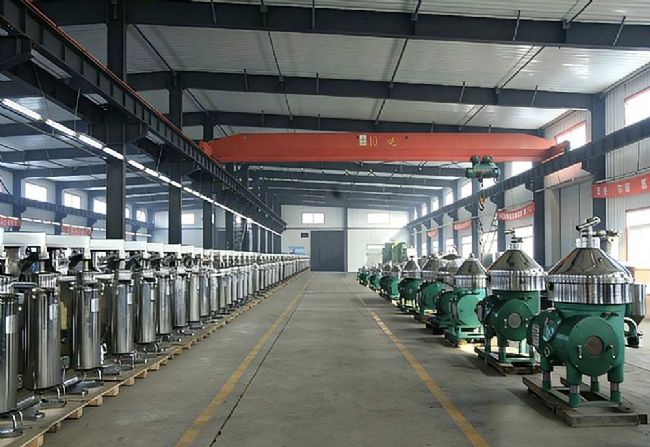
KAIMINA TECHNOLOGY Integrated of manufacturing R&D and sales of equipments on synthesis reaction, mixing and separation, evaporation and fermentation etc. Our products are mainly used in chemical industry, pharmaceutical, hydrometallurgy, food, new materials, new energy, environmental protection and other fields.
The company adheres to the principle of "customer first, service first, product first", with professional processing equipment, scientific and reasonable production technology, excellence in manufacturing requirements, strict quality control system and perfect after-sales service, and the purpose of win-win cooperation. Provide professional and high-quality products and services to every customer.
Our company currently has two specialized production and processing bases, and has carried out in-depth cooperation with Tsinghua University, Zhejiang University, Central South University, Sichuan University, Chongqing University, Tianjin University, Chinese Academy of Sciences and many other universities, continuously improving our capabilities of R&D and equipment application .
| Request Information |
| Other Products |
| Related Products |
| Recently viewed products |