Erythritol
Product Definition
Erythritol is a naturally occurring four-carbon polyol widely found in fruits, mushrooms, and fermented foods, typically produced through bio-fermentation. Its sweetness is approximately 60%–70% that of sucrose, it is extremely low in calories, participates almost entirely in human metabolism, and does not cause fluctuations in blood sugar and insulin levels, making it suitable for diabetics and those controlling their blood sugar. Erythritol has a refreshing taste with no noticeable bitter aftertaste and is not utilized by oral bacteria, thus not causing tooth decay. In the food industry, it is commonly used as a sweetener and volume filler in sugar-free or low-sugar beverages, candies, baked goods, and functional foods. Its excellent stability and safety also make it widely used in nutritional supplements and health foods.
Product Functional Category and Applications
While retaining the original meaning, it can be adjusted to a more academic and technical style, as follows:
1. When used to replace sucrose in confectionery systems, it can significantly reduce the energy level of the product and improve the digestibility of low-energy confectionery. At the same time, it has a positive impact on the flavor harmony, internal structure and storage stability of the product.
2. Due to its low melting point and weak hygroscopicity, its application in baked goods can effectively reduce the risk of moisture absorption, help maintain the stability of the product's physicochemical properties, and extend its shelf life.
3. Erythritol is not easily hydrolyzed by human digestive enzymes and does not participate in the glucose metabolism process. After ingestion, it has minimal impact on blood sugar levels and is suitable for diabetes-related functional foods. As a sucrose substitute, it can be used to prepare low-energy foods to meet the dietary needs of obese, hypertensive, and cardiovascular disease patients. It has good metabolic tolerance in the intestines and is suitable for people with sensitive gastrointestinal function. It also has anti-caries properties and can be used in oral health-related foods.
4. In the fermentation system, erythritol can reduce the osmotic pressure of the system and inhibit the lactic acid fermentation process to a certain extent, thereby slowing down the accumulation of acidity and helping to extend the shelf life and shelf stability of the product.
5. In beverage products, erythritol mainly improves the overall sensory quality by enhancing the purity of sweetness and the fullness of the mouthfeel, improving smoothness, reducing bitterness, and masking off-flavors.
Product Summary
Generic Names: Erythritol
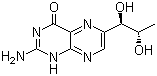
Chemical Name : ( 2R,3S)-Butane-1,2,3,4-Tetraol
CAS Registry Number : 149-32-6
EINECS login ID (EINECSRegistryNumber) : 205-737-3
Chemical equation : Molecular Formula : C₄H₁₀O₄
Molecular Weight: 122.12 g/mol
Synonyms : Acetyltetraol
Product technical specifications and MSDS
|
Appearance
|
White powder
|
|
Erythritol (calculated as C4H10O4 , on a dry basis), w / %
|
99.5~100.5
|
|
Reducing sugar (calculated as glucose), w/%
|
≤0.3
|
|
Ribitol and glycerol (on a dry basis), w/%
|
≤0.1
|
|
Burning residue, w/%
|
≤0.1
|
For specific product specifications and MSDS,please contact the product manager.
Product Packaging and Storage
Packaging: 25kg bags, 20kg bags
Storage conditions: Store in a well-ventilated, dry, and cool warehouse, taking care to prevent moisture.
Shelf life: 2 years (unopened).
bio-equip.cn
 中文
中文