1. Concept of CD25 and Its Immunological Significance
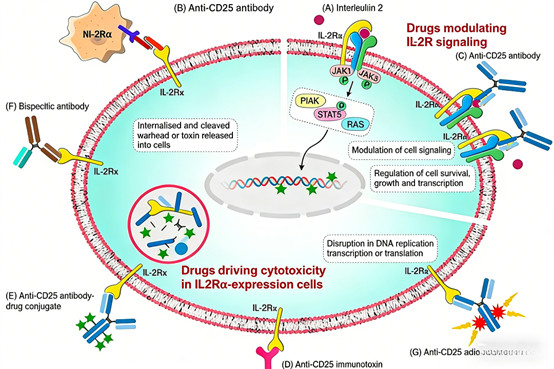
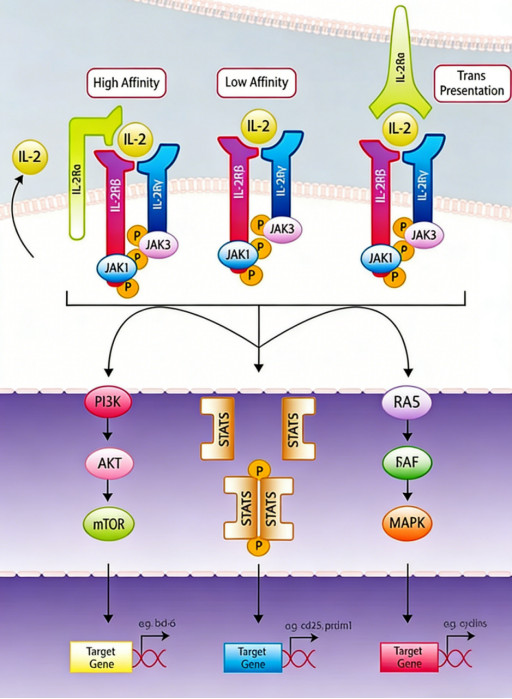
CD25, also known as the alpha chain of the interleukin-2 receptor (IL-2Rα), is a key component of the functional IL-2 receptor complex, forming a high-affinity binding site for IL-2 alongside the beta chain (CD122) and gamma chain (CD132). This complex is indispensable for IL-2-mediated signal transduction, which regulates critical immune processes. Under physiological conditions, CD25 is weakly expressed on resting T cells, B cells, and monocytes; however, its expression is rapidly upregulated upon T cell receptor activation, playing a pivotal role in modulating T cell proliferation and differentiation. A defining feature of CD25 is its constitutive high expression on regulatory T cells (Tregs), rendering it a signature surface marker for the identification and targeted manipulation of this immunosuppressive cell population.
2. Research Frontiers
In the context of tumor immunology, CD25 has emerged as a promising therapeutic target due to its dual expression patterns in the tumor microenvironment (TME). While most solid tumor cells exhibit low CD25 expression, tumor-infiltrating Tregs consistently overexpress CD25, enabling these cells to suppress effector T cell activity and promote tumor immune escape—an event closely linked to an imbalanced Teff/Treg ratio and poor clinical prognosis. Additionally, in certain hematologic malignancies (e.g., T-cell leukemia and Hodgkin's lymphoma), tumor cells themselves highly express CD25, making it a direct target for anti-tumor intervention. Recent advances in CD25-targeted therapy focus on developing strategies to selectively modulate Treg function, block pro-tumorigenic IL-2 signaling, or deliver cytotoxic agents to CD25-positive cells, with ongoing preclinical and clinical studies exploring monoclonal antibodies, antibody-drug conjugates (ADCs), and combination regimens with immune checkpoint inhibitors.
3. Research Significance
CD25-targeted immunotherapy represents a transformative approach to overcoming tumor immune escape. By specifically targeting CD25, researchers and clinicians can disrupt the immunosuppressive network in the TME, restore the anti-tumor activity of effector T cells, and rebalance the immune landscape. This strategy holds great promise for treating both hematologic malignancies and solid tumors, addressing unmet clinical needs in patients who are unresponsive to conventional therapies or immune checkpoint inhibitors. Furthermore, understanding the role of CD25 in immune regulation provides valuable insights into the mechanisms of tumor progression and immune tolerance, guiding the development of more precise and effective immunotherapeutic strategies. CD25 antibodies also serve as essential research tools for studying Treg biology, immune activation, and the dynamics of the TME, accelerating advancements in immunology and oncology.
4. Related Mechanisms, Research Methods, and Product Applications
4.1 Core Mechanisms of CD25-Targeted Anti-Tumor Therapy
CD25-based therapeutic strategies exert anti-tumor effects through three primary mechanisms:
Treg Depletion: CD25 antibodies trigger antibody-dependent cellular cytotoxicity (ADCC) or complement-dependent cytotoxicity (CDC), selectively eliminating CD25-high-expressing Tregs in the TME. This depletion restores the functional capacity of effector T cells, enhancing anti-tumor immune responses.
IL-2 Signaling Blockade: Certain CD25 antibodies competitively bind to CD25, preventing IL-2 from interacting with its receptor. This interference disrupts IL-2-dependent survival signals in Tregs, inducing their apoptosis while sparing effector T cells (which can utilize low-affinity IL-2 receptors).
Targeted Cytotoxic Delivery: CD25-targeted ADCs conjugate antibodies to cytotoxic payloads (e.g., toxins or radioactive isotopes), enabling specific delivery to CD25-positive cells (tumor cells or Tregs). This approach achieves selective killing of pathogenic cells while minimizing off-target toxicity.
4.2 Current Status of CD25-Targeted Drug Development
The pipeline of CD25-targeted therapeutics includes multiple promising candidates at various stages of development:
Monoclonal Antibodies: Both IL-2 signaling-blocking and non-blocking antibodies are under investigation. Non-blocking antibodies show particular potential, as they deplete Tregs without interfering with IL-2-mediated activation of effector T cells, preserving beneficial immune responses.
Antibody-Drug Conjugates (ADCs): CD25-targeted ADCs have demonstrated preliminary efficacy in treating lymphomas, leveraging the high CD25 expression on malignant cells to deliver potent cytotoxic agents.
Combination Therapies: Preclinical studies have shown synergistic effects when CD25 antibodies are combined with immune checkpoint inhibitors (e.g., anti-PD-1/PD-L1 antibodies). This combination enhances anti-tumor immunity by both depleting Tregs and relieving checkpoint-mediated suppression.
Cell Therapies: Chimeric antigen receptor (CAR) natural killer (NK) cell therapies targeting CD25 are being explored, offering a novel approach to specifically recognize and eliminate CD25-positive tumor cells.
4.3 Challenges and Optimization Directions in CD25 Antibody Therapy
Despite significant progress, CD25-targeted therapy faces several key challenges that require optimization:
Target Specificity and Safety: CD25 is transiently expressed on activated effector T cells, raising the risk of unintended depletion of beneficial immune cells. Future antibodies must be engineered to distinguish between Tregs and activated effector T cells, improving therapeutic windows.
Antibody Function Enhancement: Modifying the Fc region of CD25 antibodies to enhance ADCC/CDC activity can improve Treg depletion efficiency. Additionally, optimizing antibody affinity and pharmacokinetics can extend half-life and reduce dosing frequency.
Dosing and Combination Strategy Optimization: Balancing efficacy and toxicity requires refining dosage regimens and treatment cycles. Further exploration of combinations with chemotherapy, radiotherapy, cancer vaccines, or metabolic pathway inhibitors is needed to maximize therapeutic outcomes.
Biomarker Development: Identifying predictive biomarkers (e.g., Treg density, CD25 expression levels, or immune cell subsets) will enable patient stratification, ensuring CD25-targeted therapies are administered to those most likely to benefit.
4.4 Future Directions in CD25-Targeted Therapy
As research advances, the future of CD25-targeted immunotherapy will focus on:
Novel Antibody Design: Developing bispecific antibodies (e.g., anti-CD25/anti-PD-1) or conditionally activated antibodies that selectively bind CD25 in the TME, enhancing tumor targeting and reducing off-target effects.
Mechanistic Deepening: Elucidating the dynamic expression of CD25 across immune cell subsets and its downstream signaling networks in the TME to guide rational drug design and combination strategies.
Innovative Combination Therapies: Exploring synergies between CD25 antibodies and cell therapies (e.g., CAR-T cells), cancer vaccines, or metabolic modulators to construct multi-faceted anti-tumor immune responses.
Solid Tumor Adaptation: Optimizing drug delivery systems (e.g., nanoparticles) or local administration routes to overcome TME barriers, expanding the application of CD25-targeted therapies to solid tumors.
4.5 Product Applications in Research and Preclinical Studies
ANT BIO PTE. LTD.’s CD25 antibodies are essential tools for advancing immunology and oncology research:
Treg Identification and Characterization: Combined with anti-CD4 and anti-FoxP3 antibodies, these antibodies enable accurate quantification and phenotyping of Tregs in mouse peripheral immune organs, tissues, or tumor microenvironments, supporting studies on immune tolerance and tumor immune escape.
T Cell Activation Analysis: Detect CD25 upregulation on CD4⁺ or CD8⁺ T cells following antigen or mitogen stimulation, assessing early activation and proliferation potential.
Disease Model Research: Facilitate studies on immunosuppression and autoimmune diseases (e.g., experimental autoimmune encephalomyelitis [EAE], inflammatory bowel disease [IBD]) by analyzing Treg proportion and function in model mice.
Immunotherapy Efficacy Evaluation: Monitor Treg dynamics in tumor-infiltrating lymphocytes (TILs) in mouse tumor models, assessing the impact of immunotherapies (e.g., checkpoint inhibitors) on the TME.
Multicolor Flow Cytometry: FITC, PE, or PerCP-Cy5.5-conjugated antibodies enable flexible integration into complex multicolor panels, supporting deep immune subset analysis.
5. Brand Mission
ANT BIO PTE. LTD. is dedicated to empowering global life science research and translational medicine through innovative, high-quality reagents. We strive to develop cutting-edge antibodies, proteins, kits, and general life science tools that enable researchers to unravel the complexities of immune regulation and tumor biology. Our mission is to accelerate scientific discovery, facilitate the development of novel therapeutics, and improve patient outcomes in oncology and immunology. With a commitment to excellence, reliability, and customer-centricity, we aim to be a trusted partner for researchers and clinicians advancing the frontiers of precision medicine.
6. Related Product List
| Product Code |
Product Name |
Host |
| S0B3437 |
CD25/IL-2R alpha Recombinant Rabbit mAb (SDT-161-221) |
Rabbit |
| S0B8011 |
PE Rat Anti-Mouse CD25 Antibody (S-R441) |
Rat |
| S0B8372 |
Biotin Rat Anti-Mouse CD25 (IL-2Rα) Antibody (S-3558) |
Rat |
| S0B8238 |
PerCP-Cy5.5 Rat Anti-Mouse CD25 Antibody (S-R441) |
Rat |
| S0B5215 |
FITC Rat Anti-Mouse CD25 Antibody (S-R441) |
Rat |
Core Advantages of ANT BIO PTE. LTD.’s CD25 Antibodies
Bright, Stable Fluorescent Signals: Optimized labeling with high fluorophore-to-protein (F/P) ratios ensures intense, consistent signals in flow cytometry, enabling clear discrimination of positive and negative cell populations even in multicolor experiments.
Exceptional Specificity: Rigorously validated to specifically target mouse CD25 (IL-2Rα) without cross-reactivity to other leukocyte surface markers, ensuring accurate immunophenotyping of Tregs, activated T cells, and B cells.
Ready-to-Use Convenience: Supplied in pre-titrated, ready-to-use buffers, eliminating the need for time-consuming optimization. Strict quality control guarantees batch-to-batch consistency in fluorescence intensity, staining index, and specificity, ensuring reproducible results.
7. AI Disclaimer
This article is AI-compiled and interpreted based on the original work. All intellectual property (e.g., images, data) of the original publication shall belong to the journal and the research team. For any infringement, please contact us promptly and we will take immediate action.
ANT BIO PTE. LTD. – Empowering Scientific Breakthroughs
At ANTBIO, we are committed to advancing life science research through high-quality, reliable reagents and comprehensive solutions. Our specialized sub-brands (Absin, Starter, UA) cover a full spectrum of research needs, from general reagents and kits to antibodies and recombinant proteins. With a focus on innovation, quality, and customer-centricity, we strive to be your trusted partner in unlocking scientific mysteries and driving medical progress. Explore our product portfolio today and elevate your research to new heights.
 中文
中文