 中文
中文


Home > News > Accurately Analyzing Key Features of Programmed Inflammatory Cell Death: A Guide to Pyroptosis Detection
Accurately Analyzing Key Features of Programmed Inflammatory Cell Death: A Guide to Pyroptosis Detection
- 1. Concept
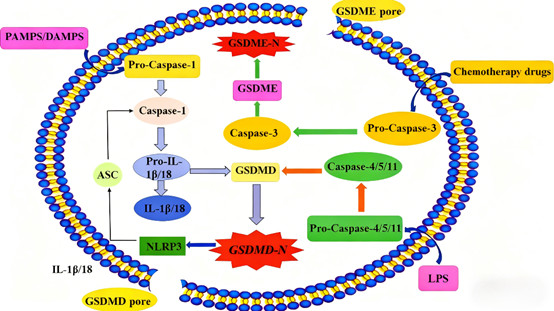
Pyroptosis is a well-characterized form of programmed cell death inherently linked to inflammation. Unlike apoptosis, its core hallmark is the activation of inflammatory caspases (primarily caspase-1, 4, 5, 11) and the massive release of pro-inflammatory factors. It is executed via two main pathways: the classical pathway dependent on caspase-1 activation and the non-classical pathway mediated by caspase-4/5 (in humans) or caspase-11 (in mice). Both pathways converge on the cleavage of Gasdermin D (GSDMD), which forms membrane pores leading to cell rupture and release of inflammatory contents. Pyroptosis plays a pivotal role in diverse pathological processes, including cerebrovascular accidents, myocardial infarction, malignant tumors, and infectious diseases—making its accurate detection critical for understanding disease mechanisms.
2. Research Frontiers
2.1 Molecular Mechanisms and Biological Significance of Pyroptosis
Pyroptosis’s unique molecular pathways underpin its biological functions:
* Pathway Convergence: Classical and non-classical pathways both target GSDMD, the key executor protein. Cleavage of GSDMD is irreversible and necessary for pyroptosis execution.
* Inflammatory Amplification: Release of pro-inflammatory factors (IL-1β, IL-18) recruits immune cells, amplifying inflammatory responses—supporting host defense against pathogens but contributing to tissue damage in chronic inflammation.
* Disease Relevance: Dysregulated pyroptosis is implicated in acute (e.g., sepsis) and chronic (e.g., neurodegeneration) diseases, highlighting its potential as a therapeutic target.
2.2 Key Detection Indicators for Pyroptosis
Comprehensive pyroptosis detection relies on three core molecular indicators:
* GSDMD Cleavage Verification: Resting GSDMD is a 53kDa full-length protein; inflammatory caspases cleave it into a 30kDa N-terminal active fragment. Western blot detects this molecular weight shift, providing direct evidence of pyroptosis.
* Inflammatory Caspase Activity Analysis: Caspase-1 (classical pathway) and caspase-4/5/11 (non-classical pathway) activation are pathway-specific hallmarks. Quantitative analysis using specific substrates or activity kits reflects activation levels, with attention to distinct activation kinetics.
* Inflammatory Cytokine Maturation and Release: Pro-IL-1β (31kDa) and pro-IL-18 (24kDa) are processed by caspases into mature forms (17kDa and 18kDa, respectively). ELISA (for supernatant cytokines) or Western blot (for processing analysis) confirms downstream pyroptosis activity.
2.3 Morphological Features Aiding Pyroptosis Identification
Pyroptosis exhibits distinct morphological changes that complement molecular detection:
* Progressive Morphological Shifts: Initial cell swelling with membrane bubble-like protrusions → formation of obvious membrane pores → complete cell rupture and release of intracellular contents.
* Imaging Techniques: Scanning electron microscopy visualizes membrane pores and structural details; fluorescence microscopy with membrane-impermeable dyes (e.g., propidium iodide, PI) monitors real-time membrane permeability changes.
* Apoptosis Distinction: Pyroptosis-related swelling contrasts sharply with apoptosis’s cell shrinkage and apoptotic body formation.
2.4 Key Points for Differential Diagnosis Between Pyroptosis and Apoptosis
Despite both being programmed cell death, pyroptosis and apoptosis differ fundamentally:
| Feature | Pyroptosis | Apoptosis |
| Dependent Caspases | Inflammatory caspases (1, 4, 5, 11) |
Initiator (8, 9, 10) and executioner (3, 6, 7) caspases |
| Morphology | Cell swelling, membrane rupture | Cell shrinkage, nuclear condensation, apoptotic bodies |
| Inflammatory Response | Strong (pro-inflammatory factor release) |
Minimal to none |
| DNA Degradation | Random fragmentation | Ladder pattern (180–200bp multiples) |
| Physiological Significance | Anti-infection immunity, inflammation | Development, tissue homeostasis |
2.5 Establishing a Multi-Technology Collaborative Verification Strategy
To ensure detection reliability, a multi-level verification approach is recommended:
* Molecular Level: Combined detection of GSDMD cleavage, caspase activation, and IL-1β/IL-18 maturation to confirm pyroptosis occurrence and pathway.
* Cellular Level: Integration of morphological observation (imaging) and membrane integrity analysis (PI staining) to correlate molecular events with cellular changes.
* Functional Level: Specificity validation via inhibitor intervention (e.g., caspase inhibitors) or gene knockout (e.g., GSDMD⁻/⁻ cells) to rule out non-specific signals.
* Temporal Dynamics: Establishment of time gradients to track pyroptosis progression (e.g., caspase activation peaks, GSDMD cleavage kinetics) and understand pathway activation order.
2.6 Technical Challenges and Future Development Directions
Pyroptosis detection faces notable technical hurdles and promising innovations:
* Current Challenges: Low sensitivity of live-cell real-time monitoring; cell type-specific variations in pyroptosis features; cross-interference with other cell death modes (e.g., necroptosis).
* Future Directions: Development of highly specific fluorescent probes for real-time, in vivo pyroptosis tracking; establishment of standardized detection protocols to ensure inter-laboratory reproducibility; advancement of single-cell-level research methods to capture heterogeneity in pyroptosis responses; discovery of novel biomarkers to enhance detection specificity.
3. Research Significance
Accurate pyroptosis detection addresses a critical need in cell biology and disease research by enabling precise identification of programmed inflammatory cell death. It advances understanding of pyroptosis’s role in pathogen defense, inflammation, and disease pathogenesis—providing insights for developing targeted therapies (e.g., inhibiting excessive pyroptosis in inflammatory diseases, inducing pyroptosis in tumors). The multi-technology verification strategy ensures data reliability, promoting reproducibility across research teams. As a key research tool, pyroptosis detection accelerates progress in immunology, oncology, and neurology, offering new diagnostic and therapeutic targets for related diseases.
4. Related Mechanisms, Research Methods, and Product Applications
4.1 Mechanisms
Pyroptosis is driven by two interconnected mechanisms:
* Caspase-GSDMD Axis: Inflammatory caspases cleave GSDMD, releasing its N-terminal domain to form membrane pores—disrupting ion balance and inducing cell lysis.
* Inflammatory Amplification: Caspase-mediated processing of pro-IL-1β/pro-IL-18 generates mature cytokines, which amplify inflammatory responses and recruit immune cells.
4.2 Research Methods
Key methods for pyroptosis detection include:
* Molecular Detection: Western blot (GSDMD cleavage, caspase activation, cytokine processing); ELISA (mature IL-1β/IL-18 quantification); caspase activity kits (fluorometric/colorimetric assays).
* Cellular Imaging: Scanning electron microscopy (morphological details); fluorescence microscopy (PI staining for membrane integrity, immunofluorescence for protein localization).
* Functional Validation: Inhibitor studies (e.g., Z-YVAD-FMK for caspase-1); gene editing (CRISPR-Cas9 knockout of GSDMD or caspases); flow cytometry (PI/Annexin V staining to distinguish pyroptosis from apoptosis).
4.3 Product Applications
ANT BIO PTE. LTD.’s “Pyroptosis MiniAb Set” (Catalog No.: S0M1032) is a high-performance tool for pyroptosis research:
* Comprehensive Pathway Coverage: Includes antibodies targeting core proteins (GSDMD), inflammatory caspases (Caspase-1), and key cytokines (IL-1β, ASC), enabling systematic monitoring of pyroptosis activation.
* Key Application Scenarios:
Mechanism Research: Verifies pyroptosis occurrence and activation pathways (e.g., classical inflammasome pathway) in cell, animal, and clinical samples.
Infection and Immunity: Studies host pyroptosis-mediated pathogen defense and its role in inflammatory responses.
Disease Exploration: Investigates pyroptosis’s role in autoinflammatory diseases, neurodegeneration, metabolic diseases, and tumors.
Drug Development: Serves as a pharmacodynamic evaluation tool for pyroptosis inhibitors/agonists in drug screening and mechanism research.
The S0M1032 set offers exceptional advantages: high intra-batch consistency, cross-platform compatibility (WB, IHC, IF), and optimized experimental conditions—ensuring reliable, efficient research outcomes.
5. Brand Mission
ANT BIO PTE. LTD. is dedicated to empowering the global life science community with high-quality, innovative biological reagents and solutions. Leveraging advanced development platforms—including recombinant rabbit monoclonal antibody, recombinant mouse monoclonal antibody, rapid monoclonal antibody, and multi-system recombinant protein expression platforms (E.coli, CHO, HEK293, Insect Cells)—and adhering to rigorous international certifications (EU 98/79/EC, ISO9001, ISO13485), we strive to deliver reliable, performance-proven tools that accelerate scientific breakthroughs in cell death, immunology, and translational medicine. Our commitment to quality and innovation aims to support researchers and clinicians in advancing human health through precise detection and cutting-edge life science research.
6. Related Product List
| Catalog No. | Product Name |
| S0M1032 | Pyroptosis MiniAb Set |
7. AI Disclaimer
This article is AI-compiled and interpreted based on the original work. All intellectual property (e.g., images, data) of the original publication shall belong to the journal and the research team. For any infringement, please contact us promptly and we will take immediate action.
ANT BIO PTE. LTD. – Empowering Scientific Breakthroughs
At ANTBIO, we are committed to advancing life science research through high-quality, reliable reagents and comprehensive solutions. Our specialized sub-brands (Absin, Starter, UA) cover a full spectrum of research needs, from general reagents and kits to antibodies and recombinant proteins. With a focus on innovation, quality, and customer-centricity, we strive to be your trusted partner in unlocking scientific mysteries and driving medical progress. Explore our product portfolio today and elevate your research to new heights.
Related News
- PIC Paired Antibodies: A Comprehensive Analysis of Principles, Preparation, and 9/11/2026
- CMS: Initial Prescriptions for Silevimig Injection, the World's First Bispecific 9/10/2026
- Precision in Practice: Why Skilled Manufacturing Remains Central to Titan Enterp 9/10/2026
- Adagene Achieves Milestone in Collaboration with Exelixis for Advancement of SAF 9/10/2026
- Avi-Tag Technology: High-Precision Biotinylation Labeling Facilitates Molecular 9/10/2026
- ANT BIO: The Remarkable Biotinylated Proteins 9/9/2026
- ANT BIO: Applications of the Biacore System 9/8/2026
- Everest Medicines Strengthens Its Cardiovascular Portfolio with CARDAMYST(R) App 9/7/2026
- CMS: Innovative Drug Lumirix Approved in China for Additional Indication of Atop 9/7/2026
- OGT Expands SureSeq™ Universal NGS Unique Dual Index (UDI) Capabilities to 9/7/2026