中文
中文


AELAB Laboratory Filtration Products and Consumables

- Product Detail
- Company Profile
- HPLC and UHPLC sample preparation
- GC and LC-MS sample clarification
- Mobile-phase and solvent filtration
- Pharmaceutical quality control and sterility testing
- Microbiological analysis of water and beverages
- Environmental water and wastewater testing
- Cell culture media and buffer filtration
- Protein, enzyme and biological sample preparation
- Food and beverage quality testing
- Removal of suspended particles from liquid samples
- Sterile filtration of aqueous solutions
- Air and gas vent filtration
- Laboratory vacuum filtration
- Clarification before spectroscopic analysis
- Prefiltration of high-particulate samples
- Wide selection of membrane materials for different sample types
- Multiple pore sizes and filter diameters
- Products for aqueous, organic, biological and aggressive chemical samples
- Hydrophilic and hydrophobic filtration options
- Low-protein-binding membrane options for biological applications
- Sterile and non-sterile product configurations
- Individually packed and bulk packaging options depending on product
- Solutions for HPLC, microbiology, pharmaceutical and environmental laboratories
- Vacuum filtration systems and solvent filtration assemblies
- Technical product-selection support before quotation
- International supply, export packaging and shipping support
- OEM and customized filtration solutions where available
AELAB supplies a comprehensive selection of laboratory filtration products for sample preparation, solvent purification, clarification, sterilization, microbiological testing, pharmaceutical quality control and analytical laboratory workflows.
The AELAB laboratory filtration range includes membrane filters, syringe filters, vacuum filtration systems, solvent filtration apparatus, filter holders, filter cartridges, vent filters, sterile filtration units, roll membranes, microbiology membranes and filtration accessories.
AELAB filtration products are available with different membrane materials, pore sizes, diameters, chemical compatibility characteristics and packaging configurations. Customers can select suitable products according to the sample type, target particle size, solvent compatibility, sterility requirements and analytical method.
Compare membrane filters, syringe filters, vacuum filtration systems, solvent filtration apparatus and sterile filtration products.
View All AELAB Filtration Products Request Product Recommendation
Main Laboratory Filtration Product Categories
AELAB offers filtration consumables and complete filtration assemblies for routine and advanced laboratory applications. The main product groups are summarized below.
| Filtration Product | Typical Laboratory Use |
|---|---|
| Membrane Filters | Particle retention, sample clarification, microbiological analysis, sterility testing and liquid filtration. |
| Syringe Filters | Small-volume sample preparation before HPLC, GC, ion chromatography, spectroscopy and other instrumental analyses. |
| Vacuum Filtration Systems | Rapid filtration of laboratory samples, culture media, solvents, aqueous solutions and biological liquids. |
| Solvent Filtration Apparatus | Preparation and purification of mobile phases and solvents used in chromatography and analytical laboratories. |
| Filter Cartridges | High-flow or continuous filtration in laboratory, pilot-scale and industrial filtration processes. |
| Vent Filters | Sterile air and gas filtration, pressure equalization and protection of containers, vessels and laboratory equipment. |
| Roll Membranes | Custom cutting, large-area filtration and specialized laboratory or production filtration applications. |
| Microbiology Filtration Products | Microbial enumeration, water testing, beverage testing, environmental monitoring and sterility control. |
Available Membrane Materials
Selecting the correct membrane material is important because each membrane provides different chemical compatibility, flow characteristics, protein-binding behavior and hydrophilic or hydrophobic properties.
Mixed cellulose ester membranes are widely used for microbiological testing, particle monitoring, aqueous sample filtration and general laboratory analysis.
Polyethersulfone membranes provide high flow rates and low protein binding, making them suitable for biological, pharmaceutical and aqueous applications.
PTFE membranes provide broad chemical compatibility and are commonly selected for aggressive solvents, gas filtration and hydrophobic applications.
PVDF membranes are available for laboratory filtration where good chemical resistance, controlled protein binding and reliable mechanical strength are required.
Nylon membranes are suitable for many aqueous and organic solvent samples and are frequently used for HPLC sample preparation and routine analytical filtration.
Cellulose acetate membranes offer low protein adsorption and are commonly used for biological solutions, buffers and aqueous laboratory samples.
Regenerated cellulose membranes provide low nonspecific binding and compatibility with a variety of aqueous and organic sample types.
Glass fiber filters are commonly used for prefiltration, high-particle-load samples, suspended solids analysis and protection of final membrane filters.
How to Select the Correct Laboratory Filter
A suitable laboratory filter should be selected according to the liquid or gas being filtered, the required pore size, membrane compatibility, sample volume, filtration method and sterility requirements. Selecting a filter only by diameter may result in slow filtration, membrane damage, analyte loss or sample contamination.
| Selection Parameter | Questions to Consider |
|---|---|
| Sample Composition | Is the sample aqueous, organic, acidic, alkaline, biological, pharmaceutical or chemically aggressive? |
| Membrane Material | Which membrane provides suitable chemical compatibility and acceptable analyte recovery for the sample? |
| Pore Size | Is the objective prefiltration, clarification, particle removal, microbial retention or sterile filtration? |
| Filter Diameter | What is the sample volume, and how much effective filtration area is needed for an acceptable flow rate? |
| Hydrophilic or Hydrophobic | Will the membrane filter an aqueous liquid, organic solvent, air or gas? |
| Protein Binding | Does the sample contain proteins, peptides, enzymes or other components that may adsorb onto the membrane? |
| Sterility | Is a sterile, individually packed or non-sterile filter required? |
| Filter Housing | Is a syringe filter, disc membrane, vacuum unit, cartridge, vent filter or reusable holder more suitable? |
| Analytical Method | Will the filtered sample be analyzed by HPLC, GC, LC-MS, spectroscopy, microbiology or another method? |
| Sample Particle Load | Does the sample require a glass-fiber prefilter or a staged filtration process before final membrane filtration? |
General Pore Size Selection Guide
| Pore Size | General Purpose | Example Application |
|---|---|---|
| 5.0 µm and larger | Coarse filtration or prefiltration | Removal of visible particles and protection of finer membranes |
| 1.0 µm to 3.0 µm | General particle reduction | Clarification of samples with moderate particulate content |
| 0.45 µm | Routine sample clarification | HPLC sample preparation and general microbiological analysis |
| 0.22 µm | Fine filtration and microbial retention | Sterile filtration of compatible liquids and culture media |
| Below 0.22 µm | Specialized fine filtration | Advanced analytical, biological or nanoparticle-related applications |
Note: Pore-size selection depends on the actual method and validation requirements. The laboratory should confirm compatibility and performance before routine use.
Representative AELAB Filtration Product Families
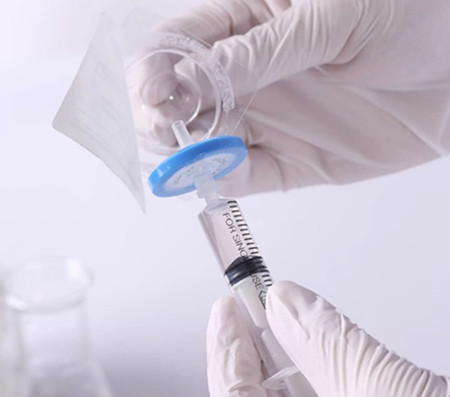
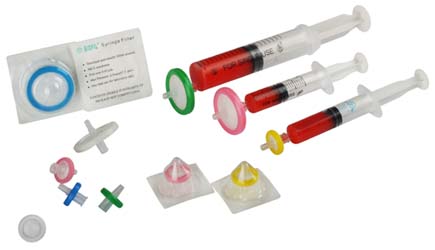
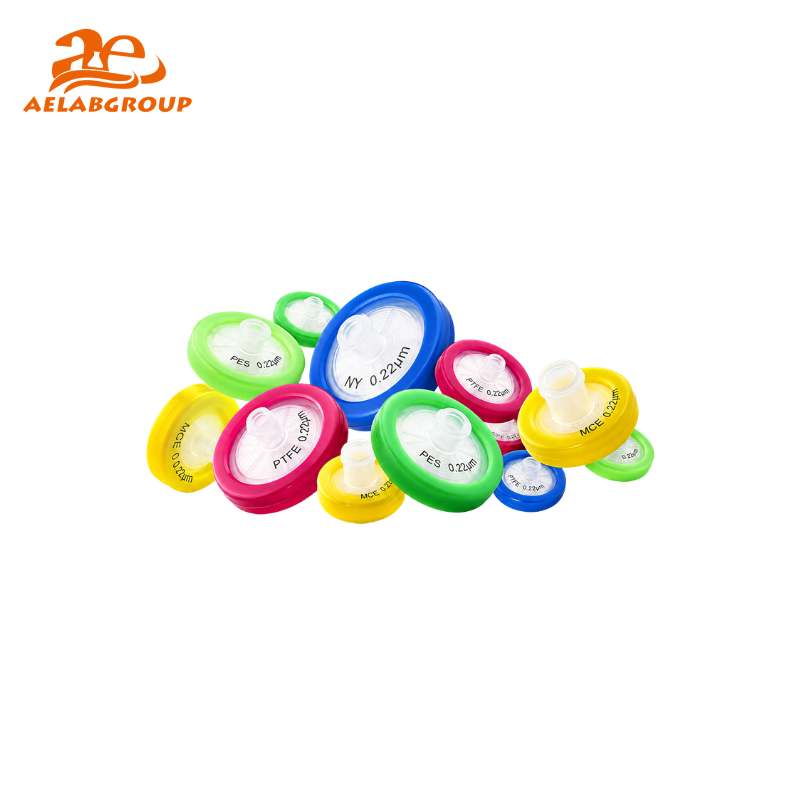
Disposable syringe filters for small-volume laboratory sample preparation. Available in different diameters, membrane materials and pore sizes for HPLC, pharmaceutical, environmental, food and research applications.
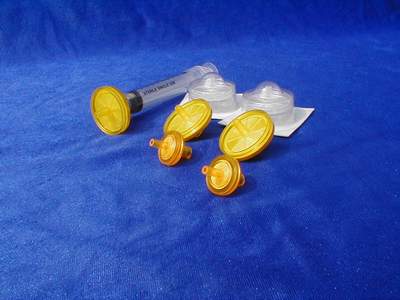
Disc membrane filters for microbiological testing, general laboratory filtration, sterility control and analytical sample preparation. Options include MCE, PES, PTFE, PVDF, nylon, cellulose acetate and other membrane materials.
Sterile membrane filters, including gridded membranes and individually packed formats, for microbial enumeration, water testing, beverage analysis and pharmaceutical microbiology.
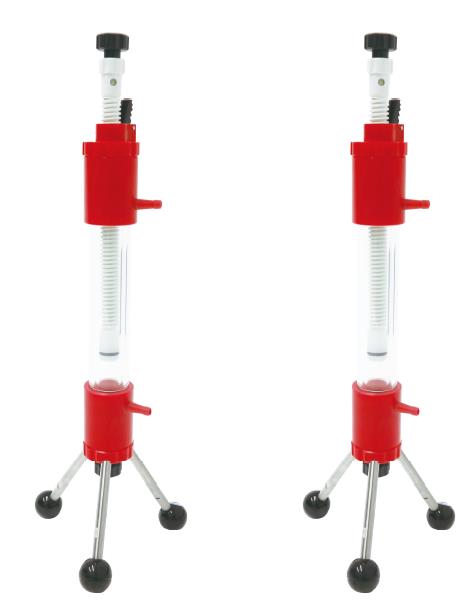
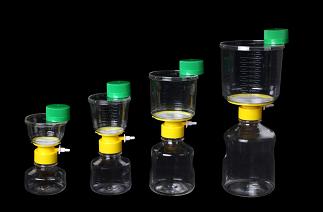
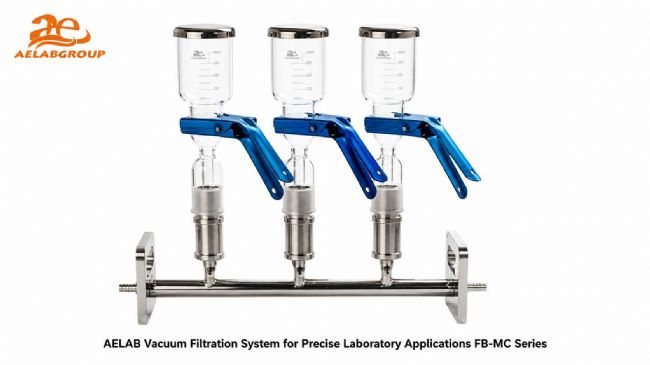
Laboratory vacuum filtration systems designed for rapid filtration of liquids. Configurations may include single-position or multi-position manifolds, glass assemblies and disposable filtration units.
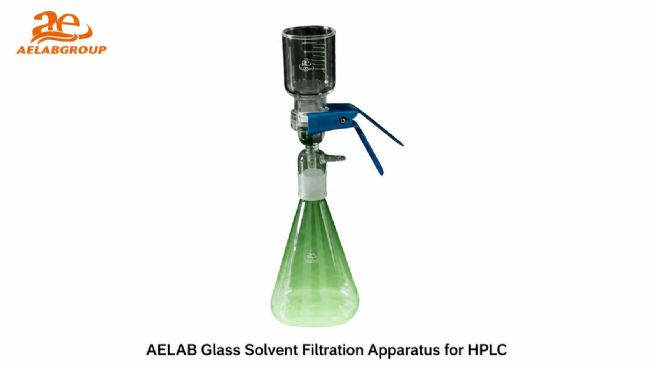
Glass and stainless-steel solvent filtration assemblies for filtration and preparation of chromatography mobile phases, laboratory solvents and analytical reagents.
High-flow filtration cartridges for laboratory and industrial filtration processes. Different cartridge structures and filtration materials are available according to process requirements.
Ready-to-use sterile filtration kits developed for pharmaceutical quality control, microbiological testing and routine laboratory workflows.
Vent filters, glass-fiber prefilters and filtration accessories for air and gas filtration, container protection and filtration of samples with high particle loads.
Nylon, PES, PTFE and other roll membrane materials for custom dimensions, large-area filtration and specialized laboratory or production requirements.
View Available Models and Filtration Specifications
Syringe Filter Diameter Selection
| Filter Diameter | General Sample Volume | Typical Use |
|---|---|---|
| 4 mm | Very small sample volumes | Limited or valuable analytical samples |
| 13 mm | Small-volume filtration | Routine HPLC and laboratory sample preparation |
| 25 mm | Medium sample volumes | General analytical and pharmaceutical filtration |
| 30–33 mm | Larger sample volumes | Biological, environmental and routine laboratory filtration |
| 50 mm | High-volume syringe or vent applications | High-throughput filtration and sterile air or gas filtration |
Information Required for Product Recommendation
To receive an accurate filtration product recommendation, customers should provide as much information as possible about the filtration process.
Aqueous, organic solvent, biological liquid, air, gas or mixed sample.
For example 0.22 µm, 0.45 µm, 1.0 µm or another specified pore size.
Syringe filter, membrane disc, vacuum unit, cartridge, roll or vent filter.
Approximate volume filtered per sample or per laboratory batch.
Sterile, individually packed, non-sterile or validation-related requirements.
HPLC, microbiology, pharmaceutical QC, water testing or another method.
AELAB is a laboratory equipment and consumables supplier based in Guangzhou, China. AELAB provides analytical instruments, laboratory equipment, filtration consumables and quality-control solutions for distributors, universities, research institutions, pharmaceutical laboratories and industrial customers worldwide.
The AELAB product portfolio includes laboratory filtration products, analytical instruments, environmental testing equipment, pharmaceutical testing systems, sample-preparation equipment and customized laboratory solutions.
Official website: www.aelabgroup.com
Frequently Asked Questions
What laboratory filtration products does AELAB supply?
AELAB supplies syringe filters, membrane filters, vacuum filtration systems, solvent filtration apparatus, filter cartridges, vent filters, roll membranes, sterile microbiology membranes and related filtration accessories.
Which membrane is suitable for HPLC sample preparation?
The suitable membrane depends on the sample solvent and analyte. Nylon, PTFE, PVDF, PES, regenerated cellulose and other membranes may be selected depending on chemical compatibility and analytical requirements.
What is the difference between 0.22 µm and 0.45 µm filters?
A 0.45 µm filter is commonly used for routine clarification and particle removal, while a 0.22 µm filter is generally selected for finer filtration and microbial retention in compatible applications.
Are sterile syringe filters and membrane filters available?
Yes. Selected AELAB filtration products are available in sterile and individually packed configurations. Product availability depends on membrane type, diameter, pore size and packaging requirement.
How should I choose between hydrophilic and hydrophobic membranes?
Hydrophilic membranes are generally selected for aqueous liquids, while hydrophobic membranes are often used for organic solvents, air and gas filtration. The exact choice should be confirmed according to membrane compatibility.
Can AELAB recommend a filter for a specific solvent?
Yes. Send the solvent name, sample composition, required pore size, sample volume, analytical method and preferred filter format. The AELAB team can recommend compatible filtration products.
Does AELAB provide vacuum filtration equipment?
Yes. The filtration range includes glass solvent filtration apparatus, disposable vacuum filtration units and multi-position filtration manifolds for different laboratory workflows.
Can AELAB supply filtration products for microbiological testing?
Yes. AELAB provides sterile membrane filters, gridded membranes, individually packed filters and filtration products for microbial enumeration, water testing, pharmaceutical microbiology and sterility control.
Tell the AELAB technical sales team your sample type, solvent composition, required pore size, filter diameter, sample volume, sterility requirement and laboratory application. Suitable filtration products can then be recommended according to your actual workflow.
The quotation can include available membrane materials, pore sizes, product dimensions, packaging quantities, technical specifications, delivery time, export packaging and shipping information.
View AELAB Laboratory Filtration Products
Email: info@aelabgroup.com
WhatsApp / WeChat: +86 158 0001 6110
Website: www.aelabgroup.com
-
AELAB GUANGZHOU CO., LTD.
AELAB is a laboratory equipment and analytical instrument supplier based in Guangzhou, China. We provide laboratory instruments, quality control equipment, analytical systems, sample preparation equipment, and related laboratory solutions for distributors, industrial laboratories, universities, research organizations, and testing centers worldwide.
AELAB offers both our own-brand products and carefully selected instruments from established manufacturers. OEM and ODM services are available for selected AELAB products, including customized branding, appearance, configuration, power supply, accessories, packaging, and documentation according to customer requirements.
For laboratory projects, distributor orders, government tenders, and complete laboratory setups, our team can provide a one-stop purchasing solution. We assist customers with product selection, technical comparison, quotation preparation, sourcing, quality inspection, export packaging, shipping coordination, and after-sales support.
Our technical team helps customers select suitable equipment based on their application, testing method, required specifications, budget, and local standards. Warranty and technical support are provided according to the product and project requirements.
AELAB operates under an established quality management system. Relevant company and product documentation may include SGS verification, ISO certification, CE, RoHS, FCC, or UL-related documentation, depending on the specific product model and configuration. Customers may contact us to confirm the available certificates before ordering.
Our equipment is widely used in industrial quality control, scientific research, universities, pharmaceutical laboratories, food and agricultural testing, environmental analysis, chemical laboratories, and other professional testing applications.
We are committed to developing long-term cooperation with distributors, laboratories, research institutions, and project contractors. If you are looking for a reliable laboratory equipment supplier with stable service and technical support, please contact AELAB.
Contact AELAB
Website:
https://aelabgroup.com
Email:
info@aelabgroup.com
WhatsApp / WeChat:
+86 15800016110
| Request Information |
| Other Products |
| Related Products |