中文
中文


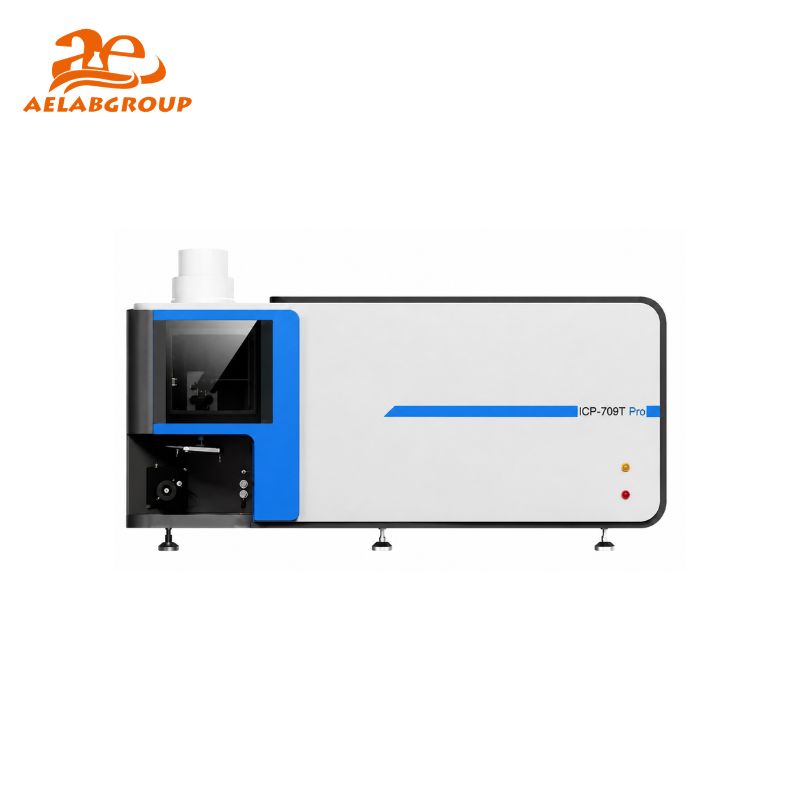
AELAB ICP Emission Spectrometers – ICP-AES, ICP-OES & ICP-MS Series

- Product Detail
- Company Profile
- Drinking water, wastewater and process water
- Acid-digested soil, sediment and environmental samples
- Minerals, ores, rocks and geological materials
- Metals, alloys and industrial components
- Food, beverages, agricultural products and animal feed
- Pharmaceutical raw materials and finished products
- Petroleum products, lubricants and chemical samples
- Fertilizers, plant materials and soil extracts
- Ceramics, glass, cement and construction materials
- Research samples prepared as suitable liquid solutions
- ICP-AES, ICP-OES, ICP-MS and optical emission solutions within one analytical equipment category
- Systems for routine, research and industrial elemental analysis
- Options for multi-element and full-spectrum measurement applications
- Solutions for environmental, geological, metal, food, pharmaceutical and chemical laboratories
- Model-selection assistance according to elements, matrices and detection requirements
- Support for instrument configuration and optional accessories
- International supply, export packaging and shipping coordination
- Technical communication before purchase and installation planning
- Required technique: ICP-AES, ICP-OES, ICP-MS or metal OES
- Target elements to be analyzed
- Expected concentration range for each element
- Required detection or reporting limits
- Sample type and sample matrix
- Typical number of samples tested per day
- Relevant testing method or standard, where available
- Required accessories, autosampler or sample-introduction configuration
- Laboratory voltage, frequency and destination country
- Installation, training or application-support requirements
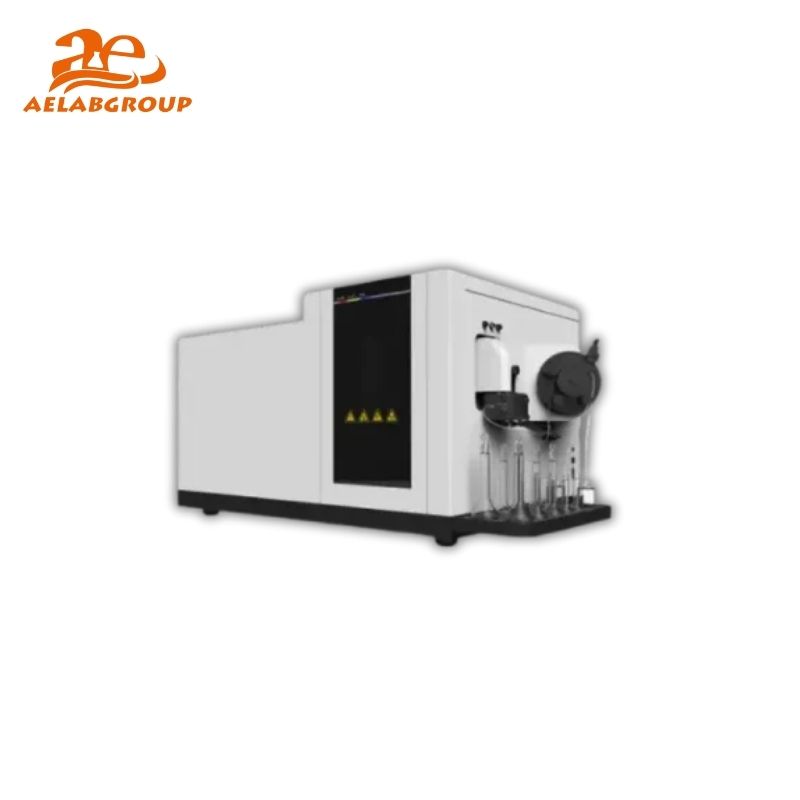
AELAB provides ICP emission spectrometers and related elemental analysis systems for laboratories requiring accurate qualitative and quantitative determination of metals, metalloids and other elements in different sample types.
The available range includes ICP-AES and ICP-OES optical emission spectrometers, ICP-MS systems, simultaneous multi-element analyzers, full-spectrum direct-reading instruments and optical emission solutions for laboratory or industrial metal analysis.
These instruments are suitable for environmental laboratories, universities, geological and mining organizations, metal manufacturers, petroleum laboratories, pharmaceutical quality control departments, food testing laboratories and independent analytical service centers.
Customers can compare AELAB ICP spectrometer configurations according to the required analytical technique, target elements, concentration range, detection limits, sample matrix, laboratory throughput and data-processing requirements.
Compare available elemental analysis technologies, instrument configurations and application options for laboratory and industrial testing.
| Instrument Type | Typical Analytical Purpose |
|---|---|
| ICP-AES Spectrometer | Atomic emission analysis of multiple elements using an inductively coupled plasma source for laboratory research, quality control and routine elemental testing. |
| ICP-OES Spectrometer | Optical emission measurement for simultaneous or sequential determination of metals and other elements across a wide concentration range. |
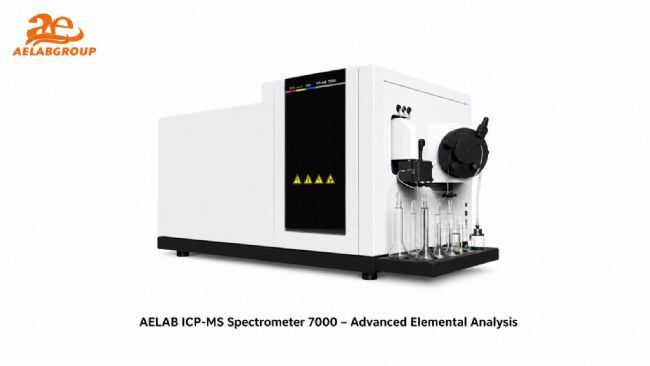
| ICP-MS Spectrometer | Mass-spectrometric elemental analysis for applications requiring very low detection limits, trace-element measurement and isotope-related analytical capabilities. |
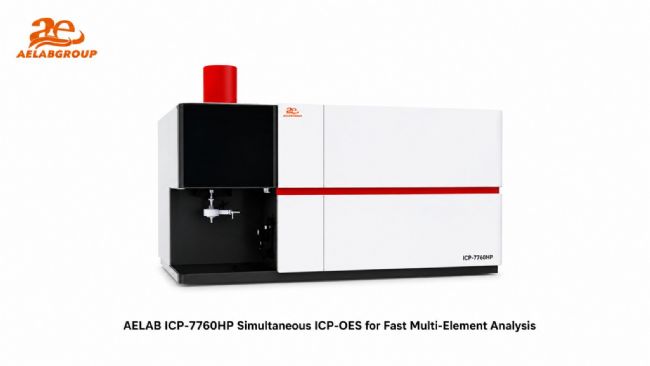
| Simultaneous ICP-OES System | Fast multi-element measurement where several analytical wavelengths must be collected efficiently during a single sample run. |
| Full-Spectrum Direct-Reading ICP | Broad spectral acquisition for flexible method development, multi-wavelength analysis and identification of potential spectral interferences. |
| Optical Emission Spectrometer for Metals | Rapid elemental composition testing and material identification for metal production, alloy verification, foundries and industrial quality control. |
| Mobile Metal Analysis System | On-site elemental and alloy analysis where samples or metal components cannot easily be transferred to a central laboratory. |
ICP-AES and ICP-OES are closely related optical emission techniques. Both measure characteristic light emitted by excited atoms and ions inside an inductively coupled plasma. The terminology used may depend on the manufacturer, instrument design and laboratory convention.
ICP-MS introduces ions produced by the plasma into a mass spectrometer. It is commonly selected when the application requires lower detection limits, advanced trace-element analysis or measurement according to mass-to-charge ratio.
| Comparison Factor | ICP-AES / ICP-OES | ICP-MS |
|---|---|---|
| Measurement Principle | Measurement of element-specific optical emission wavelengths. | Measurement of ions according to mass-to-charge ratio. |
| Typical Concentration Range | Suitable for routine trace, minor and major elemental analysis, depending on the element and method. | Often selected for very low-level trace and ultra-trace elemental measurement. |
| Multi-Element Analysis | Supports simultaneous or sequential analysis of multiple emission wavelengths. | Supports multi-element analysis across selected masses. |
| Typical Selection Reason | Routine elemental analysis, broad dynamic range, practical sample throughput and industrial quality control. | Demanding detection limits, ultra-trace analysis and specialized elemental research. |
| Method Considerations | Spectral overlap, wavelength selection, background correction and matrix effects. | Mass interference, contamination control, matrix effects and ion transmission conditions. |
Typical Applications
Measurement of metals and trace elements in drinking water, wastewater, soil extracts, sediments and environmental samples.
Elemental characterization of ores, rocks, minerals, concentrates, process solutions and exploration samples.
Composition testing, alloy verification, raw-material inspection and process control in foundries and metal manufacturing facilities.
Analysis of nutritional minerals, contaminants and selected trace elements in food, beverages, feed, plants and agricultural materials.
Elemental impurity analysis and raw-material testing according to the laboratory method and applicable quality requirements.
Elemental measurement in fuels, oils, additives, chemicals, catalysts and related industrial materials after suitable sample preparation.
Multi-element analysis for chemistry, materials science, environmental science, geology and interdisciplinary research projects.
Routine analysis of diverse customer samples requiring flexible methods, stable performance and reliable analytical reporting.
Many solid or complex samples require digestion, dissolution, dilution, filtration or another validated preparation procedure before ICP analysis. The appropriate process depends on the material, target elements, concentration range and laboratory method.
How to Select the Right ICP Spectrometer
Selecting an ICP system should begin with the analytical method and required performance rather than only the instrument name. Laboratories should evaluate the target elements, expected concentration range, sample matrix, detection-limit requirements, daily sample volume and available operating resources.
| Selection Factor | Questions to Consider |
|---|---|
| Analytical Technique | Does the method require optical emission analysis, mass-spectrometric analysis or direct metal composition testing? |
| Target Elements | Which elements must be measured, and are suitable analytical wavelengths or masses available for those elements? |
| Required Detection Limits | Are routine trace-level results sufficient, or does the application require very low or ultra-trace detection limits? |
| Expected Concentration Range | Will the samples contain major, minor, trace or ultra-trace concentrations of the target elements? |
| Sample Matrix | Are the samples clean aqueous solutions, high-salt solutions, organic matrices, digested solids or industrial process samples? |
| Plasma Viewing Configuration | Does the method benefit from radial, axial or dual-view observation, depending on the available instrument design? |
| Sample Throughput | How many samples and elements must be analyzed during each working day? |
| Interference Management | What spectral, matrix, background or mass-related interferences may affect the intended analysis? |
| Sample Introduction | Which nebulizer, spray chamber, torch configuration, pump system or autosampler arrangement is appropriate? |
| Gas and Utility Requirements | Are the necessary gas supply, exhaust system, electrical connection, cooling conditions and laboratory space available? |
| Software and Data Handling | Are method development, calibration, quality-control functions, reporting and laboratory data export required? |
| Installation and Training | Does the laboratory require installation guidance, operator training, application support or method-development assistance? |
Designed for routine and advanced multi-element optical emission analysis in environmental, industrial, geological, chemical and scientific laboratories. Different configurations may be available according to analytical requirements.
Intended for laboratories requiring efficient acquisition of multiple analytical wavelengths, practical sample throughput and flexible elemental analysis methods.
Suitable for broad spectral acquisition, wavelength selection, method development and multi-element testing involving different analytical applications.
Developed for laboratories performing demanding trace-element analysis where low detection limits, mass-based elemental measurement and advanced analytical capability are required.
Used for elemental composition testing, alloy verification, material identification and quality control in foundries, metal-processing facilities and industrial laboratories.
Intended for field or production-area analysis when rapid on-site testing is required and transporting the sample or component to a laboratory is impractical.
View the complete AELAB ICP emission spectrometer range and available technical configurations
To receive a suitable ICP spectrometer recommendation, customers should provide as much application information as possible.
AELAB is a laboratory equipment brand and supplier based in Guangzhou, China. The company supplies analytical instruments, general laboratory equipment, environmental testing systems and quality-control solutions to distributors, research institutions, universities and industrial customers.
The AELAB portfolio includes elemental analysis instruments, spectrometers, chromatography systems, laboratory balances, sample-preparation equipment, environmental testing instruments, pharmaceutical testing systems and other laboratory solutions.
Official website: www.aelabgroup.com
What is an ICP emission spectrometer used for?
An ICP emission spectrometer is used to identify and quantify elements in prepared samples. Typical applications include metals analysis, environmental testing, geological analysis, food testing, pharmaceutical quality control and industrial material analysis.
Are ICP-AES and ICP-OES the same technique?
The terms are often used for closely related or equivalent inductively coupled plasma optical emission techniques. Both describe measurement of characteristic light emitted by excited atoms and ions in the plasma.
What is the main difference between ICP-OES and ICP-MS?
ICP-OES measures element-specific optical emission, while ICP-MS measures ions according to mass-to-charge ratio. ICP-MS is generally considered when lower detection limits or specialized trace-element capabilities are required.
Can ICP systems analyze solid samples directly?
Standard liquid sample-introduction systems usually require solid samples to be digested or dissolved before analysis. Direct solid analysis may require specialized sampling equipment or another analytical technique.
What information is needed to select an ICP instrument?
The main information includes target elements, required detection limits, sample types, concentration ranges, daily sample volume, analytical method and required accessories.
Does AELAB provide systems for metal and alloy analysis?
The category includes optical emission solutions intended for elemental composition testing and metal analysis. The appropriate configuration should be selected according to the alloy types, target elements and testing location.
Can AELAB recommend a system for a specific laboratory method?
Yes. Customers can provide their target elements, sample matrix, required detection limits, testing method, throughput and destination country so that a suitable configuration can be evaluated.
Tell the AELAB technical sales team which elements you need to analyze, your sample type, expected concentration range, required detection limits, daily sample quantity and preferred analytical technique.
A technical proposal can include suitable instrument configurations, available specifications, optional accessories, sample-introduction components, delivery information, export packaging and commercial quotation.
View AELAB ICP-AES, ICP-OES and ICP-MS Systems
Email: info@aelabgroup.com
WhatsApp / WeChat: +86 158 0001 6110
Website: www.aelabgroup.com
-
AELAB GUANGZHOU CO., LTD.
AELAB is a laboratory equipment and analytical instrument supplier based in Guangzhou, China. We provide laboratory instruments, quality control equipment, analytical systems, sample preparation equipment, and related laboratory solutions for distributors, industrial laboratories, universities, research organizations, and testing centers worldwide.
AELAB offers both our own-brand products and carefully selected instruments from established manufacturers. OEM and ODM services are available for selected AELAB products, including customized branding, appearance, configuration, power supply, accessories, packaging, and documentation according to customer requirements.
For laboratory projects, distributor orders, government tenders, and complete laboratory setups, our team can provide a one-stop purchasing solution. We assist customers with product selection, technical comparison, quotation preparation, sourcing, quality inspection, export packaging, shipping coordination, and after-sales support.
Our technical team helps customers select suitable equipment based on their application, testing method, required specifications, budget, and local standards. Warranty and technical support are provided according to the product and project requirements.
AELAB operates under an established quality management system. Relevant company and product documentation may include SGS verification, ISO certification, CE, RoHS, FCC, or UL-related documentation, depending on the specific product model and configuration. Customers may contact us to confirm the available certificates before ordering.
Our equipment is widely used in industrial quality control, scientific research, universities, pharmaceutical laboratories, food and agricultural testing, environmental analysis, chemical laboratories, and other professional testing applications.
We are committed to developing long-term cooperation with distributors, laboratories, research institutions, and project contractors. If you are looking for a reliable laboratory equipment supplier with stable service and technical support, please contact AELAB.
Contact AELAB
Website:
https://aelabgroup.com
Email:
info@aelabgroup.com
WhatsApp / WeChat:
+86 15800016110
| Request Information |
| Other Products |
| Related Products |