 中文
中文


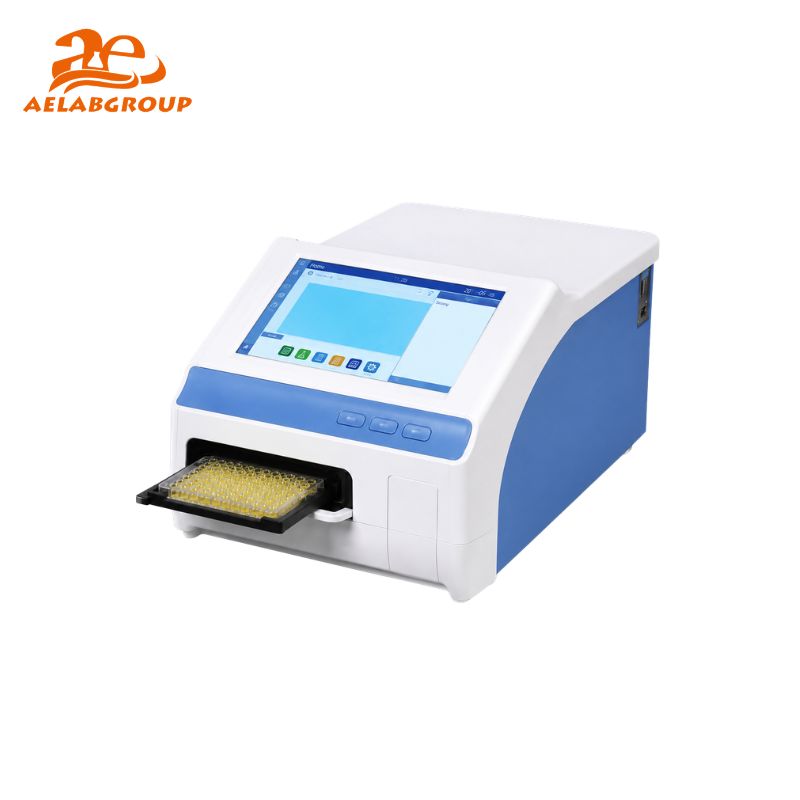
AELAB ELISA Microplate Reader and Washer Series

- Product Detail
- Company Profile
- ELISA-based antigen and antibody detection
- Protein concentration and biomarker analysis
- Immunology and life science research
- Pharmaceutical research and quality-control testing
- Biotechnology development laboratories
- Clinical and diagnostic research workflows
- Veterinary laboratory testing
- Food allergen and contamination screening
- Agricultural and plant-disease research
- Environmental biomarker analysis
- University teaching and scientific research
- High-volume microplate assay processing
- Flush washer fluid lines after use according to the operating procedure
- Prevent salt, buffer and reagent deposits from drying inside the washing system
- Inspect aspiration and dispensing components regularly
- Keep the plate carrier and instrument work area clean
- Use compatible microplates and properly prepared wash solutions
- Verify measurement performance using appropriate laboratory controls
- Back up stored methods and laboratory results when required
- Follow the recommended preventive-maintenance schedule
- Document performance checks according to laboratory procedures
- Reader, washer and automated ELISA processing options within one product category
- Solutions for research, biotechnology and laboratory testing applications
- Different configurations according to assay and throughput requirements
- Support for routine microplate measurement and washing workflows
- Model-selection assistance based on laboratory application
- Technical information and quotation support before purchase
- International supply, export packaging and shipping assistance
- Configuration support according to destination and laboratory requirements
AELAB ELISA Microplate Reader and Washer Solutions
AELAB supplies ELISA microplate readers, microplate washers and integrated microplate analysis solutions for life science research, biotechnology, pharmaceutical laboratories, clinical research, food testing, veterinary analysis and academic applications.
This product category covers systems used for optical measurement of microplate-based assays, automated washing of microplates and streamlined processing of ELISA workflows. Different configurations are available according to assay format, laboratory throughput, detection requirements, plate compatibility and workflow automation needs.
Laboratories can compare AELAB ELISA reader and washer solutions according to measurement mode, wavelength requirements, supported plate format, washing method, processing capacity, software functions and data-management requirements.
Explore AELAB ELISA Microplate Reader and Washer Solutions
Compare microplate reading, plate washing and automated ELISA processing solutions available for different laboratory workflows.
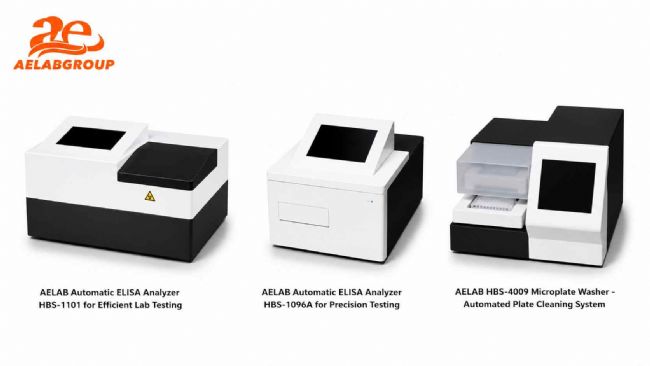
Available ELISA Microplate Equipment Types
| Equipment Type | Main Function |
|---|---|
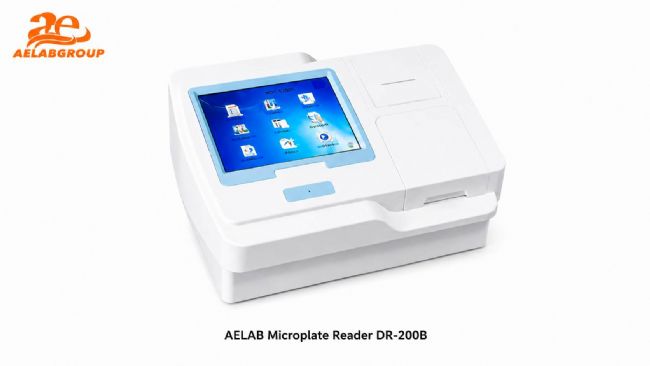
| ELISA Microplate Reader | Measures optical signals from microplate wells for quantitative or qualitative evaluation of ELISA and other absorbance-based assays. |
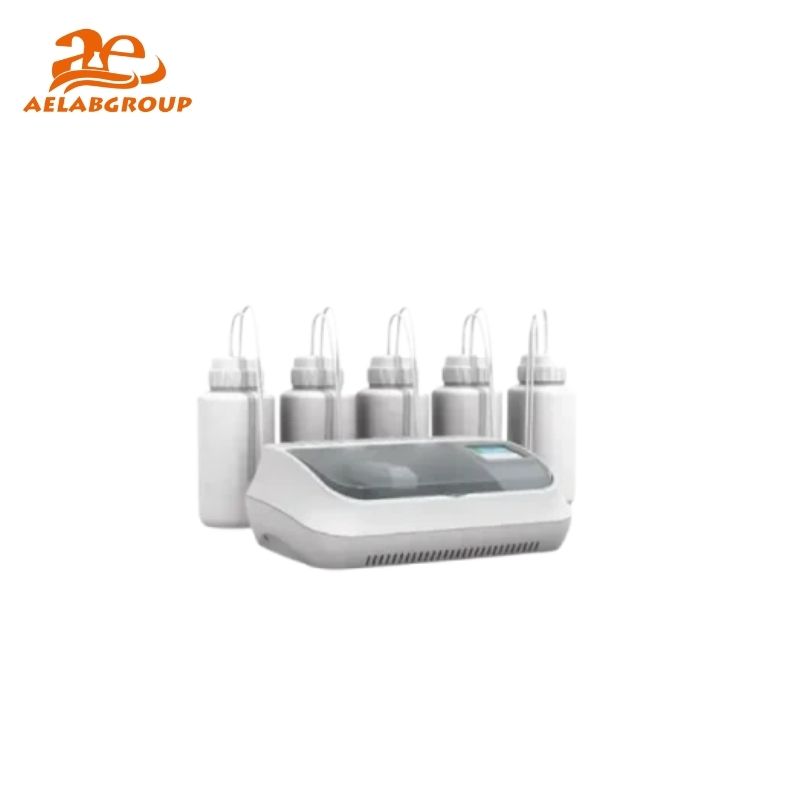
| Microplate Washer | Automates aspiration, dispensing and washing steps to remove unbound material and improve consistency between wells. |
| Automatic ELISA Analyzer | Combines multiple ELISA processing functions to reduce manual handling and support more standardized testing workflows. |
| Multi-Mode Microplate Reader | Supports laboratories that require more than one microplate detection method for different research and assay applications. |
| Reader and Washer Workflow System | Provides coordinated plate washing and reading capabilities for laboratories seeking a more integrated ELISA workflow. |
| Microplate Processing Accessories | Includes compatible plate holders, washing components, software options and workflow accessories depending on the selected configuration. |
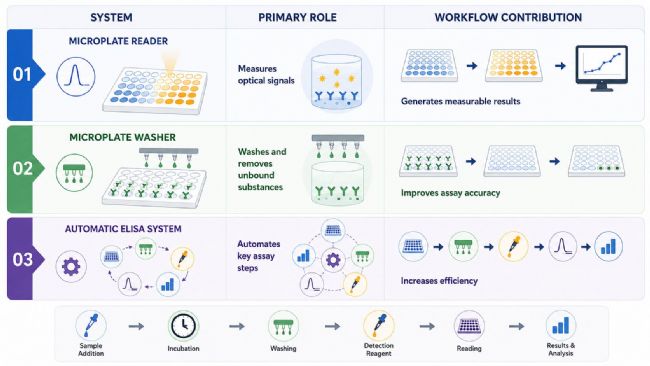
Microplate Reader and Microplate Washer Functions
| System | Primary Role | Workflow Contribution |
|---|---|---|
| Microplate Reader | Detects and measures optical signals generated by reactions inside microplate wells. | Converts assay signals into measurable laboratory results for further analysis and reporting. |
| Microplate Washer | Performs controlled washing, aspiration and liquid-dispensing cycles. | Helps remove unbound substances, reduce background interference and improve assay repeatability. |
| Automatic ELISA System | Coordinates several assay-processing and measurement stages. | Reduces repetitive manual work and supports laboratories processing larger numbers of samples. |
Typical Applications
Role in a Typical ELISA Workflow
1. Sample and Reagent Addition
Samples, standards, controls and assay reagents are added to the required microplate wells according to the laboratory procedure.
2. Incubation and Reaction
The plate is incubated under the required assay conditions to allow binding and reaction stages to take place.
3. Microplate Washing
A microplate washer can remove unbound substances through programmed aspiration and dispensing cycles.
4. Signal Development
Detection reagents are added to generate an optical signal related to the amount of target substance present in each well.
5. Microplate Reading
The microplate reader measures the developed signal using the appropriate detection settings and assay method.
6. Result Processing
Measurement data can be reviewed, calculated, exported or incorporated into the laboratory reporting workflow.
How to Select an ELISA Microplate Reader or Washer
Selecting the correct system should be based on the assay method and laboratory workflow rather than only on processing speed. Important considerations include detection requirements, plate format, assay volume, washing performance, software capability, data export and future testing needs.
| Selection Factor | Questions to Consider |
|---|---|
| Instrument Function | Does the laboratory require a reader, a washer, an automatic analyzer or a combined workflow? |
| Detection Method | What type of signal must be measured, and which measurement modes are required by the assay? |
| Wavelength Requirements | Which measurement and reference wavelengths are specified by the laboratory method or assay kit? |
| Plate Compatibility | Which microplate formats and well configurations will be used in routine testing? |
| Laboratory Throughput | How many plates or samples must be processed during each working day? |
| Washer Configuration | What aspiration, dispensing, soaking, shaking and wash-cycle controls are needed? |
| Residual Liquid Control | Does the assay require strict control of remaining wash liquid and cross-well consistency? |
| Software Functions | Are calibration curves, automatic calculations, stored methods or result-management functions required? |
| Data Communication | Must results be exported to a computer, printer, USB device or laboratory information system? |
| Automation Level | Will the instrument be used independently, or should it support a more automated laboratory workflow? |
| Cleaning and Maintenance | How easily can the fluid lines, wash head, plate carrier and other working components be cleaned? |
| Future Applications | Will the laboratory expand into additional assays, higher throughput or different plate formats? |
Routine Operation and Maintenance Considerations
Proper operation and maintenance are important for preserving reliable plate washing and measurement performance. Maintenance requirements depend on the selected system, laboratory workload and reagents used.
Why Choose AELAB ELISA Microplate Solutions?
About AELAB
AELAB is a laboratory equipment brand and supplier based in Guangzhou, China. The company supplies analytical instruments, life science equipment, environmental testing systems, pharmaceutical testing equipment and general laboratory solutions for distributors, universities, research organizations and industrial customers.
AELAB supports customers with equipment selection, technical communication, quotation preparation, export packaging and international delivery arrangements.
Official website: www.aelabgroup.com
Frequently Asked Questions
What is an ELISA microplate reader used for?
An ELISA microplate reader measures optical signals produced inside microplate wells and converts them into results that can be used for qualitative or quantitative assay evaluation.
What is the purpose of a microplate washer?
A microplate washer automates aspiration and dispensing cycles to remove unbound material from wells and improve consistency during ELISA processing.
Does every laboratory need both a reader and a washer?
The requirement depends on the testing volume and assay procedure. A reader is required to measure the final signal, while an automatic washer is especially useful when consistent washing and reduced manual handling are priorities.
How should a laboratory select the correct reader?
The laboratory should consider the assay detection method, required wavelengths, supported plate formats, processing capacity, software functions and data-export requirements.
How should a microplate washer be selected?
Important factors include plate compatibility, wash-cycle programming, aspiration performance, residual liquid control, dispensing flexibility, cleaning functions and daily testing volume.
Can ELISA systems be used outside clinical laboratories?
Yes. ELISA readers and washers are also used in biotechnology, pharmaceutical research, food safety, veterinary testing, agricultural research, environmental analysis and university laboratories.
Can AELAB recommend a suitable system?
Yes. Customers can provide their assay type, plate format, detection requirements, daily workload, automation needs and destination country so that suitable options can be recommended.
Request ELISA Reader or Washer Recommendation, Price and Technical Proposal
Tell the AELAB technical sales team about your assay type, required detection method, wavelength requirements, microplate format, daily sample volume, washing needs, software requirements and destination country.
The proposal can include suitable equipment options, available configurations, technical information, optional accessories, delivery time, packaging and shipping details.
View AELAB ELISA Microplate Reader and Washer Solutions
Email: info@aelabgroup.com
WhatsApp / WeChat: +86 158 0001 6110
Website: www.aelabgroup.com
-
AELAB GUANGZHOU CO., LTD.
AELAB is a laboratory equipment and analytical instrument supplier based in Guangzhou, China. We provide laboratory instruments, quality control equipment, analytical systems, sample preparation equipment, and related laboratory solutions for distributors, industrial laboratories, universities, research organizations, and testing centers worldwide.
AELAB offers both our own-brand products and carefully selected instruments from established manufacturers. OEM and ODM services are available for selected AELAB products, including customized branding, appearance, configuration, power supply, accessories, packaging, and documentation according to customer requirements.
For laboratory projects, distributor orders, government tenders, and complete laboratory setups, our team can provide a one-stop purchasing solution. We assist customers with product selection, technical comparison, quotation preparation, sourcing, quality inspection, export packaging, shipping coordination, and after-sales support.
Our technical team helps customers select suitable equipment based on their application, testing method, required specifications, budget, and local standards. Warranty and technical support are provided according to the product and project requirements.
AELAB operates under an established quality management system. Relevant company and product documentation may include SGS verification, ISO certification, CE, RoHS, FCC, or UL-related documentation, depending on the specific product model and configuration. Customers may contact us to confirm the available certificates before ordering.
Our equipment is widely used in industrial quality control, scientific research, universities, pharmaceutical laboratories, food and agricultural testing, environmental analysis, chemical laboratories, and other professional testing applications.
We are committed to developing long-term cooperation with distributors, laboratories, research institutions, and project contractors. If you are looking for a reliable laboratory equipment supplier with stable service and technical support, please contact AELAB.
Contact AELAB
Website:
https://aelabgroup.com
Email:
info@aelabgroup.com
WhatsApp / WeChat:
+86 15800016110
| Request Information |
| Other Products |
| Related Products |

| Recently viewed products |