 中文
中文


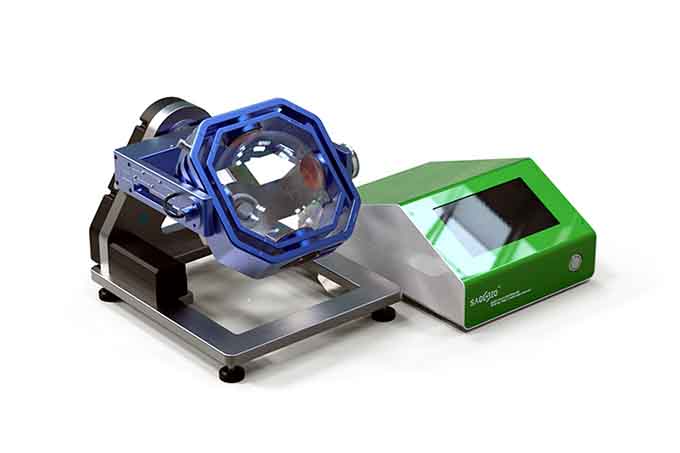
DARC‑G5.0P Professional Universal Gravity Environment Simulation System Random Position Machine

- Product Detail
- Company Profile
- 16 × T25 flasks
- 22 × SG‑RWV rotating wall vessels
- 1 × 1350 mL BV spherical bioreactor
- 7‑inch high‑resolution sensitive color touch screen
- 24 V DC adapter for safer low‑voltage operation
- Front‑mounted metal circular control buttons with integrated power indicator
- Angled display for improved ergonomics
- Built‑in homing, camera interface, and remote monitoring
- Optional photo/video module with cloud storage and monitoring (5 GB free cloud space per account)
- USB data export
- Compatibility with SG‑BSV, SG‑RWV, SG‑NSV, T25 adapters, SG‑DCF dynamic flasks, and other specialized vessels for microgravity, hypergravity, and 3D dynamic culture
- Cloud service support
- Step‑by‑step operational guidance for all key functions and parameters
- Customizable user programs for gradient or mixed simulation modes
- Admin user management with permission control
- Network and Bluetooth data transmission
- Redesigned UI for improved user experience
- 3D Tissue Construction: SG‑RWV bioreactors promote stem cell aggregation into chondrogenic pellets or hepatospheroids, forming near‑physiological 3D organoids.
- Organ‑on‑a‑Chip Development: Microgravity enhances 3D structure for accurate drug metabolism modeling and cancer metastasis studies.
- Bone & Cartilage Regeneration: Improved osteoblast mineralization and chondrogenic differentiation for bone implants and cartilage repair scaffolds.
- Space Medicine: Lunar (0.16 g) and Martian (0.38 g) gravity simulation for bone loss research and in vitro tissue bank development.
- Drug Discovery: Reduced convection interference improves protein crystallization quality.
- Stem Cell Differentiation: Enhanced chondrogenic differentiation (up to ~30%) and preserved stemness.
- Plant Space Biology: Gravity response, photosynthesis, and metabolism studies for space farming.
- Cancer Cell Behavior: 3D suspension culture reveals invasion and migration patterns under altered gravity.
- Space Industrial Production: 1350 mL vessels enable scalable production of cornea, cartilage, and other grafts.
- Environmental Engineering: Hypergravity desulfurization reduces tower height from 32 m to ~2.89 m with ~20% energy savings.
- Microbial Fermentation: Improved mass transfer boosts ethanol yield and shortens fermentation time.
- Drug Delivery: Uniform nanoparticle dispersion enhances liposome encapsulation and targeting efficiency.
- Agricultural Engineering: Self‑sharpening cutting blades with gradient composite coatings double service life.
- Spacecraft Component Testing: 3–6 g simulation for fatigue and seal reliability under launch conditions.
- Chemical Engineering: Accelerated reactive crystallization with improved nanoparticle uniformity.
-
Can the DARC‑G4.0P simulate both microgravity and hypergravity simultaneously?A: Yes. The DARC‑G4.0P supports both microgravity (down to 0.001 g) and hypergravity (up to 6 g).
-
Is the DARC‑G4.0P a medical device? Does it have a medical device registration certificate?A: The DARC‑G4.0P is designed for research use only and is classified as laboratory equipment, not a medical device. No medical device registration certificate is required.
-
Is the DARC‑G4.0P compliant with GMP and GLP?A: The system is designed and manufactured with reference to GMP and GLP principles, including user access control and data traceability.
-
Can you provide 3Q validation reports?A: 3Q validation is not included with standard systems but is available as a paid service, including annual re‑validation. Please contact our sales team for details.
-
What other research can the DARC‑G4.0P support besides cell culture?A: It supports tissue, organoid, and plant research under microgravity/hypergravity, as well as studies using zebrafish embryos/adults, Drosophila, etc. Custom models such as the DARC‑G4.0H support extended temperature ranges up to 250 °C.
-
Does the DARC‑G4.0P support continuous medium perfusion?A: No. For continuous medium renewal, we recommend the DARC‑P2.0S Perfusion Gravity Simulation Culture System.
-
Will ISO 9001 or ISO 13485 certification be available?A: We are actively pursuing ISO certifications and expect to provide relevant certificates in the second half of 2026.
-
Does the DARC‑G4.0P have independent patents?A: Yes. Almost all our products, including the DARC and SARC series, are protected by proprietary intellectual property rights.
-
Is the DARC‑G4.0P compatible with SG‑series consumables such as SG‑RWV, SG‑BSV, and SG‑NSV?A: Yes. All SG‑series vessels are fully compatible with the DARC‑G4.0P unless functionally restricted.
DARC-G Universal Gravity Environment Simulation System
The DARC-G Universal Gravity Environment Simulation System is the first domestic two-axis 3D rotating cell culture system available on the market. It is also the first two-axis 3D rotating cell culture system adopting a replaceable module design. For this system, we have developed dozens of different adapters and bioreaction vessels to meet the needs of various scenarios, helping users conduct various scientific research experiments more conveniently and efficiently. Equipped with different modules, the DARC-G can be used for research in life sciences, materials science, new energy and other fields under microgravity and hypergravity environments. It can provide a gravity simulation range of 0.001-6g.
Development of Aerospace and Space Medicine
From 1770 to the 19th century, a period of over a hundred years, scientists from various countries conducted numerous balloon experiments carrying humans and animals into the air. At that time, people did not realize the hazards of the high-altitude environment to the human body and failed to take corresponding protective measures. This led to serious accidents during ascents, such as frostbite, ear pain, loss of consciousness and even death of personnel. Afterwards, people began to attach importance to and carry out research on the high-altitude environment, gradually recognizing the hazards of low pressure, hypoxia and low temperature to the human body. This marked the embryonic stage of aerospace medicine.
The manufacture and flight of aircraft were realized in the late 19th and early 20th centuries. At that time, aircraft performance was relatively low, with a cruising altitude of only 2,000 meters and a flight speed of just 500 kilometers per hour. Even so, problems such as motion sickness, landing accidents and aircraft collisions emerged, which urgently needed to be solved. During World War II, especially after the emergence of jet aircraft, aircraft performance improved significantly—with increased cruising altitude, speed and endurance. Medical issues caused by hypergravity, low pressure, hypoxia, low temperature and other factors arose, forcing countries to invest a large amount of manpower and material resources in aerospace medicine research.
Space medicine developed on the basis of aerospace medicine. In the late 1940s and early 1950s, extensive biological experiments on rockets and satellites were carried out. After animal experiments proved that humans could travel in space, the Soviet Union first achieved successful manned spaceflight in the early 1960s. Subsequent research focused on the safe return of humans from spaceflight and the impact of weightlessness on the human body, confirming that humans could work effectively and live healthily under weightless conditions. With the development of space technology, space medicine has also advanced rapidly.
During the launch and return of spacecraft, prolonged acceleration and deceleration hypergravity are generated, with hypergravity values reaching around 6G. Humans find it difficult to adapt to high-G hypergravity in a sitting position, so astronauts usually adopt a supine posture, which has a milder impact on the human body. Humans can tolerate transverse hypergravity of 6G for more than ten minutes. This type of transverse hypergravity experienced in spaceflight is tolerable for most people.
Various accelerations during flight stimulate the human vestibular organs. Within an appropriate range, they generally do not cause adverse reactions. However, when the acceleration stimulation is frequent, intense and prolonged beyond the threshold of the vestibular organs, motion sickness may occur. Motion sickness includes seasickness, airsickness, carsickness, space motion sickness, etc. Its main symptoms are dizziness, nausea, vomiting, cold sweats, pale complexion and so on. The cause is closely related to the vestibular organs. Deaf-mutes with lost vestibular function and people with underdeveloped vestibular organs generally do not suffer from motion sickness. Airsickness is relatively common among crew members in military flights. Civil aviation airliners fly smoothly with comfortable cabins, and airsickness affects no more than 6% of passengers.
Weightlessness is a special physical factor in spaceflight. The structural characteristics of the human body enable it to resist and adapt to gravity. Manned spaceflight practice has proved that weightlessness has a significant impact on human physiological functions, but not as severe as originally imagined. After living and working continuously under weightless conditions for 365 days, humans can fully recover their health after a short rest upon returning to Earth, with no irreversible physiological changes.
With the rise of space exploration, especially China's recent achievements in spaceflight and exploration—such as the completion of the space station—many hypotheses that were previously only theoretical or documented have been verified in real environments. However, existing resources are still limited. Therefore, it is very necessary to carry out research under simulated scenarios on the ground. In this regard, developed countries such as Europe and the United States have long been at the forefront. For example, the RPM (Random Positioning Machine) developed by Airbus in Europe and the RCCS (Rotary Cell Culture System) developed by NASA in the United States have a history of more than 20 years, and numerous scientific research projects have been carried out based on these simulation platforms.
The DARC-G series Universal Gravity Environment Simulation System is China's first commercial microgravity and hypergravity simulation platform for the market, and also the world's first platform adopting a modular design—such as the supporting SG-BSV spherical (ball kettle) bioreaction vessel. With this system, users can conduct various experiments on biology, materials, fluids and other fields under simulated microgravity and hypergravity environments in ground laboratories
Advantages
-
SUZHOU SAGE-BIO TECHNOLOCY CO.,LTD. is an innovative technology company specializing in the field of cell culture. The company's vision is to promote cell applications and assisted reproduction through innovation, benefiting the public. The main initiators of the company have many years of work experience in the life sciences and medical equipment industries, and are familiar with the mainstream cell culture technologies in the current market, as well as cutting-edge technologies and products applied to cell 3D culture, dynamic culture, mechanical culture, etc. Especially in the fields of training program design, automatic control structure, and silicone material application, he has rich experience. As of 2023, Saiji Biotechnology has successfully launched DARC series microgravity simulation culture system, SARC series rotating cell culture system, RSED series rotating embryo culture system, as well as COCS multi-stage co culture, perfusion culture, MSCS in vitro dynamic large-scale expansion culture and other products to the market. The product covers many application scenarios such as dynamic 3D cell culture, dynamic adherent culture, dynamic suspension culture, microgravity or supergravity simulation culture, pressure culture, anaerobic culture, as well as embryo and organoid culture.
In addition to selling standard products, SAGE-BIO can also provide customized products and services based on user needs. These include the entire process from requirements to solutions, from solutions to products, and from products to applications. At present, SAGE-BIO has successfully provided customized products for some users, which are applied in cell culture, embryo culture, organoid culture, as well as microgravity, supergravity simulation and other fields. The product involves multiple fields such as life sciences and new energy research, and has been recognized by users.
| Request Information |
| Other Products |
| Related Products |
| Recently viewed products |
- SiteMap