 中文




Zearalenone ELISA Kit

- Product Detail
- Company Profile
- Microplate reader (450nm)
- High-precision pipette and gun tips: 0.5-10uL, 5-50uL, 20-200uL, 200-1000uL
- 37℃ constant temperature box
- Distilled water or deionized water
- Preparation of Biotin-Antibody Working Solution: Centrifuge the concentrated Biotin-Antibody at 1000×g for 1 minute 15 minutes before use. Dilute the 100× concentrated Biotin-Antibody to a 1× working concentration with universal diluent (e.g., 10uL concentrate + 990uL universal diluent) and use on the same day. 4. Preparation of Enzyme Conjugate Working Solution: 15 minutes before use, centrifuge the 100x concentrated enzyme conjugate at 1000×g for 1 minute. Dilute the 100x concentrated HRP enzyme conjugate to a 1x working concentration with universal diluent (e.g., 10μL concentrate + 990μL universal diluent). Use the same day. 5. Preparation of 1x Wash Solution: Dispense 10mL of 20x Wash Solution into 190mL of distilled water (Concentrated Wash Solution removed from the refrigerator may crystallize; this is normal. Allow to stand at room temperature until the crystals have completely dissolved before preparing). Procedure: 1. Remove the desired strips from the aluminum foil bag after equilibration at room temperature for 10 minutes. Seal the remaining strips in a ziplock bag and return them to 4°C. 2. Sample Addition: Add 50 μL of sample or standard of varying concentrations to the corresponding wells. Add 50 μL of universal diluent to the blank wells, followed by 50 μL of Biotin-Antibody Working Solution to each well. Cover with film and incubate at 37°C for 1 hour. (Recommendation: Dilute the sample to be tested at least 1-fold with universal diluent before adding it to the ELISA plate to minimize matrix effects. The sample concentration should be multiplied by the dilution factor when calculating the final concentration. It is recommended to run replicates for all samples and standards.) 3. Plate Wash: Discard the liquid and add 300 μL of 1x Wash Solution to each well. Let stand for 1 minute, then shake off the wash solution and pat dry on absorbent paper. Repeat this process three times (a plate washer can also be used). 4. Enzyme Conjugate Working Solution: Add 100 μL of enzyme conjugate working solution to each well. Cover with film and incubate at 37°C for 30 minutes. 5. Wash: Discard the liquid and wash the plate five times as in step 3. 6. Add substrate: Add 90 μL of substrate (TMB) to each well, cover with a sealing film, and incubate at 37°C in the dark for 15 minutes. 7. Add stop solution: Remove the ELISA plate and add 50 μL of stop solution directly to each well. Immediately measure the OD value of each well at a wavelength of 450 nm. Calculation of experimental results: Result evaluation: 1. Calculate the average OD value of the standard and sample replicates and subtract the OD value of the blank well as a correction value. Plot a standard curve for the four-parameter logistic function on double-logarithmic graph paper with concentration as the horizontal axis and OD value as the vertical axis. 2. If the sample OD value is higher than the upper limit of the standard curve, dilute the sample appropriately and retest. Multiply the sample concentration by the corresponding dilution factor.
- Strictly adhere to the specified incubation time and temperature to ensure accurate results. All reagents must be at room temperature (20-25°C) before use. Refrigerate reagents immediately after use.
- Improper plate washing may result in inaccurate results. Ensure that all liquid in the wells is aspirated thoroughly before adding substrate. Do not allow the wells to dry out during incubation.
- Remove any residual liquid and fingerprints from the bottom of the plate, as this will affect the OD value.
- The substrate developer solution should be colorless or very light in color. Do not use substrate solution that has turned blue.
- Avoid cross-contamination of reagents and specimens to prevent erroneous results.
- Avoid direct exposure to strong light during storage and incubation.
- Do not expose any reagents to bleaching solvents or the strong fumes emitted by bleaching solvents. Any bleaching agent will destroy the biological activity of the reagents in the kit.
- Do not use expired products, and do not mix components with different product numbers and batches.
- Recombinant proteins from sources other than the kit may not be compatible with the antibodies in this kit and will not be recognized.
- If there is a possibility of disease transmission, all samples should be managed properly and samples and testing devices should be handled according to prescribed procedures.
Product Specification
| Theory | This kit uses a competitive enzyme-linked immunosorbent assay (ELISA). Sample, standard, biotin-labeled antibody, and HRP conjugate are sequentially added to microwells pre-coated with a generic zearalenone antigen. After incubation and washing, the sample is developed with the substrate TMB. TMB converts to blue under the catalysis of HRP and to yellow under the action of acid. The intensity of the color is positively correlated with the generic zearalenone content in the sample. The absorbance (OD) is measured at 450 nm using a microplate reader to calculate the sample concentration. |
|---|---|
| Source | All |
| Synonym | General Zearalenone ELISA Kit |
| Detection Type | Competition Law |
| Background | Zearalenone (ZEN), also known as RAL and F-2 mycotoxins, is a potent estrogenic metabolite produced by some Fusarium and Gibberella species. Specifically, it is produced by Fusarium graminearum, Fusarium arborescens, Fusarium cereals, Fusarium maslennifolia, Fusarium verticillioides, and Fusarium saprophyticus. Several Fusarium species produce toxic substances of great concern to livestock and poultry producers, namely deoxynivalenol, T-2 toxin, HT-2 toxin, diacetoxyabietyl (DAS), and zearalenone. Zearalenone is the primary toxin, causing infertility, abortion, and other reproductive problems, particularly in pigs. Zearalenone is heat-stable and is found worldwide in several cereal crops, such as corn, barley, oats, wheat, rice, and sorghum. In addition to its effects on classical estrogen receptors, zearalenone has also been found to act as an agonist of the GPER (GPR30). |
| Storage Temp. | If the unopened kit is stored at 4°C, the shelf life is 6 months. |
| Test Range | 31.25-2000 pg/mL |
| Applications | Serum, plasma, tissue homogenate, cell lysate, cell culture supernatant and other biological fluids |
Assay Procedure (Click to expand)
Experimental equipment required for the experiment:
Sample processing and requirements:
Serum
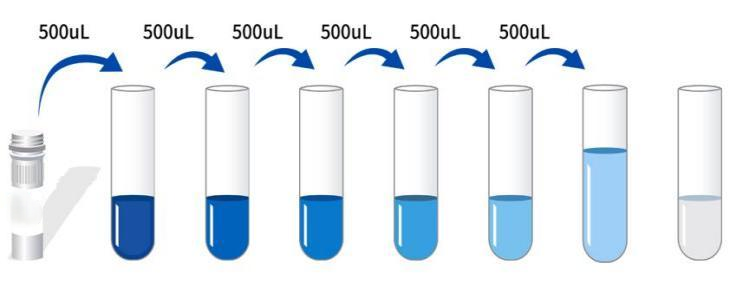
Place the whole blood sample collected in the serum separation tube at room temperature for 2 hours or at 4℃ overnight, then centrifuge at 1000×g for 20 minutes, and take the supernatant, or store the supernatant at -20℃ or -80℃, but avoid repeated freezing and thawing. Plasma: Collect the specimen using EDTA or heparin as an anticoagulant. Centrifuge the specimen at 1000 × g for 15 minutes at 2-8°C within 30 minutes of collection. The supernatant can be assayed or stored at -20°C or -80°C, but avoid repeated freezing and thawing. Tissue homogenization: Rinse the tissue with pre-chilled PBS (0.01M, pH 7.4) to remove residual blood (lysed red blood cells in the homogenate will affect the measurement results). Weigh the tissue and mince it. Add the minced tissue to the appropriate volume of PBS (generally a 1:9 weight-to-volume ratio, e.g., 1 g of tissue sample to 9 mL of PBS. The specific volume can be adjusted according to experimental needs and recorded. It is recommended to add protease inhibitors to the PBS) in a glass homogenizer and grind thoroughly on ice. To further lyse tissue cells, the homogenate can be sonicated or repeatedly frozen and thawed. Finally, centrifuge the homogenate at 5000 × g for 5-10 minutes, and the supernatant can be assayed. Cell Lysis Buffer: Gently wash adherent cells with ice-cold PBS, then trypsinize and collect cells by centrifugation at 1000×g for 5 minutes. Suspension cells can be collected directly by centrifugation. Wash collected cells three times with ice-cold PBS and resuspend in 150-200 μL of PBS per 1×10^6 cells (it is recommended to add protease inhibitors to the PBS; if the cell count is very low, reduce the PBS volume appropriately). Disrupt the cells by repeated freeze-thaw cycles or sonication. Centrifuge the extract at 1500×g for 10 minutes at 2-8°C, and remove the supernatant for analysis. Cell Culture Supernatant: Centrifuge at 1000×g for 20 minutes. Remove the supernatant for analysis or store at -20°C or -80°C, avoiding repeated freeze-thaw cycles. Other biological fluids: Centrifuge at 1000xg for 20 minutes, remove the supernatant, and assay. Pre-Assay Preparation: 1. Remove the test kit from the refrigerator 10 minutes in advance and equilibrate to room temperature. 2. Prepare the standard gradient working solution: Add 1 mL of universal diluent to the lyophilized standard, let stand for 15 minutes to completely dissolve, then gently mix (concentration is 2000 pg/mL). Then dilute to the following concentrations: 2000 pg/mL, 1000 pg/mL, 500 pg/mL, 250 pg/mL, 125 pg/mL, 62.5 pg/mL, 31.25 pg/mL, and 0 pg/mL. Serial dilution method: Take seven EP tubes and add 500uL of universal diluent to each tube. Pipette 500uL of the 2000pg/mL standard working solution into the first EP tube and mix thoroughly to make a 1000pg/mL standard working solution. Repeat this procedure for subsequent tubes. The last tube serves as a blank well; there is no need to pipette liquid from the penultimate tube. See the figure below for details.

Composition (Click to expand)
| Name | 9?6 T?Configuration | Remarks |
|---|---|---|
| Pre-coated 96-well enzyme plate | 8 holes×12 strips | None |
| Standard | 2 bottles | Dilution according to the instructions |
| Universal diluent | 2×20mL | None |
| Concentrated Biotin-Antibody (100×) | 60uL | Dilution according to the instructions |
| Concentrated enzyme conjugate (100×) | 120uL | Dilution according to the instructions |
| 20× Wash solution | 2×10mL | Dilute according to instructions |
| Substrate (TMB) | 10mL | None |
| Stop solution | 6mL | none |
| Sealing film | 4 sheets | None |
| Instructions | 1 serving | None |
General Notes (Click to expand)
ANT BIO PTE. LTD. – Empowering Scientific Breakthroughs At ANTBIO, we are committed to advancing life science research through high-quality, reliable reagents and comprehensive solutions. Our specialized sub-brands (Absin, Starter, UA) cover a full spectrum of research needs, from general reagents and kits to antibodies and recombinant proteins. With a focus on innovation, quality, and customer-centricity, we strive to be your trusted partner in unlocking scientific mysteries and driving medical progress. Explore our product portfolio today and elevate your research to new heights.
-
AntBio is a biotechnology group company dedicated to serving life sciences, aiming to help scientists accelerate research and improve work efficiency. AntBio provides comprehensive and high-quality reagent tools for basic research, drug development, and diagnosis, including research grade antibodies, proteins, biochemical reagents, and assay kits. These research tools are widely used in different segments of life science research. The group company currently consists of three brands, Absin, Starter-Bio and UA-Bio.
| Request Information |
| Other Products |
| Related Products |


| Recently viewed products |