|
SHPS1 Protein: A Multifunctional Cell Surface Receptor Shaping Immunity, Development, and Disease
hits:28 Date:04/25/26
SHPS1 Protein: A Multifunctional Cell Surface Receptor Shaping Immunity, Development, and Disease—Powered by ANT BIO PTE. LTD.
1. Concept
SHPS1 (SHP substrate 1), also known as SIRPα (Signal-regulatory protein α), is a conserved transmembrane glycoprotein belonging to the immunoglobulin superfamily (IgSF). First identified in the late 1990s as a specific substrate for tyrosine phosphatases SHP-1 and SHP-2, it plays pivotal roles in immune regulation, intercellular communication, and diverse physiological and pathological processes.
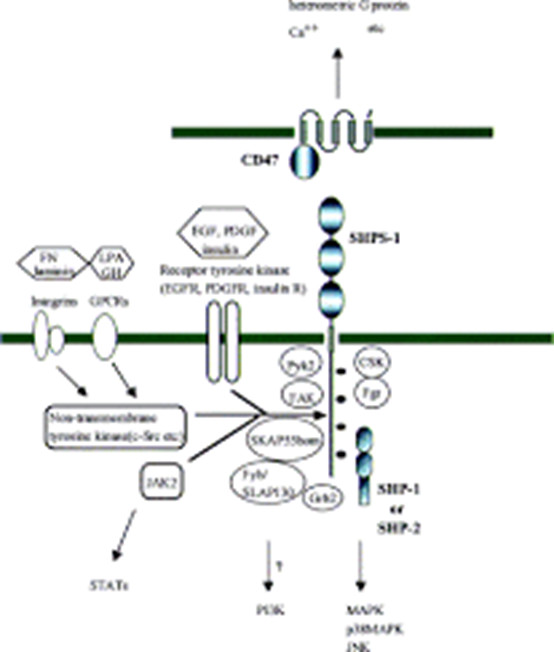
Structurally, SHPS1 features three extracellular immunoglobulin-like domains (one N-terminal V-type and two C1-type domains) that mediate ligand binding—most notably the interaction between its V-type domain and CD47. Its transmembrane region consists of a hydrophobic amino acid sequence, while the intracellular domain contains four tyrosine phosphorylation sites. Upon phosphorylation, these sites recruit SH2 domain-containing proteins, primarily SHP-1 and SHP-2 phosphatases, to initiate downstream signaling. The human SHPS1 gene is located on chromosome 20p13, and post-translational glycosylation modifications result in a molecular weight of 90–110 kDa, which influences protein stability and ligand-binding capacity.
2. Research Frontiers
SHPS1 research is advancing across immunology, oncology, neuroscience, and cardiovascular biology. A key frontier is deciphering the context-dependent functions of the SHPS1-CD47 axis—particularly its "don't-eat-me" signal in tumor immune evasion. Preclinical and clinical studies are exploring antibodies targeting this axis to enhance macrophage-mediated tumor phagocytosis.
In neuroscience, emerging research focuses on SHPS1's role in synaptic plasticity and neurodegenerative diseases, with potential applications in treating Alzheimer's and Parkinson's. In cardiovascular biology, its involvement in angiogenesis and atherosclerosis is being unraveled for therapeutic development.
Technological innovations include single-cell sequencing to map tissue-specific SHPS1 regulatory networks, high-resolution imaging to visualize dynamic membrane interactions, and the development of conditional knockout mice and isoform-selective modulators. Future directions expand to metabolic regulation and inter-organ communication, leveraging multi-omics to uncover novel signaling crosstalk.
3. Research Significance
SHPS1's significance lies in its multifunctional role as a cell surface receptor bridging immunity, development, and disease. In immunology, it regulates macrophage phagocytosis and immune tolerance, offering targets for cancer immunotherapy and autoimmune disorders. In neuroscience, it modulates neuronal function, providing insights into neurodegenerative diseases.
In oncology, the SHPS1-CD47 axis is a promising immunotherapeutic target, with clinical trials underway for anti-CD47 antibodies and SHPS1 antagonists. Basic research on SHPS1 deepens understanding of intercellular signaling, while translational efforts advance treatments for cancer, neurodegenerative diseases, and cardiovascular disorders—addressing unmet medical needs.
4. Biological Functions, Disease Roles, and Product Support
4.1 Expression Distribution and Regulatory Mechanisms
4.1.1 Tissue-Specific Expression
SHPS1 is highly expressed in myeloid immune cells (macrophages, dendritic cells, neutrophils) and is also present in neurons, epithelial cells, and endothelial cells—reflecting its diverse biological roles.
4.1.2 Molecular Regulation
Cytokine-Mediated Regulation: Pro-inflammatory cytokines (IFN-γ, TNF-α) upregulate SHPS1; anti-inflammatory factors suppress it.
Epigenetic Regulation: Promoter DNA methylation modulates expression levels.
miRNA-Mediated Regulation: miR-340 and miR-342-3p bind the 3' untranslated region of SHPS1 mRNA to downregulate expression.
Pathological Dysregulation: Abnormal SHPS1 expression is observed in tumors (context-dependent upregulation/downregulation) and neurodegenerative diseases.
4.2 Core Biological Functions and Mechanisms
4.2.1 Immune Regulation
The best-characterized function of SHPS1 is mediating the "don't-eat-me" signal via CD47 binding. This interaction activates intracellular SHP-1/SHP-2, transmitting inhibitory signals that prevent macrophages from phagocytosing healthy cells. Tumor cells exploit this mechanism by overexpressing CD47 to evade immune surveillance.
4.2.2 Cell Migration, Proliferation, and Differentiation
Neurons: SHPS1 regulates synaptic plasticity and neurite outgrowth; deficiency leads to abnormal neuronal morphology and synaptic dysfunction.
Vascular Endothelial Cells: It participates in angiogenesis and barrier function, with dysregulation linked to vascular diseases.
4.2.3 Signaling Mechanisms
SHPS1 transmits signals via two pathways:
Phosphatase-Dependent: Tyrosine phosphorylation recruits SHP-1/SHP-2 to modulate downstream signaling.
Phosphatase-Independent: Forms complexes with membrane proteins or influences cytoskeletal reorganization.
4.3 Disease Roles and Therapeutic Potential
4.3.1 Cancer
The SHPS1-CD47 axis is a key immunotherapeutic target. Disrupting this interaction enhances macrophage-mediated tumor phagocytosis and anti-tumor immunity. Anti-CD47 antibodies and SHPS1 antagonists are in clinical trials, showing promising efficacy.
4.3.2 Neurodegenerative Diseases
Alzheimer's Disease: Altered SHPS1 expression in the brain affects microglial activation and Aβ clearance.
Parkinson's Disease: SHPS1 regulates dopaminergic neuron survival in preclinical models, offering neuroprotective potential.
4.3.3 Other Diseases
Cardiovascular Diseases: SHPS1 influences macrophage function and plaque stability in atherosclerosis.
Autoimmune Disorders: Dysregulated signaling contributes to immune tolerance loss in conditions like systemic lupus erythematosus.
4.4 How ANT BIO PTE. LTD. Products Support SHPS1 Research
ANT BIO PTE. LTD., through its sub-brand Starter (specializing in antibodies), provides high-quality reagents to advance SHPS1 signaling research.
Key products and applications:
S0B1093 (Phospho-SHP-2 (Tyr542) Recombinant Rabbit mAb): Detects phosphorylated SHP-2 (active form), ideal for assessing SHPS1-mediated signaling activation in immune cells, neurons, or tumor models.
S0G0015 (Phospho-SHP-2 (Tyr542) Antibody Duo): Offers complementary tools for validating SHP-2 phosphorylation, supporting Western blotting, immunofluorescence, and co-immunoprecipitation assays to study SHPS1-SHP-2 interactions.
Both products are recombinant rabbit monoclonal antibodies, ensuring high specificity, affinity, and consistency—critical for reproducible signaling pathway analysis and drug screening.
5. Brand Mission
ANT BIO PTE. LTD. is dedicated to empowering the global life science community with high-quality, innovative biological reagents and solutions. With 15 years of antibody development experience, the company leverages advanced platforms—including recombinant antibody development (rabbit/mouse monoclonal), recombinant protein expression systems (E.coli, CHO, HEK293, Insect Cells), One-Step ELISA, and PTM Pan-Modification Antibody platforms—to deliver a comprehensive product portfolio.
Through its three specialized sub-brands—Absin (general reagents and kits), Starter (antibodies), and UA (recombinant proteins)—ANT BIO PTE. LTD. adheres to international certifications (EU 98/79/EC, ISO9001, ISO13485) and strict quality standards. The company’s mission is to accelerate scientific discovery by providing tools that enhance experimental precision, efficiency, and reproducibility. ANT BIO PTE. LTD. is committed to supporting SHPS1 research and global efforts in immunotherapy, neurodegenerative disease treatment, and cardiovascular medicine, ultimately advancing human health through interdisciplinary collaboration and innovation.
6. Related Product List
| Product Code |
Product Name |
| S0B1093 |
Phospho-SHP-2 (Tyr542) Recombinant Rabbit mAb (S-1254-13) |
| S0G0015 |
Phospho-SHP-2 (Tyr542) Antibody Duo |
7. AI Disclaimer
This article is AI-compiled and interpreted based on the original work. All intellectual property (e.g., images, data) of the original publication shall belong to the journal and the research team. For any infringement, please contact us promptly and we will take immediate action.
ANT BIO PTE. LTD. – Empowering Scientific Breakthroughs
At ANTBIO, we are committed to advancing life science research through high-quality, reliable reagents and comprehensive solutions. Our specialized sub-brands (Absin, Starter, UA) cover a full spectrum of research needs, from general reagents and kits to antibodies and recombinant proteins. With a focus on innovation, quality, and customer-centricity, we strive to be your trusted partner in unlocking scientific mysteries and driving medical progress. Explore our product portfolio today and elevate your research to new heights.
|
 中文
中文