 中文
中文


Home > News > Hemodialysis Water Treatment System and Treatment Methods
Hemodialysis Water Treatment System and Treatment Methods
- What is hemodialysis?
Hemodialysis is a medical procedure used to replace kidney function and remove waste and excess fluid from the blood. During dialysis, the patient's blood is filtered through a dialyzer (or "artificial kidney") to remove harmful substances and excess water to maintain the normal functioning of the body. Dialysis water is the core of the dialysis process because the purity of the dialysate directly affects the patient's health and treatment results.
A patient may require over 300 – 500 litres of water each week, more than 30 times above the standard weekly oral intake. For this reason, the quality of water used for dialysis treatment must be correctly controlled and effectively monitored.
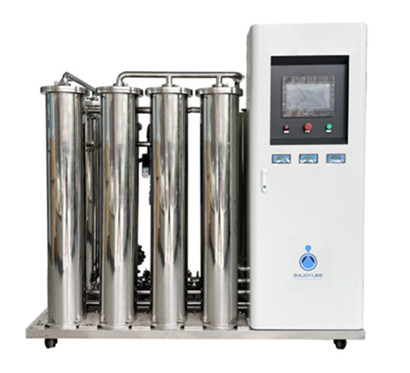
ZHUOYUE Hemodialysis Water Treatment System
What are the basic requirements for hemodialysis water treatment?
Hemodialysis water must meet extremely strict quality standards. Since patients are exposed to a large amount of water during dialysis, any substandard water quality may cause serious health problems such as infection, inflammation or poisoning. Therefore, dialysis water must undergo multiple purification and disinfection to remove all substances that may be harmful to the human body, including microorganisms, chemicals and heavy metals.
According to the American Society of Nephrology and other relevant standards, dialysis water must meet the following requirements:
1. Microbial load: The number of bacteria in the water should be extremely low, usually less than 100 CFU/mL.
2. Endotoxin content: The level of endotoxin needs to be strictly controlled, usually less than 0.25 EU/mL.
3. Chemical purity: Remove minerals and heavy metals such as calcium, magnesium, chlorine, lead, copper, and any organic pollutants in the water.
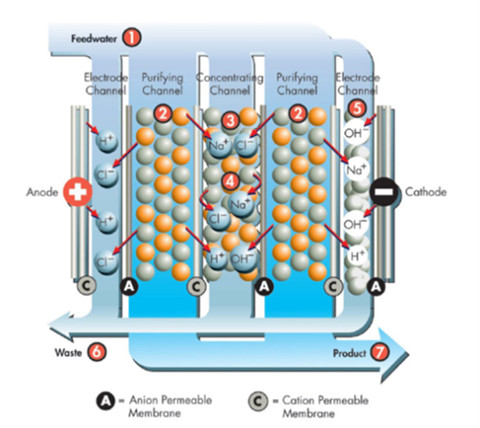
How is the process of hemodialysis water treatment carried out?
The design of the hemodialysis water treatment system is very complex and requires multiple stages of purification to ensure that the water quality meets the standards. The main steps include raw water pretreatment, RO treatment, pure water storage and distribution, and final monitoring and control. The following is a detailed description of each step:
Raw water pretreatment
Common pretreatment equipment includes:
Quartz sand: used to remove large suspended particles and impurities in water, such as silt and rust.
Activated carbon filter: absorbs organic matter, chlorine and chloramine in water, which may cause damage to reverse osmosis membrane and patients if not removed.
Softening resin: removes calcium and magnesium ions in water through ion exchange resin, reduces water hardness and prevents scale from forming on reverse osmosis membrane.
Reverse osmosis (RO)
It is the purification system itself that removes the organic and inorganic materials, minerals, bacteria, and endotoxins from water. In reverse osmosis, the molecules move from a concentrated solution to a less concentrated solution, pure water. For this process to occur, a pressure higher than osmotic pressure and a semipermeable membrane limiting the passage of dissolved ionic substances are needed. Pure water can be obtained thanks to the appropriate pressure and membrane. Reverse osmosis technology is the most sensitive membrane filtration technology known where up to 99.5% stable and 99.3% minimum salt removal occurs.
The performance of the reverse osmosis system directly affects the quality of dialysis water. Therefore, a two-stage reverse osmosis system is usually used to provide additional safety. The two-stage system consists of two RO units in series, and the water after the first RO treatment will pass through the second RO unit again for further purification.
Pure water storage and distribution
The water after reverse osmosis treatment is called "pure water" and needs to be transported to the dialysis machine through a dedicated pipeline. Since microorganisms and chemicals in water may still re-contaminate water quality during storage and transportation after treatment, the storage and distribution stages also need to be strictly controlled.
Pure water storage tank: Stores pure water after reverse osmosis treatment, usually made of stainless steel or other corrosion-resistant materials to prevent water quality from being affected by the outside world.
Ultraviolet disinfector: Installed in the distribution pipeline to further kill microorganisms in the water and ensure the sterility of dialysis water.
Circulation system: Keep pure water flowing continuously in the distribution pipeline to prevent bacteria from growing in stagnant water.
Final monitoring and control
All aspects of the water treatment system need to be monitored in real time to ensure the quality of dialysis water. The main monitoring items include:
Conductivity monitoring: Measuring the conductivity of water can reflect the total ion concentration in the water and judge the desalination effect of the RO system.
Microbial monitoring: Regular sampling is used to detect the bacteria and endotoxin levels in the water to ensure that the water quality meets the standards.
Chemical monitoring: Detect residual chlorine, heavy metals and other harmful chemicals in the water to ensure that their concentrations are within a safe range.
Why do we need water treatment in dialysis?
In dialysis, water is used for four different purposes:
• Mixing concentrate
• To make dialysate
• For dialyzer reprocessing
vTo wash concentrate jugs
A normal human body can handle harmful substances in drinking water when healthy. The digestive system, immune system, and kidney help protect or get rid of those toxins. Patients who are on dialysis do not have that protection. On dialysis, blood comes in contact with dialysate through the dialyzer membrane. Contaminated water can cause illness or death. Therefore, water is passed through water treatment systems.
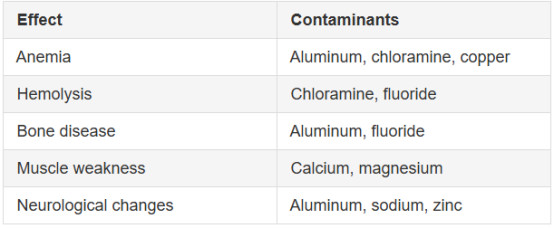
Water that has not been strictly treated may contain a variety of substances that are harmful to the human body, such as:
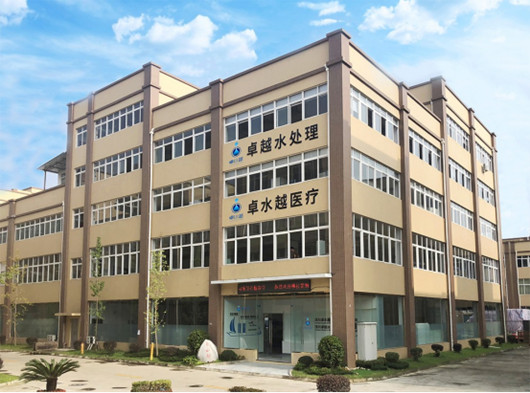
Sichuan Zhuoyue Water Treatment Equipment Co.,Ltd is a comprehensive water treatment manufacturer integrating R&D, production, sales and after-sales in Chengdu City, specializing in the production of laboratory ultra-pure water system, medical water system, pharmaceutical water machine, central integrating pure water system,industrial ultra-pure water machine, sewage water treatment machine, slightly acidic electrolytic water,membrane filtration machine and other related water treatment equipment. 4000㎡modern production line with sales department are located in Pengzhou Industrial Park in Chengdu city. We offer a range of high-quality, custom water treatment solutions, upholding strict safety standards.
Related News
- Optical Surfaces: Large High Precision Optics 10/23/2026
- Thermo Fisher Scientific Launches Gibco™ CHO-K1 Catalog Panel Media and Fe 10/22/2026
- Amsbio: Seamless 2D to 3D Cell Culture 10/20/2026
- Waters Launches AI Link, Advancing AI-Enabled LC-MS Workflows from Research to R 10/15/2026
- Shimadzu Launches MultiNA II Microchip Electrophoresis System for DNA and RNA An 10/14/2026
- Resolve Optics: Application Optimised Ruggedised Lenses 10/13/2026
- Cryogenic Storage System for Fertility Clinics 10/9/2026
- Ventri Labs AB: Ultra-Low Shear Flow for Bioprocessing 10/8/2026
- Agilent Introduces the NovoStation Sample Preparation System for Automated Flow 10/5/2026
- Asynt Adds Overhead Stirring to PressureSyn for More Demanding High-pressure Che 9/28/2026