 中文
中文


Home > News > Transforming Growth Factor Beta (TGF-β): Unraveling Its Dual Roles in Cell Fate and Disease Progression
Transforming Growth Factor Beta (TGF-β): Unraveling Its Dual Roles in Cell Fate and Disease Progression
- 1. Concept of TGF-β and Its Signaling Mechanisms
Transforming Growth Factor Beta (TGF-β) is an evolutionarily conserved family of multifunctional secreted cytokines, playing pivotal roles in regulating cell biology and tissue homeostasis. Its biological effects are mediated through a sophisticated signaling system involving three receptor types: Type I (TβRI) and Type II (TβRII) transmembrane receptors with serine/threonine kinase activity (core for signal transduction), and Type III receptors (e.g., β-glycan) that enhance signal sensitivity by presenting TGF-β to TβRII. Signaling is transmitted via two core pathways: the canonical Smad-dependent pathway (activating Smad2/3-Smad4 complexes for nuclear transcriptional regulation) and non-canonical (non-Smad) pathways (e.g., MAPK, PI3K/AKT, Rho GTPase), which cross-talk to mediate complex cellular responses.
2. Research Frontiers
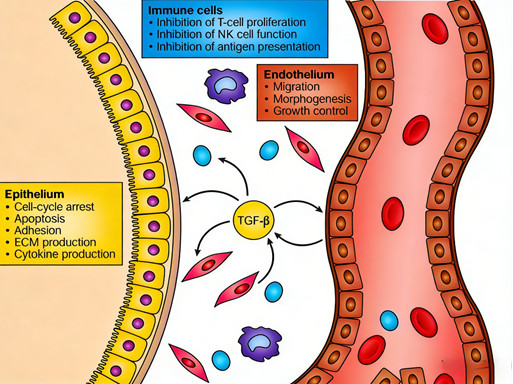
TGF-β’s dual, context-dependent roles have made it a focal point in cell biology, immunology, oncology, and fibrosis research. Key frontiers include dissecting its "tumor suppressor to tumor promoter" transition during cancer progression, understanding its role in epithelial-mesenchymal transition (EMT) and tumor metastasis, and targeting its signaling for anti-fibrotic and immunotherapeutic interventions. Recent advances focus on developing selective TGF-β pathway inhibitors to mitigate its pro-tumor and pro-fibrotic effects while preserving its beneficial functions (e.g., immune tolerance, tissue repair). Additionally, recombinant TGF-β proteins are increasingly used to model disease mechanisms and screen novel therapeutics, enabling precise modulation of cellular processes in vitro and preclinical studies.
3. Research Significance
TGF-β’s dual functionality holds profound implications for human health and disease. As a master regulator of cell growth, differentiation, and immune homeostasis, its dysregulation contributes to diverse pathologies—including cancer, fibrosis, autoimmune diseases, and developmental disorders. Understanding its context-dependent roles enables the development of targeted therapies: inhibiting TGF-β in advanced cancer to block metastasis and immunosuppression, or modulating it in fibrosis to reduce excessive ECM deposition. For basic research, TGF-β proteins serve as essential tools to unravel cellular signaling networks and disease mechanisms, bridging bench research and clinical translation. Its significance extends to drug development, where it acts as a target and positive control for screening anti-fibrotic, anti-tumor, and immunomodulatory agents.
4. Related Mechanisms, Research Methods, and Product Applications
4.1 Regulation of Cell Growth and Differentiation
TGF-β exerts cell type-specific control over growth and differentiation:
Growth Inhibition: Induces G1-phase cell cycle arrest in epithelial, endothelial, and hematopoietic cells by upregulating cyclin-dependent kinase inhibitors (p15, p21) and downregulating c-Myc, functioning as a tumor suppressor in early cancer.
Differentiation and Phenotypic Switching: Promotes mesenchymal cell proliferation and differentiation (e.g., fibroblasts to myofibroblasts) and drives EMT—critical for embryonic development, tissue repair, and tumor metastasis.
Stem Cell Regulation: Maintains stemness or directs differentiation of mesenchymal stem cells (e.g., osteogenic/adipogenic differentiation) as a key medium additive in tissue engineering.
4.2 Dual Roles in Immune Homeostasis
TGF-β is a central immunoregulator with both suppressive and promotional effects:
Immunosuppression: Inhibits T/B cell activation/proliferation, induces regulatory T cell (Treg) differentiation, and suppresses macrophage/dendritic cell pro-inflammatory activity—maintaining self-tolerance and preventing autoimmunity.
Tumor Immune Evasion: In the tumor microenvironment, high TGF-β levels create an immunosuppressive niche by inhibiting cytotoxic T/NK cells and recruiting Tregs/myeloid-derived suppressor cells (MDSCs), counteracting immunotherapies.
4.3 Balance in Tissue Repair and Fibrosis
TGF-β is indispensable for tissue repair but contributes to pathology when overactivated:
Tissue Repair: Recruits inflammatory cells, promotes granulation tissue formation, and stimulates ECM synthesis (collagen) during wound healing.
Pathological Fibrosis: Persistent TGF-β signaling leads to excessive ECM deposition, causing organ fibrosis (lung, liver, kidney, heart)—making it a core target for anti-fibrotic drug development.
4.4 Dual Nature in Tumorigenesis
TGF-β’s role in cancer shifts with disease progression:
Early Tumor Suppression: Restrains precancerous cell proliferation and induces apoptosis, eliminating abnormal cells.
Late Tumor Promotion: Cancer cells evade growth inhibition (e.g., Smad4 mutations) and exploit TGF-β to induce EMT, promote angiogenesis, and shape immunosuppressive microenvironments—driving metastasis and malignancy.
4.5 Product Applications in Research and Drug Development
ANT BIO PTE. LTD.’s recombinant TGF-β proteins support diverse research areas:
Cell Biology Studies: Induce proliferation inhibition, EMT, and differentiation in various cell types for signaling and functional research.
Immunology Research: Investigate Treg induction, Th1/Th17 inhibition, and macrophage polarization to study immune balance.
Disease Model Construction: Establish in vitro fibrosis models (fibroblast activation, ECM deposition) and cancer biology models (tumor microenvironment, metastasis).
Drug Screening: Serve as a target/positive control for evaluating anti-fibrotic agents, TGF-β pathway inhibitors, and immunotherapeutics.
5. Brand Mission
ANT BIO PTE. LTD. is dedicated to empowering global life science research and biopharmaceutical development through innovative, high-quality reagents. We strive to provide cutting-edge recombinant proteins, antibodies, kits, and tools that enable researchers to unravel the complexities of TGF-β signaling and its role in disease. Our mission is to accelerate scientific discovery, facilitate the development of targeted therapies for cancer, fibrosis, and autoimmune diseases, and improve human health by delivering reliable, reproducible, and high-performance research solutions. With a commitment to excellence, innovation, and customer-centricity, we aim to be a trusted partner for researchers advancing the frontiers of cell biology and precision medicine.
6. Related Product List
| Product Code | Product Name | Host | Expression System |
| UA040172 | TGF-β1 Protein, Mouse/Rat | Mouse, Rat | HEK293 |
| UA040459 | TGF-β1 Protein, Mouse/Rat | Mouse, Rat | HEK293 |
| UA040490 | TGF-β2 Protein, Human | Human | HEK293 |
| UA040495 | TGF-β1 Protein, Human | Human | CHO |
Core Advantages of ANT BIO PTE. LTD.’s TGF-β Proteins
High Biological Activity and Natural Structure: Expressed as full-length precursors processed into mature active forms, matching endogenous TGF-β’s amino acid sequence, dimeric structure, and conformation. Validated via reporter gene assays (A549/CAGA-luc) to meet international specific activity standards.
Exceptional Purity and Consistency: Multi-step chromatographic purification ensures >98% purity (SDS-PAGE/SEC-HPLC) and endotoxin <1.0 EU/μg. Strict quality control guarantees batch-to-batch uniformity in activity, purity, and physicochemical properties.
7. AI Disclaimer
This article is AI-compiled and interpreted based on the original work. All intellectual property (e.g., images, data) of the original publication shall belong to the journal and the research team. For any infringement, please contact us promptly and we will take immediate action.
ANT BIO PTE. LTD. – Empowering Scientific Breakthroughs
At ANTBIO, we are committed to advancing life science research through high-quality, reliable reagents and comprehensive solutions. Our specialized sub-brands (Absin, Starter, UA) cover a full spectrum of research needs, from general reagents and kits to antibodies and recombinant proteins. With a focus on innovation, quality, and customer-centricity, we strive to be your trusted partner in unlocking scientific mysteries and driving medical progress. Explore our product portfolio today and elevate your research to new heights.
Related News
- Prestained Protein Marker: A Comprehensive Guide for Western Blot and Protein El 9/17/2026
- PSEN1 Antibody: A Critical Tool for Deciphering Alzheimer's Disease Pathogenesis 9/16/2026
- SHP Substrate 1 Recombinant Protein: Molecular Design, Functional Mechanisms and 9/15/2026
- Research Progress on Hepatic Lectin H1 Protein 9/14/2026
- PIC Paired Antibodies: A Comprehensive Analysis of Principles, Preparation, and 9/11/2026
- CMS: Initial Prescriptions for Silevimig Injection, the World's First Bispecific 9/10/2026
- Precision in Practice: Why Skilled Manufacturing Remains Central to Titan Enterp 9/10/2026
- Adagene Achieves Milestone in Collaboration with Exelixis for Advancement of SAF 9/10/2026
- Avi-Tag Technology: High-Precision Biotinylation Labeling Facilitates Molecular 9/10/2026
- ANT BIO: The Remarkable Biotinylated Proteins 9/9/2026