 中文
中文


Home > News > Hot Research Topic: Multiplex Immunohistochemistry (mIHC) vs. Immunofluorescence (IF) – Principles, Differences and Applications
Hot Research Topic: Multiplex Immunohistochemistry (mIHC) vs. Immunofluorescence (IF) – Principles, Differences and Applications
- 1. Concept: Core Definitions of mIHC and IF
1.1 Immunofluorescence (IF)
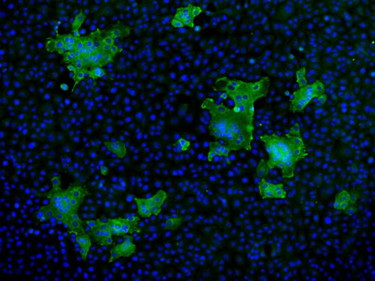
Immunofluorescence (IF) technique, also known as fluorescent antibody technique, is one of the earliest developed labeled immunoassays. Established on the basis of immunology, biochemistry, and microscopy, this technique aims to localize antigenic substances in tissues or cells through antigen-antibody reactions by conjugating antibody molecules with tracer substances. As a classic molecular localization tool, IF has been widely used in basic life science research and clinical diagnosis due to its direct visualization advantage.
1.2 Multiplex Immunohistochemistry (mIHC)
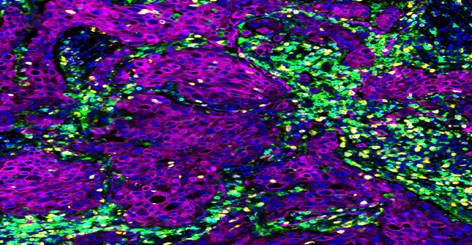
Multiplex Immunohistochemistry (mIHC) is primarily based on Tyramide Signal Amplification (TSA) technology. TSA is a type of enzymatic detection method that uses Horseradish Peroxidase (HRP) for high-density in situ labeling of target proteins or nucleic acids. This technology is compatible with high-performance dyes such as Alexa Fluor®, traditional fluorescent dyes, and colorimetric detection systems. The core principle of TSA involves the peroxidase reaction of tyramide: tyramide salts form covalent binding sites under the catalysis of HRP and H₂O₂, generating a large number of enzymatic products. These products can bind to surrounding protein residues (including tryptophan, histidine, and tyrosine residues), resulting in massive biotin deposition at the antigen-antibody binding site. Subsequent binding with Streptavidin-HRP/fluorophores, followed by several cycles of such amplification, allows the binding of a large number of enzyme molecules or fluorophores, thereby achieving geometric amplification of the detection signal.
2. Research Frontiers
With the increasing demand for comprehensive analysis of complex biological systems (such as tumor microenvironments, immune cell interactions, and tissue heterogeneity), the limitations of single-target detection technologies have become increasingly prominent. Multiplex detection technologies represented by mIHC have emerged as a research frontier, enabling simultaneous detection of multiple targets in a single tissue section. The comparison and optimization of mIHC and traditional IF technologies, as well as the exploration of their applicable scenarios, have become key research directions to improve the efficiency and depth of biological research. In addition, the integration of mIHC with digital pathology and image analysis technologies has further expanded its application potential in precision medicine and translational research.
3. Research Significance
A clear understanding of the principles, differences, and applicable scenarios of mIHC and IF is of great significance for optimizing experimental design and improving research efficiency. IF, as a traditional technology, has the advantages of simplicity, rapidity, and direct visualization, making it suitable for preliminary localization of single or a small number of targets. In contrast, mIHC, with its unique TSA-based signal amplification mechanism and multiplex detection capability, addresses the limitation of IF in detecting multiple targets simultaneously. This advantage is particularly critical for exploring complex biological processes involving multiple molecules and cells (such as immune cell infiltration patterns in tumors, intercellular crosstalk, etc.), providing more comprehensive and in-depth data support for deciphering complex biological mechanisms and promoting the development of precision medicine.
4. Related Mechanisms, Differences and Product Applications
4.1 Core Mechanisms Comparison
The core mechanism of IF relies on the specific binding of fluorescently labeled antibodies to target antigens, with the signal directly generated by the fluorophores conjugated to the antibodies. This mechanism ensures the simplicity of the technique but limits its signal intensity and multiplexing capability. In contrast, mIHC utilizes the TSA signal amplification system: HRP catalyzes the deposition of a large number of tyramide-conjugated fluorophores at the antigen-antibody binding site, achieving signal amplification. This amplification mechanism not only enhances the detection sensitivity but also enables sequential labeling of multiple targets through antibody stripping and re-staining cycles, realizing multiplex detection.
4.2 Key Differences Between mIHC and IF
| Comparison Dimension | Multiplex Immunohistochemistry (mIHC) | Immunofluorescence (IF) |
| Core Technology Basis | Tyramide Signal Amplification (TSA) technology | Direct conjugation of fluorophores to antibodies |
| Signal Intensity | High, achieved by geometric signal amplification | Moderate, dependent on the number of conjugated fluorophores |
| Multiplex Detection Capability | Strong, capable of detecting 4-6 or more targets simultaneously on a single section | Limited, generally 2-3 targets due to spectral overlap of fluorophores |
| Sensitivity | High, suitable for detecting low-abundance targets | Moderate, relatively less sensitive to low-abundance targets |
| Compatibility | Compatible with fluorescent dyes and colorimetric detection systems | Mainly compatible with fluorescent detection systems |
| Application Scenarios | Complex microenvironment analysis, multiplex target detection, low-abundance antigen detection | Preliminary antigen localization, simple single-target detection, rapid experimental verification |
4.3 Product Applications: ANT BIO's mIHC Solutions
In response to the research needs of mIHC and IF technologies, ANT BIO PTE. LTD. provides a full range of high-quality solutions through its Absin product line, including multiplex fluorescence IHC staining kits and professional mIHC technical services. These products are developed based on optimized TSA technology, supporting simultaneous detection of up to 6 targets with 7 colors (including DAPI) on a single tissue section. The kits are equipped with high-performance SuperNova series dyes, which have higher fluorescence intensity and longer signal stability compared to traditional dyes, ensuring clear and reliable imaging results.
ANT BIO PTE. LTD.'s mIHC solutions are widely applicable to various research fields such as tumor microenvironment analysis, immune cell interaction research, and tissue heterogeneity exploration. Whether it is basic scientific research or translational medicine research, these solutions can effectively help researchers overcome the limitations of traditional IF technology, achieve comprehensive and in-depth analysis of complex biological systems, and accelerate the process of scientific research.
5. Brand Mission
ANT BIO PTE. LTD. is dedicated to empowering life science research through the provision of high-quality, reliable reagents and comprehensive solutions. Our specialized sub-brands (Absin, Starter, UA) are strategically positioned to cover a full spectrum of research needs: Absin focuses on general reagents and kits, Starter specializes in antibodies, and UA is dedicated to recombinant proteins. We strive to support researchers in unlocking scientific mysteries, advancing medical progress, and addressing unmet clinical needs through continuous innovation and customer-centric services.
6. Related Product List
| Catalog No. | Product Name | Specification |
| abs50086 | Two-Color Multiplex Immunofluorescence IHC Staining Kit (Anti-Rabbit Secondary Antibody) | 100T |
| abs50087 | Two-Color Multiplex Immunofluorescence IHC Staining Kit (Mouse/Rabbit Universal Secondary Antibody) | 100T |
| abs50088 | Three-Color Multiplex Immunofluorescence IHC Staining Kit (Anti-Rabbit Secondary Antibody) | 100T |
| abs50089 | Three-Color Multiplex Immunofluorescence IHC Staining Kit (Mouse/Rabbit Universal Secondary Antibody) | 100T |
| abs50012 | Four-Color Multiplex Immunofluorescence IHC Staining Kit (Mouse/Rabbit Universal Secondary Antibody) | 20T/50T/100T |
| abs50168 | Four-Color Multiplex Immunofluorescence IHC Staining Kit B (Anti-Rabbit Secondary Antibody) | 20T/50T/100T |
| abs50013 | Five-Color Multiplex Immunofluorescence IHC Staining Kit (Mouse/Rabbit Universal Secondary Antibody) | 20T/50T/100T |
| abs50029 | Five-Color Multiplex Immunofluorescence IHC Staining Kit (Anti-Rabbit Secondary Antibody) | 20T/50T/100T |
| abs50030 | Six-Color Multiplex Immunofluorescence IHC Staining Kit (Anti-Rabbit Secondary Antibody) | 20T/50T/100T |
| abs50048 | Six-Color Multiplex Immunofluorescence IHC Staining Kit (Plus) (Anti-Rabbit Secondary Antibody) | 20T/50T/100T |
| abs50049 | Six-Color Multiplex Immunofluorescence IHC Staining Kit (Plus) (Mouse/Rabbit Universal Secondary Antibody) | 20T/50T/100T |
| abs50015 | Seven-Color Multiplex Immunofluorescence IHC Staining Kit (Mouse/Rabbit Universal Secondary Antibody) | 20T/50T/100T |
| abs50031 | Seven-Color Multiplex Immunofluorescence IHC Staining Kit (Anti-Rabbit Secondary Antibody) | 20T/50T/100T |
| abs50037 | Seven-Color Multiplex Immunofluorescence IHC Staining Kit (Plus) (Mouse/Rabbit Universal Secondary Antibody) | 20T/50T/100T |
| abs50038 | Seven-Color Multiplex Immunofluorescence IHC Staining Kit (Plus) (Anti-Rabbit Secondary Antibody) | 20T/50T/100T |
| abs50165 | Seven-Color Multiplex Immunofluorescence IHC Staining Kit (770 Dye Enhanced Version) (Anti-Rabbit Secondary Antibody) | 20T/50T/100T |
| abs50166 | Seven-Color Multiplex Immunofluorescence IHC Staining Kit (770 Dye Enhanced Version) (Mouse/Rabbit Universal Secondary Antibody) | 20T/50T/100T |
| abs50018 | Ten-Color Multiplex Immunofluorescence IHC Staining Kit | 100T |
| abs50083 | Lung Cancer Tumor Microenvironment Multiplex Immunofluorescence IHC Detection Kit (I) | 20T |
| abs50084 | Lung Cancer Tumor Microenvironment Multiplex Immunofluorescence IHC Detection Kit (II) | 20T |
7. Disclaimer
This article is AI-compiled and interpreted based on the original work in document 1226.docx (Multiplex Immunohistochemistry vs. Immunofluorescence). All intellectual property (e.g., images, data) of the original publication shall belong to the corresponding journal and research team. For any infringement, please contact us promptly and we will take immediate action.
8. Brand Promotion Copy
ANT BIO PTE. LTD. – Empowering Scientific Breakthroughs
At ANTBIO, we are committed to advancing life science research through high-quality, reliable reagents and comprehensive solutions. Our specialized sub-brands (Absin, Starter, UA) cover a full spectrum of research needs, from general reagents and kits to antibodies and recombinant proteins. With a focus on innovation, quality, and customer-centricity, we strive to be your trusted partner in unlocking scientific mysteries and driving medical progress. Explore our product portfolio today and elevate your research to new heights.
Related News
- PSEN1 Antibodies: Unraveling Alzheimer’s Disease Pathogenesis and Fueling Therap 9/30/2026
- PMS2 Gene: From DNA Mismatch Repair to Tumorigenesis – Uncovering Multidimension 9/29/2026
- BCA Protein Quantification Kit: Principle, Applications, and Comprehensive Exper 9/22/2026
- Proteinase K: A Versatile and Indispensable Tool Enzyme in Molecular Biology Res 9/21/2026
- Lipid Nanoparticles (LNPs) for Protein Delivery: Breaking Through Therapeutic Ba 9/20/2026
- PMSF Protease Inhibitor: The Indispensable Guardian of Proteins in Laboratory Re 9/19/2026
- Neutral Protease: Core Properties, Experimental Applications and High-Quality Pr 9/18/2026
- Prestained Protein Marker: A Comprehensive Guide for Western Blot and Protein El 9/17/2026
- PSEN1 Antibody: A Critical Tool for Deciphering Alzheimer's Disease Pathogenesis 9/16/2026
- SHP Substrate 1 Recombinant Protein: Molecular Design, Functional Mechanisms and 9/15/2026