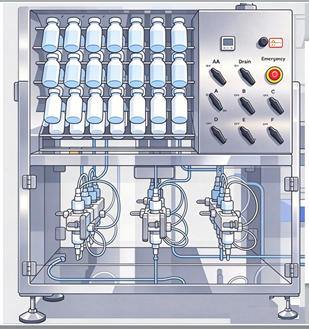
Multi‑Channel Peptide Synthesizer
Product Introduction
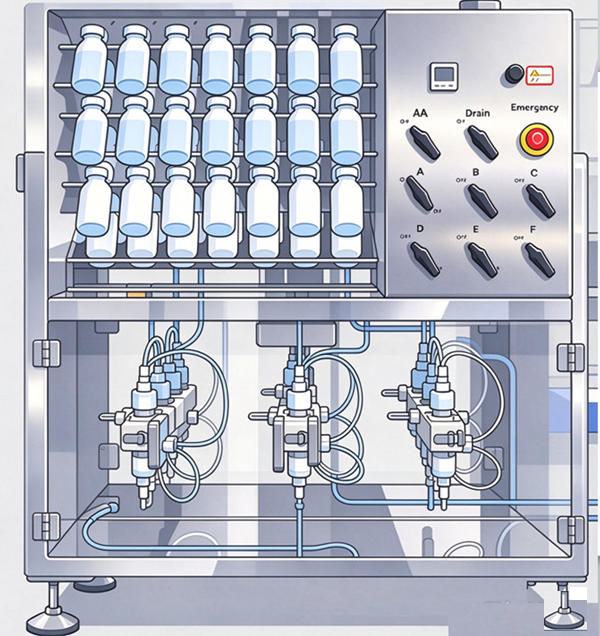
Multi‑channel fully‑automatic peptide synthesizer. Equipped with dead‑zone‑free numerically‑controlled stirring technology, it can automatically synthesize 6 different peptides simultaneously. It is especially suitable for peptide mapping, peptide library construction, peptide drug R&D, research on peptide synthesis optimization conditions, as well as users synthesizing custom peptides, difficult‑to‑synthesize peptides, special peptides, and users requiring high crude peptide purity.
 Application Scenarios & Functions
The peptide synthesizer is mainly applied for Solid‑Phase Peptide Synthesis (SPPS). It automatically completes amino acid coupling and batch preparation of peptide fragments. It is widely used in drug development, antigen peptide preparation, diagnostic reagents, cosmetic raw materials and other fields.
- Synthesis Mode: Fmoc
- Activation Method: HOBT/DIC/DCC/HBTU/HATU/Oxyma, etc.
- Amino Acid Addition: Automatic
- Reactor Volume: Optional 40 mL, 100 mL
- Number of Amino Acids: 27 types
- Amino Acid Bottle Volume: 100 mL / 250 mL
- Overall Dimension: 93 cm(W) × 60 cm(D) × 82 cm(H)
1. Amino Acid Feeding and Reagent Delivery
‑ Automatically deliver protected amino acids, activators, deprotection reagents, washing solvents, etc. ‑ Precisely control reagent volume, complete reagent feeding and liquid drainage according to programmed procedures. ‑ Support multi‑position amino acid stations for synthesis of peptides with different sequences.
2. Deprotection (Fmoc/Boc Removal)
‑ Fmoc strategy: Remove amino‑protecting groups with piperidine. ‑ Boc strategy: Acid‑mediated deprotection. ‑ Control reaction time and temperature to ensure full exposure of amino groups on resin for subsequent coupling reactions.
3. Amino Acid Activation and Coupling Reaction
‑ On‑line activation: Activate carboxyl groups by activators including HBTU, HATU, DIC, etc. ‑ Activated amino acids react with free amino groups on resin to form peptide bonds. ‑ Coupling time, temperature and equivalent dosage are configurable to improve coupling efficiency. ‑ Double‑coupling supported for difficult‑to‑couple sites to reduce deletion‑sequence impurities.
4. Resin Washing
‑ Automatically perform multiple solvent washing cycles after each deprotection and coupling step. ‑ Remove residual reagents, unreacted amino acids and by‑products. ‑ Minimize side reactions and reduce peptide‑related impurities.
5. Reaction Temperature Control
‑ Room‑temperature / heated synthesis; low‑temperature mode supported on partial models. ‑ Heating improves coupling efficiency for sterically‑hindered amino acids and shortens synthesis cycle.
6. Nitrogen Stirring / Bubbling Mixing
‑ Resin is mixed by nitrogen bubbling as an alternative to mechanical stirring. ‑ Resin particles are fully suspended to realize uniform solid‑liquid contact and complete reactions.
7. Nitrogen Blowing, Liquid Drainage and Waste Liquid Collection
‑ Automatically drain waste liquid upon reaction completion. ‑ Dry resin by nitrogen blowing. ‑ Collect waste liquid in separate tanks for acid, alkali and organic solvents.
8. Program Editing and Execution
‑ Customize peptide sequences to auto‑generate synthesis workflows. ‑ Modify step‑wise parameters including reaction time, reagent dosage and cycle counts. ‑ Runtime status monitoring, fault alarm and synthesis log recording.
9. Crude Peptide Preparation before Cleavage (On‑instrument)
Fully‑protected peptides attached to resin are obtained after synthesis.
10. Throughput Modes
‑ Single‑column synthesis: For long peptides and difficult‑to‑synthesize peptides. ‑ Multi‑channel parallel synthesis: Synthesize multiple peptides of different sequences simultaneously for screening purposes.
Specifications
| Number of Channels |
Synthesis Scale per Channel |
Heating Support |
| 3*40ml |
0.1-0.5mmol |
Optional |
| 6*40ml |
0.1-0.5mmol |
Optional |
| 3*100ml |
0.1-1.25mmol |
Optional |
| 3*250ml |
0.1-3.12mmol |
Optional |
Product Features
• Dead‑zone‑free stirring design. The stirring system adopts 180° up‑and‑down flipping motion to achieve thorough and homogeneous mixing without dead zones. Average coupling efficiency exceeds 99%. Highly suitable for synthesis of long peptides and difficult peptides to satisfy research requirements. • Simultaneously synthesize up to 6 peptides of different lengths, supporting long‑term unattended automatic operation. • 27 amino acids available for synthesis; users can self‑define special amino acids and reagents. • Adopt automatic circulating hot‑water system, heating reactor interior up to 75 °C for shortened synthesis duration. • Synthesis data is fully recorded and auto‑saved, facilitating patent application for new drug development.
Application Scenarios
Based on Solid‑Phase Peptide Synthesis (SPPS), the synthesizer realizes automated peptide chain assembly, covering the full workflow of fundamental research, pharmaceutical R&D, diagnostic reagents and process scaling‑up. Application scenarios are divided into lab‑scale R&D, pilot‑scale test and production‑scale manufacturing according to synthesis scale.
I. Universities & Research Institutes (Lab‑scale, mg‑g level)
- Fundamental Biological Research ‑ Synthesize antigen peptides and epitope peptides for antibody preparation. ‑ Synthesize signal peptides, cell‑penetrating peptides and antimicrobial peptides for cellular and in‑vitro functional assays. ‑ Synthesize protein fragments for protein‑protein interaction and enzyme substrate studies.
- Chemical Biology Research ‑ Modified peptide synthesis: phosphorylated peptides, biotin‑labeled peptides, fluorescence‑labeled peptides, cyclic peptides. ‑ Research on peptide conformation and development of peptide chemistry methodologies. ‑ Parallel synthesis of multiple peptides for activity screening.
Recommended Equipment: Compact multi‑channel peptide synthesizer for multi‑sequence parallel synthesis with priority on throughput.
II. Biomedical CRO Companies
- Early‑stage Drug Screening ‑ Synthesize large batches of candidate peptide molecules for rapid activity screening. ‑ Prepare peptide drug candidates for in‑vitro / in‑vivo pharmacological experiments.
- Custom Peptide Service ‑ Provide commercial custom peptide synthesis services, deliver crude peptides or resin‑bound protected peptides to universities and pharmaceutical clients.
Recommended Equipment: Medium‑small‑scale synthesizer, compatible with single long‑peptide synthesis and multi‑sequence parallel synthesis.
III. Pharmaceutical Enterprises (Innovative Drugs & Peptide API)
- Drug R&D Phase ‑ Synthesize peptide drug candidates such as GLP‑1 analogues, somatostatin, thymosin and oxytocin. ‑ Process development: optimize coupling time, temperature and reagent equivalent dosage to establish robust solid‑phase synthesis processes. ‑ Prepare pre‑clinical samples for pharmacodynamic and toxicological studies.
- Pilot‑scale Scale‑up (g‑kg level) ‑ Process transfer and scale‑up of solid‑phase peptide synthesis. ‑ GMP‑compliant traceable logs to satisfy regulatory submission requirements. ‑ Manufacture clinical‑batch samples.
Recommended Equipment: Pilot‑scale and GMP‑production grade peptide synthesizer with large single‑reactor feeding capacity and complete audit trail function.
IV. In‑Vitro Diagnostic (IVD) Industry
‑ Synthesize peptide antigens for ELISA, colloidal gold and chemiluminescence diagnostic reagents. ‑ Synthesize specific epitope peptides for development of diagnostic kits for autoimmune and infectious diseases.
Features: Relatively fixed sequences; high requirements on batch‑to‑batch stability and reproducibility.
V. Other Industrial Applications
- Cosmetic Raw Materials: R&D and synthesis of signal peptides and cosmetic active peptides.
- Agricultural Peptides: R&D of plant‑derived active peptides and antimicrobial peptide pesticide candidates.
- Peptide Library Construction: Combinatorial peptide libraries for high‑throughput screening of active molecules.
Welcome to inquire, pangjun@costones.com
bio-equip.cn
Suzhou COSTONES Instruments Co., Ltd. (COSTONES) is an instrument company focusing
on separation and purification. It is an equipment supplier and service provider
for biopharmaceutical, cell therapy and gene testing. It is committed to providing
users with industry-leading technical support and services.
The company has a perfect service system and executive power. It interprets the
user experience from the four aspects of technical communication, scheme design,
technical support and after-sales service, and tries to achieve seamless connection
in every link until it is recognized by customers.
For a long time, we have maintained good cooperative relations with domestic and
foreign suppliers. The main products include protein purification system,
compressible chromatographic column, ultrafiltration system, chromatographic
ultrafiltration accessories, etc., and provide maintenance services and customized
product services;
At present, Suzhou quarrying has provided high-quality services for
biopharmaceutical, cell therapy, research institutes and scientific research users.
It has carried out in-depth cooperation with customers and become a reliable partner
for customers to achieve win-win results.
We take quality first as the standard, quickly respond to customer needs, help
customers solve problems, improve efficiency, and take improving core
competitiveness for customers as our service tenet. We are willing to realize our
own value while creating value for customers and society through our unremitting
efforts.
 中文