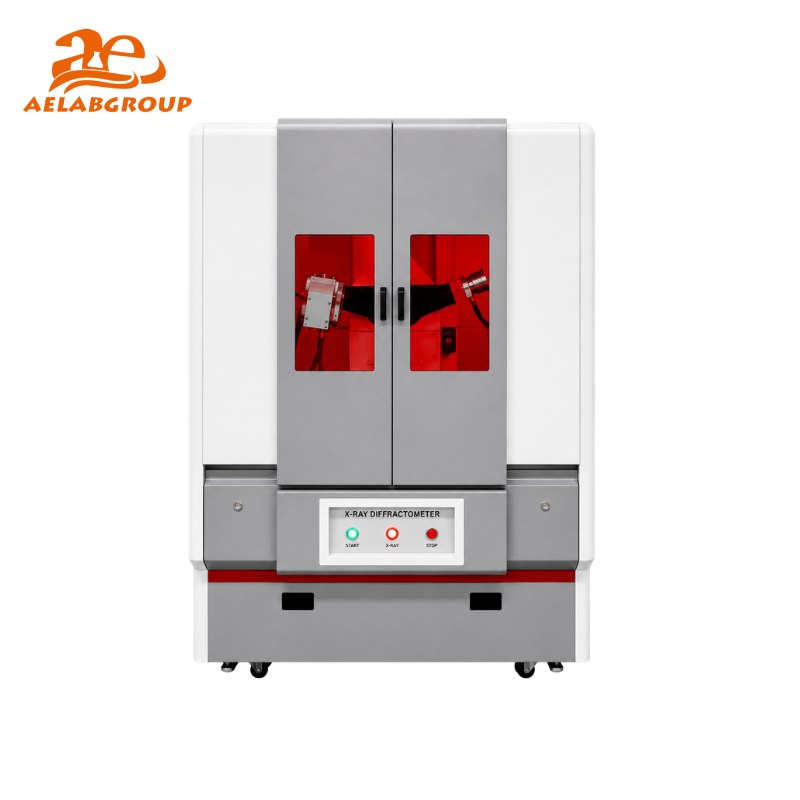
AELAB X-Ray Diffractometers for Crystal Structure and Phase Analysis
AELAB supplies laboratory X-ray diffractometer systems for crystal structure characterization, crystalline phase identification, qualitative and quantitative phase analysis, crystallinity evaluation, texture studies and residual stress measurement.
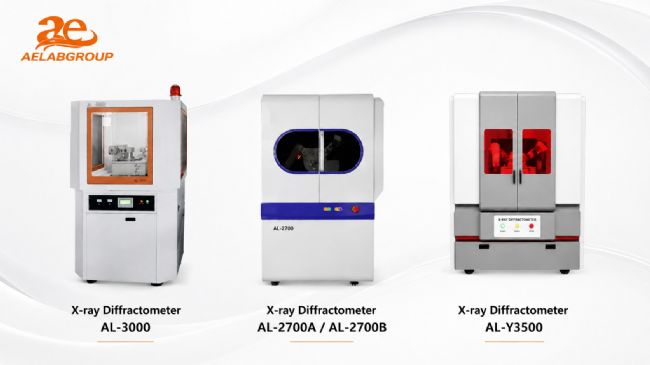
The AELAB XRD range includes compact desktop instruments, standard laboratory diffractometers, high-performance analytical systems and multi-functional configurations for research, industrial quality control and advanced materials analysis.
Available systems can be applied to powders, bulk solids, metals, minerals, ceramics, cement, pharmaceutical compounds, polymers, catalysts, thin films and other crystalline or partially crystalline materials, depending on the selected model and configuration.
Customers can compare AELAB X-ray diffractometer models according to sample type, analytical objective, X-ray tube power, scanning range, angular accuracy, detector configuration, laboratory space and required software functions.
What Is an X-Ray Diffractometer?
An X-ray diffractometer, commonly called an XRD system, is an analytical instrument used to study the structural characteristics of crystalline materials. The instrument directs an X-ray beam toward a sample and records the diffraction pattern created by the interaction between the X-rays and the atomic planes inside the material.
The position, intensity and shape of the diffraction peaks can provide information about phase composition, crystal structure, lattice parameters, crystallinity, preferred orientation, crystallite size and structural changes.
Unlike X-ray fluorescence analysis, which is mainly used to determine elemental composition, X-ray diffraction is selected when the laboratory needs information about crystalline phases and material structure.
Available XRD System Types
| XRD System Type |
Typical Application |
| Desktop X-Ray Diffractometer |
Compact XRD analysis for laboratories requiring a smaller footprint, straightforward operation and routine phase identification. |
| Powder X-Ray Diffractometer |
Identification and comparison of crystalline phases in powders such as minerals, cement, ceramics, catalysts and pharmaceutical materials. |
| Standard Laboratory XRD System |
General material characterization, phase analysis and research involving metals, inorganic materials, polymers and industrial products. |
| High-Performance XRD System |
More demanding analytical work requiring precise angular control, flexible scanning and advanced detector options. |
| Multi-Functional XRD System |
Advanced crystal structure, texture, residual stress and specialized material research using configurable accessories and software. |
| Thin-Film and Specialized XRD Configuration |
Structural characterization of coatings, thin films, semiconductor materials and specialized research samples when supported by the selected configuration. |
What Information Can XRD Provide?
Phase Identification
Identifies crystalline compounds by comparing measured diffraction peaks with reference patterns.
Quantitative Phase Analysis
Estimates the relative amount of different crystalline phases when suitable analytical methods and reference data are used.
Crystal Structure Evaluation
Provides information related to lattice arrangement, structural characteristics and changes within crystalline materials.
Crystallinity Analysis
Helps compare crystalline and amorphous characteristics and evaluate changes caused by formulation or processing.
Texture and Orientation
Evaluates preferred crystal orientation in metals, coatings, films and other processed materials.
Residual Stress Measurement
Supports stress evaluation in suitable materials when the instrument is equipped with the required measurement configuration.
Typical X-Ray Diffraction Applications
- Qualitative and quantitative crystalline phase analysis
- Identification of minerals, ores, rocks and geological samples
- Characterization of metals, alloys and metallurgical products
- Analysis of cement, clinker, ceramics and construction materials
- Pharmaceutical polymorph and crystalline-form investigation
- Crystal structure evaluation of chemical compounds
- Characterization of catalysts and petrochemical materials
- Analysis of nanomaterials and advanced functional materials
- Crystallinity studies for polymers and composite materials
- Thin-film, coating and surface-layer characterization
- Texture and preferred-orientation analysis
- Residual stress measurement in suitable metal components
- Research and teaching in universities and scientific institutes
- Incoming material inspection and industrial quality control
- Investigation of phase transformations after heat treatment
Industries Using AELAB XRD Systems
| Industry |
Common XRD Work |
| Metallurgy and Metals |
Phase identification, heat-treatment studies, texture analysis and residual stress evaluation. |
| Cement and Ceramics |
Identification and quantification of mineral phases in raw materials, clinker, cement and fired ceramic products. |
| Pharmaceuticals |
Polymorph screening, crystallinity comparison and verification of crystalline drug substances. |
| Mining and Geology |
Mineralogical identification of ores, soils, rocks, sediments and exploration samples. |
| Chemical and Petrochemical |
Structural analysis of catalysts, chemical compounds, inorganic products and process materials. |
| Advanced Materials |
Characterization of nanomaterials, battery materials, composites, functional ceramics and research materials. |
| Universities and Research Institutes |
General crystallography, materials research, method development and scientific education. |
How to Select the Right X-Ray Diffractometer
Selecting an XRD system should begin with the required analytical result rather than only the instrument size or rated power. Laboratories should identify the expected sample types, required diffraction methods, scanning range, angular accuracy, detector technology, throughput and data-analysis requirements.
| Selection Factor |
Questions to Consider |
| Analytical Objective |
Is the system required for routine phase identification, quantitative analysis, crystal structure research, texture or stress measurement? |
| Sample Type |
Will the laboratory analyze powders, bulk solids, metals, thin films, micro samples or multiple sample formats? |
| X-Ray Tube and Target |
Which target material and tube configuration are appropriate for the expected sample composition and analytical method? |
| Generator Power |
Does the application require a compact routine system or a higher-power configuration for advanced work? |
| Scanning Range |
What angular range is required for the expected phases, materials and analytical procedures? |
| Angular Accuracy |
What step size, reproducibility and positioning accuracy are required for reliable peak identification? |
| Detector Type |
Is a standard counting detector sufficient, or is a faster or higher-sensitivity detector required? |
| Sample Stage and Accessories |
Are specialized holders, automatic sample stages, thin-film accessories or stress and texture attachments needed? |
| Software Functions |
Does the laboratory require phase matching, quantitative analysis, refinement, report generation or specialized analysis modules? |
| Laboratory Space |
Is a compact desktop instrument required, or is there sufficient space for a full-size floor-standing system? |
| Testing Throughput |
How many samples will be analyzed per day, and is faster scanning or automated operation necessary? |
| Installation Requirements |
What electrical supply, cooling, room conditions, radiation protection and operator training are required? |
View the Complete AELAB X-Ray Diffractometer Range and Technical Specifications
Sample Preparation Considerations
Correct sample preparation is important for obtaining representative and repeatable diffraction patterns. The required preparation procedure depends on whether the sample is a powder, bulk solid, thin film, metal component or another material type.
- Powder samples should generally be homogeneous and prepared with a suitable particle size.
- The sample surface should be flat and correctly positioned in the holder.
- Preferred orientation should be minimized when it may influence the analytical result.
- Contamination from grinding, mixing or sample holders should be controlled.
- Bulk and metal samples may require cutting, polishing or surface preparation.
- Thin films and coatings may require special holders or measurement geometries.
- Reference standards should be used according to the selected analytical method.
- Sample preparation procedures should remain consistent when comparing batches.
XRD Compared with XRF
| Comparison Point |
X-Ray Diffractometer |
X-Ray Fluorescence Spectrometer |
| Main Analytical Goal |
Crystal structure and phase analysis |
Elemental composition analysis |
| Main Result |
Crystalline phases, structure, crystallinity and related structural information |
Elements present in the sample and, depending on method, their concentrations |
| Typical Question |
Which crystalline compound or mineral phase is present? |
Which chemical elements are present? |
| Common Samples |
Crystalline powders, metals, minerals, ceramics, thin films and pharmaceuticals |
Metals, minerals, powders, liquids, coatings and many industrial materials |
XRD and XRF are complementary techniques. Some laboratories use both systems to obtain structural information from XRD and elemental-composition information from XRF.
Why Choose AELAB X-Ray Diffractometers?
- Compact, standard and advanced XRD configurations for different laboratory requirements
- Models for routine quality control, scientific research and industrial material analysis
- Solutions for powders, bulk samples, metals, thin films and micro samples, depending on configuration
- Multiple generator power, detector and accessory options across the available product range
- Support for qualitative phase analysis and other advanced analytical functions according to model
- Model-selection assistance based on sample type and analytical objective
- Technical specification and configuration support before quotation
- International supply, export packaging and shipping assistance
- Installation, training and documentation options according to project requirements
- Customized configurations and optional accessories where available
Information to Provide When Requesting an XRD Quotation
For a more accurate model recommendation, send the AELAB technical team the following information:
- Sample names and expected material composition
- Powder, bulk, metal, thin-film or other sample format
- Required tests and analytical objectives
- Expected crystalline phases or materials
- Required scanning range and angular accuracy, when known
- Preferred detector or X-ray tube configuration, when specified
- Required software and data-analysis functions
- Expected number of samples per day
- Laboratory space and available utilities
- Destination country and required electrical supply
- Installation, training and documentation requirements
About AELAB
AELAB is a laboratory equipment brand and supplier based in Guangzhou, China. The company supplies analytical instruments, laboratory equipment, environmental testing systems, pharmaceutical testing equipment and quality-control solutions for distributors, universities, research institutes and industrial customers.
AELAB supports international laboratory projects with instrument selection, technical communication, quotation preparation, export packaging and shipping services.
Official website: www.aelabgroup.com
Frequently Asked Questions
What is an X-ray diffractometer used for?
An X-ray diffractometer is used to investigate crystalline structures and identify the phases present in a material. It can also support crystallinity, texture, lattice and residual-stress studies, depending on the instrument configuration.
Which samples can be tested by XRD?
XRD can analyze many crystalline or partially crystalline materials, including minerals, metals, alloys, ceramics, cement, pharmaceutical compounds, catalysts, polymers, powders, bulk solids and thin films.
What is the difference between XRD and XRF?
XRD primarily identifies crystal structure and crystalline phases. XRF primarily determines which chemical elements are present in a sample. The two techniques provide different but complementary information.
Can XRD test amorphous materials?
XRD can detect broad scattering features associated with amorphous or low-crystallinity materials, but these samples normally do not produce the sharp diffraction peaks associated with highly crystalline substances.
Which AELAB model is suitable for a small laboratory?
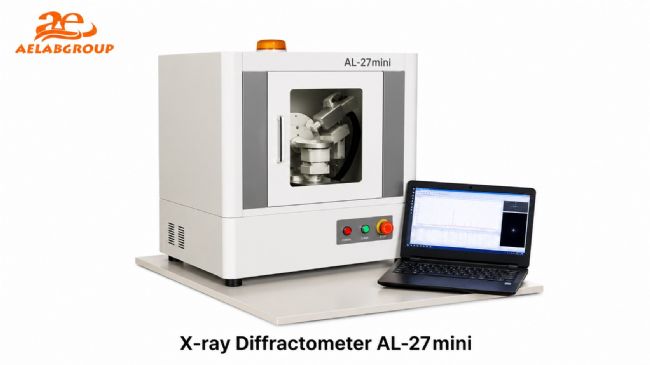
The AL-27mini is the compact desktop model in the AELAB XRD range. Final suitability depends on the sample type, required analytical functions, scanning requirements and expected workload.
Which AELAB XRD is suitable for advanced research?
The AL-Y3500 is positioned as a multi-functional system for advanced material research, including crystal structure, texture, stress and specialized diffraction studies. The required accessories should be confirmed before ordering.
Can AELAB recommend an XRD model based on my samples?
Yes. Send the sample type, required tests, expected materials, analytical objective, throughput, preferred configuration and destination country. The AELAB team can then recommend suitable models and prepare a technical quotation.
Does the XRD quotation include accessories and software?
The quotation can be prepared with the main instrument, detector configuration, sample holders, optional accessories, analytical software, installation requirements and other requested items.
Request an AELAB XRD Model Recommendation, Price and Technical Proposal
Tell the AELAB technical sales team which materials you need to test and what analytical results are required. Suitable X-ray diffractometer models and configurations can then be recommended according to your actual laboratory application.
The proposal can include available models, technical specifications, detector options, sample accessories, software functions, delivery time, installation requirements, packaging and shipping information.
View AELAB X-Ray Diffractometer Models
Email: info@aelabgroup.com
WhatsApp / WeChat: +86 158 0001 6110
Website: www.aelabgroup.com
bio-equip.cn AELAB GUANGZHOU CO., LTD.
AELAB is a laboratory equipment and analytical instrument supplier based in Guangzhou, China. We provide laboratory instruments, quality control equipment, analytical systems, sample preparation equipment, and related laboratory solutions for distributors, industrial laboratories, universities, research organizations, and testing centers worldwide.
AELAB offers both our own-brand products and carefully selected instruments from established manufacturers. OEM and ODM services are available for selected AELAB products, including customized branding, appearance, configuration, power supply, accessories, packaging, and documentation according to customer requirements.
For laboratory projects, distributor orders, government tenders, and complete laboratory setups, our team can provide a one-stop purchasing solution. We assist customers with product selection, technical comparison, quotation preparation, sourcing, quality inspection, export packaging, shipping coordination, and after-sales support.
Our technical team helps customers select suitable equipment based on their application, testing method, required specifications, budget, and local standards. Warranty and technical support are provided according to the product and project requirements.
AELAB operates under an established quality management system. Relevant company and product documentation may include SGS verification, ISO certification, CE, RoHS, FCC, or UL-related documentation, depending on the specific product model and configuration. Customers may contact us to confirm the available certificates before ordering.
Our equipment is widely used in industrial quality control, scientific research, universities, pharmaceutical laboratories, food and agricultural testing, environmental analysis, chemical laboratories, and other professional testing applications.
We are committed to developing long-term cooperation with distributors, laboratories, research institutions, and project contractors. If you are looking for a reliable laboratory equipment supplier with stable service and technical support, please contact AELAB.
Contact AELAB
Website:
https://aelabgroup.com
Email:
info@aelabgroup.com
WhatsApp / WeChat:
+86 15800016110
|
 中文
中文