ISCE High‑Performance Capillary Electrophoresis System
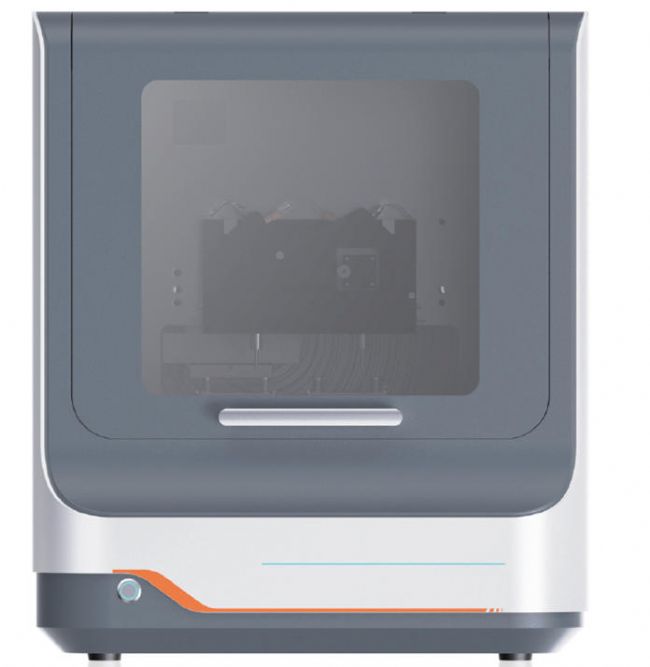
Explore the molecular world, pursue analytical perfection
Product Introduction
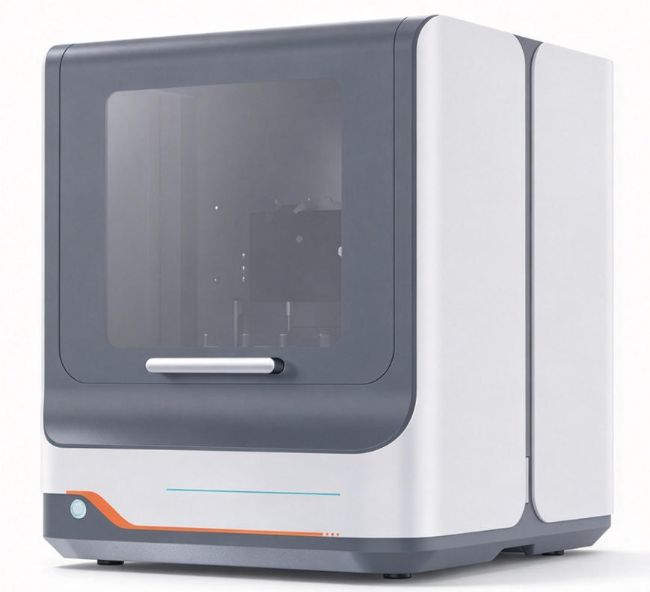
The ISCE‑1000 Capillary Electrophoresis System is a new‑generation analytical instrument developed based on high‑performance capillary electrophoresis technology. Adopting intelligent design and advanced control systems, it achieves industry‑leading levels in separation efficiency, detection sensitivity and operation convenience. Featuring a modular design, the instrument supports optional multiple detectors and injection modes to meet analytical requirements in diverse fields.
High‑performance capillary electrophoresis is an analytical technique featuring high efficiency, fast speed and high sensitivity. Driven by an electric field, charged particles migrate inside the capillary. Rapid sample separation and detection are realized based on differences in substance charge, molecular size, isoelectric point (pI), hydrophobicity and other properties. The ISCE‑1000 Capillary Electrophoresis System is a product launched by Insysis after years of technical accumulation. Its performance benchmarks international leading brands, with advancements in intelligence, regulatory compliance and application support.
It is widely applied in biochemistry, pharmaceuticals, environmental science, food safety and other fields. It is especially suitable for separation and analysis of biomolecules such as proteins, peptides, nucleic acids and saccharides, as well as chiral compounds and small‑molecule compounds.
Product Features
- Outstanding separation performance: Continuously adjustable high‑voltage output of 0±30 kV, paired with a precise liquid‑cooling temperature‑control system (10‑60 °C), ensures high resolution and excellent repeatability.
- Flexible separation modes: Supports multiple separation modes — capillary zone electrophoresis, capillary gel electrophoresis, capillary isoelectric focusing, micellar electrokinetic capillary chromatography, capillary electrochromatography, etc.
- Intelligent operating system: Fully‑automatic sample injection, separation and data processing. The 48‑position sample tray enables continuous testing of large‑batch samples.
- Strict regulatory compliance: The software platform fully meets 21 CFR Part 11 requirements, equipped with complete audit trail and electronic signature functions.
- Economical operating costs: Nanoliter‑scale injection volume and milliliter‑scale solvent consumption greatly reduce experimental costs.
Main Specifications
| Parameter Category |
Detailed Specification |
| Overall Dimension |
73×65×72 cm |
| Weight |
85 kg |
| Power Requirement |
100‑240 VAC, 50/60 Hz, 500 W |
| Output Voltage |
0‑±30 kV continuously adjustable |
| Output Current |
0‑300 μA |
| Injection Mode |
Voltage: 0‑±30 kV; Pressure: 0‑100 psi continuously adjustable output |
| Temperature‑Control System |
Liquid cooling, 10‑60 °C |
| Sample Capacity |
1×48‑vial sample tray |
| Detector |
UV detector, wavelength range 190‑600 nm |
 Typical Application Scenarios
1. CZE Detection of Aprotinin
‑ Separation Mode: Capillary Zone Electrophoresis (CZE) ‑ Capillary Specification: Fused‑silica capillary ‑ Total Length / Effective Length: 57 cm / 50 cm ‑ Inner Diameter: 75 μm ‑ Injection Condition: 0.21 psi, 3 s ‑ Separation Voltage: 12 kV ‑ Separation Buffer: 120 mM potassium dihydrogen phosphate buffer, pH 2.5 ‑ Capillary Temperature: 25 °C ‑ Sample Chamber Temperature: RT (Room Temperature) ‑ Detection Wavelength: 214 nm ‑ Sample Information: Aprotinin
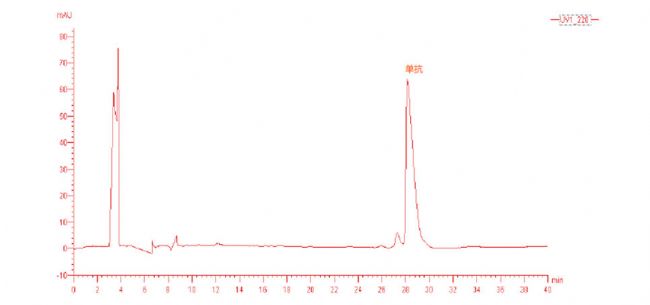 Aprotinin Detection per Chinese Pharmacopoeia — System Suitability Requirements
In the electropherogram of reference solution, the migration‑time ratio of des‑Ala‑des‑Gly‑aprotinin peak relative to aprotinin peak is 0.98; the migration‑time ratio of des‑Ala‑aprotinin peak relative to aprotinin peak is 0.99. The resolution between des‑Ala‑des‑Gly‑aprotinin peak and des‑Ala‑aprotinin peak shall be greater than 0.8; the resolution between des‑Ala‑aprotinin peak and aprotinin peak shall be greater than 0.5. The tailing factor of the aprotinin peak shall not exceed 3.
| Compound Name |
Retention Time [min] |
Peak Area (mAu*min) |
Peak Area [%] |
Tailing Factor |
Resolution |
| Des-Ala-des-Gly-aprotinin |
11.206 |
0.2 |
7.3 |
1.25 |
—— |
| Des-Ala-aprotinin |
11.331 |
0.193 |
7.04 |
1.3 |
1.34 |
| Aprotinin |
11.444 |
2.346 |
85.66 |
2.77 |
0.89 |
2. Non‑Reduced Monoclonal Antibody Detection by CES‑SDS
‑ Separation Mode: Capillary Gel Electrophoresis (CGE)
‑ Capillary Specification: Fused‑silica capillary
‑ Total Length / Effective Length: 33 cm / 26 cm
‑ Inner Diameter: 50 μm ‑ Injection Condition: 10 kV, 40 s
‑ Separation Voltage: 15 kV
‑ Separation Buffer: Self‑prepared mAb separation gel
‑ Capillary Temperature: 25 °C
‑ Sample Chamber Temperature: 15 °C
‑ Detection Wavelength: 220 nm
‑ Sample Information: Non‑reduced monoclonal antibody
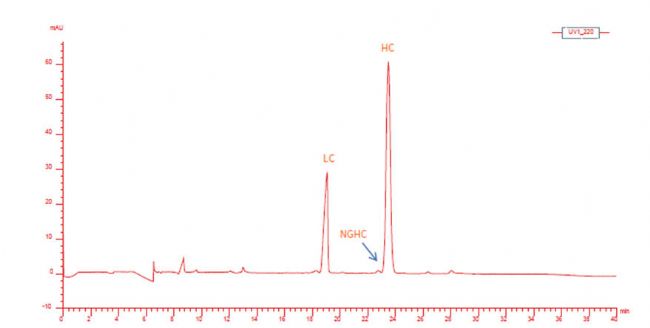 3. Reduced Monoclonal Antibody Detection by CES‑SDS
‑ Separation Mode: Capillary Gel Electrophoresis (CGE)
‑ Capillary Specification: Fused‑silica capillary
‑ Total Length / Effective Length: 33 cm / 26 cm
‑ Inner Diameter: 50 μm
‑ Injection Condition: 10 kV, 30 s
‑ Separation Voltage: 15 kV
‑ Separation Buffer: Self‑prepared mAb separation gel
‑ Capillary Temperature: 25 °C
‑ Sample Chamber Temperature: 15 °C
‑ Detection Wavelength: 220 nm
‑ Sample Information: Reduced monoclonal antibody
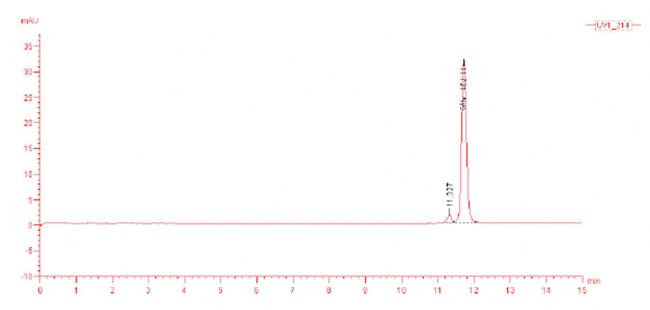 4. CZE Detection of Lysozyme
‑ Separation Mode: Capillary Zone Electrophoresis (CZE)
‑ Capillary Specification: Fused‑silica capillary
‑ Total Length / Effective Length: 47 cm / 40 cm
‑ Inner Diameter: 75 μm ‑ Injection Condition: 5 kV, 5 s
‑ Separation Voltage: 10 kV
‑ Separation Buffer: 50 mM sodium dihydrogen phosphate buffer, pH 2.24
‑ Capillary Temperature: 25 °C
‑ Sample Chamber Temperature: RT (Room Temperature)
‑ Detection Wavelength: 214 nm ‑ Sample Information: Lysozyme
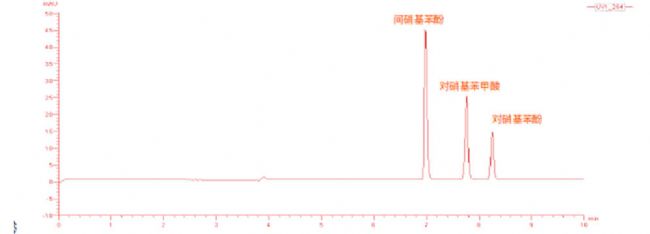 5. CZE Detection of Mixed Small‑Molecule Standards
‑ Separation Mode: Capillary Zone Electrophoresis (CZE)
‑ Capillary Specification: Fused‑silica capillary
‑ Total Length / Effective Length: 47 cm / 40 cm
‑ Inner Diameter: 75 μm
‑ Injection Condition: 0.5 psi, 5 s
‑ Separation Voltage: 15 kV
‑ Separation Buffer: 30 mM Na₂B₄O₇
‑ Capillary Temperature: 25 °C
‑ Sample Chamber Temperature: RT (Room Temperature)
‑ Detection Wavelength: 254 nm
‑ Sample Information: 0.1 mg/mL p‑nitrophenol + 0.1 mg/mL m‑nitrophenol + 0.1 mg/mL p‑nitrobenzoic acid
Notes:
- RT = Room Temperature
- mAb = monoclonal antibody
- CZE = Capillary Zone Electrophoresis; CGE = Capillary Gel Electrophoresis; CES‑SDS = Capillary Electrophoresis‑Sodium Dodecyl Sulfate
Welcome to inquire by phone: E-Mail: pangjun@costones.com
bio-equip.cn
Suzhou COSTONES Instruments Co., Ltd. (COSTONES) is an instrument company focusing
on separation and purification. It is an equipment supplier and service provider
for biopharmaceutical, cell therapy and gene testing. It is committed to providing
users with industry-leading technical support and services.
The company has a perfect service system and executive power. It interprets the
user experience from the four aspects of technical communication, scheme design,
technical support and after-sales service, and tries to achieve seamless connection
in every link until it is recognized by customers.
For a long time, we have maintained good cooperative relations with domestic and
foreign suppliers. The main products include protein purification system,
compressible chromatographic column, ultrafiltration system, chromatographic
ultrafiltration accessories, etc., and provide maintenance services and customized
product services;
At present, Suzhou quarrying has provided high-quality services for
biopharmaceutical, cell therapy, research institutes and scientific research users.
It has carried out in-depth cooperation with customers and become a reliable partner
for customers to achieve win-win results.
We take quality first as the standard, quickly respond to customer needs, help
customers solve problems, improve efficiency, and take improving core
competitiveness for customers as our service tenet. We are willing to realize our
own value while creating value for customers and society through our unremitting
efforts.
 中文