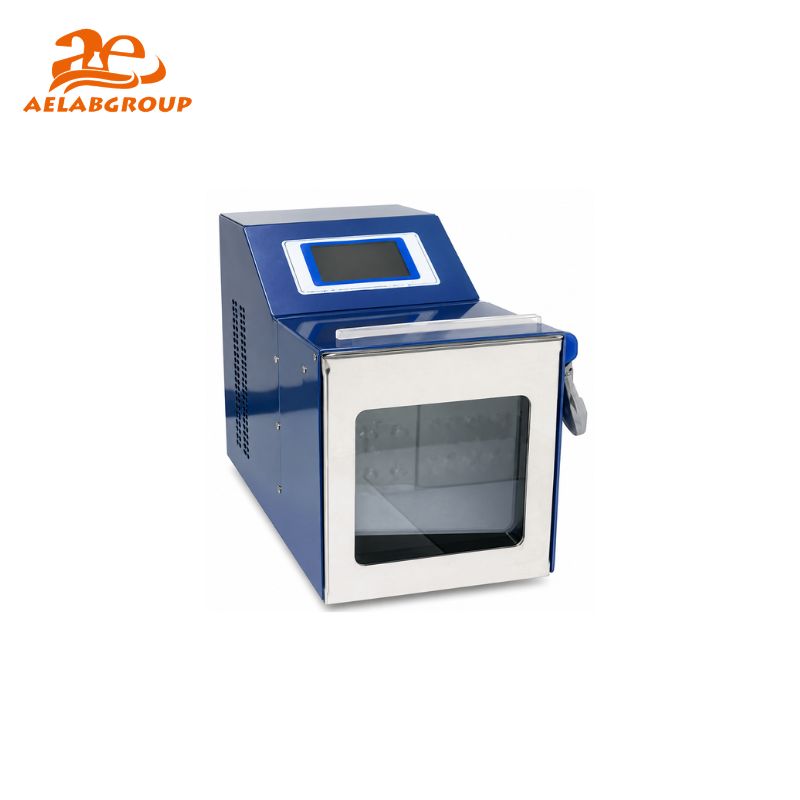
AELAB Laboratory Homogenizer, Grinder and Blender Solutions
AELAB supplies laboratory homogenizers, sample grinders, cell disruption systems and laboratory blenders for research, quality control, biological sample preparation, food analysis, pharmaceutical testing and industrial laboratories.
The available product family supports applications such as particle-size reduction, tissue processing, cell disruption, emulsification, dispersion, mixing and preparation of uniform laboratory samples.
Different operating principles, processing capacities, speed ranges, probe or shaft configurations and sample-handling methods are available according to the sample type and laboratory workflow.
Customers can compare suitable equipment according to sample composition, processing volume, required fineness, viscosity, contamination-control requirements and intended analytical procedure.
Available Homogenization and Sample-Preparation Types
| Equipment Type |
Typical Function |
| Rotor-Stator Homogenizer |
Provides high-speed mechanical shearing for preparing dispersions, suspensions, emulsions and uniform liquid or semi-solid samples. |
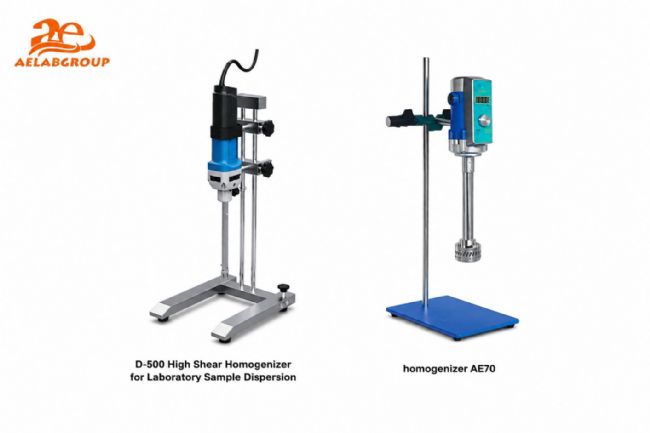
| High-Shear Homogenizer |
Used for intensive mixing, particle-size reduction and dispersion of samples requiring stronger mechanical processing. |
| Handheld Homogenizer |
Suitable for flexible processing of small and medium sample volumes in routine laboratory workflows. |
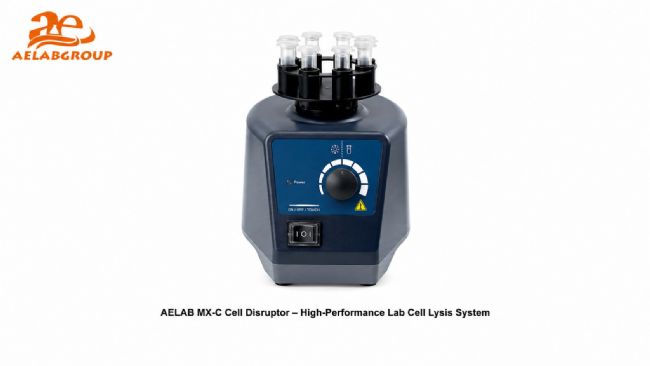
| Ultrasonic Cell Disruptor |
Uses ultrasonic cavitation for cell disruption, extraction, dispersion, emulsification and processing of biological samples. |
| Aseptic Homogenizer |
Processes biological, food and microbiological samples in sealed bags or controlled containers to reduce contamination risk. |
| Laboratory Grinder |
Reduces solid, dry, fibrous or brittle samples into smaller and more representative particles before analysis. |
| Laboratory Blender |
Blends and mixes sample materials to create a more uniform composition for testing and quality-control procedures. |
Typical Laboratory Applications
- Preparation of food and beverage samples before chemical or microbiological analysis
- Homogenization of animal tissue, plant material and biological samples
- Cell disruption for DNA, RNA, protein and intracellular-component extraction
- Preparation of pharmaceutical suspensions, emulsions and formulations
- Dispersion of pigments, powders, additives and fine particles
- Mixing of cosmetic creams, lotions, gels and personal-care formulations
- Grinding of soil, feed, seeds, plants and environmental samples
- Sample preparation before chromatography, spectroscopy and elemental analysis
- Microbiological sample preparation using contamination-controlled workflows
- Development and evaluation of laboratory-scale formulations
- Preparation of uniform samples for quality-control testing
- Research and teaching applications in universities and scientific institutes
Common Processing Principles
Mechanical Shearing
A rotating shaft, rotor or blade applies mechanical force to break particles and distribute sample components more evenly.
High-Speed Dispersion
Rapid rotation creates strong flow and shear conditions for mixing powders, liquids, emulsions and viscous materials.
Ultrasonic Cavitation
Ultrasonic energy generates microscopic cavitation forces that can disrupt cells, disperse particles and assist extraction.
Grinding and Impact
Mechanical impact, cutting or crushing reduces the size of solid and fibrous samples before laboratory analysis.
How to Select the Right Homogenizer, Grinder or Blender
Selecting suitable sample-preparation equipment requires more than comparing motor power or maximum speed. The instrument should be matched to the physical properties of the sample, desired processing result, working volume and contamination-control requirements.
| Selection Factor |
Questions to Consider |
| Sample Type |
Is the material liquid, semi-solid, biological, fibrous, viscous, brittle, dry or particle-based? |
| Required Process |
Is the main objective homogenization, grinding, cell disruption, dispersion, mixing, emulsification or extraction? |
| Sample Volume |
Will the instrument process micro-volume samples, individual laboratory containers or larger batch volumes? |
| Required Particle Size |
What level of particle-size reduction or sample uniformity is required by the analytical method? |
| Sample Viscosity |
Can the selected motor, shaft and processing head handle the viscosity of the material? |
| Speed and Control |
Is variable speed, timing control, pulse operation or programmable processing required? |
| Processing Head or Probe |
Which shaft, probe, blade or accessory configuration is suitable for the sample and vessel? |
| Contamination Control |
Does the application require sealed bags, disposable vessels, sterilizable accessories or aseptic processing? |
| Temperature Sensitivity |
Could heat generated during processing damage biological material or change the sample properties? |
| Daily Throughput |
How many samples must be processed during each working shift? |
| Cleaning Requirements |
Can the sample-contact components be removed, washed, disinfected or sterilized easily? |
Industries and Laboratories Using This Equipment
Biotechnology and Molecular Biology
Preparation of cells, tissues and biological materials for extraction, molecular analysis and research.
Food and Beverage Testing
Creation of representative food samples for compositional, microbiological, nutritional and contaminant testing.
Pharmaceutical and Cosmetic Laboratories
Preparation of suspensions, emulsions, creams, gels and laboratory-scale formulations.
Environmental and Agricultural Testing
Processing of soil, plants, animal feed, fertilizers and environmental solid samples before extraction or analysis.
Chemical and Industrial Quality Control
Dispersion of pigments, fillers, additives, polymers and industrial materials for formulation and testing.
Homogenizer, Grinder and Blender Comparison
| Aspect |
Homogenizer |
Grinder |
Blender |
| Main Purpose |
Producing a uniform dispersion or mixture |
Reducing solid sample particle size |
General mixing and blending |
| Typical Samples |
Liquids, tissues, suspensions and emulsions |
Dry, brittle, fibrous or solid materials |
Food, powders, liquids and mixed materials |
| Processing Result |
Controlled sample uniformity |
Smaller particles or powder |
Combined and mixed sample |
| Typical Laboratory Use |
Analytical and biological sample preparation |
Solid-sample preparation before testing |
Routine preparation and batch mixing |
Benefits of Laboratory Homogenization and Grinding
- Improves sample uniformity before analytical testing
- Helps produce more representative laboratory samples
- Supports repeatability between different sample batches
- Reduces manual sample-preparation time
- Allows controlled processing of liquids, solids and biological materials
- Supports extraction of target compounds from complex samples
- Improves dispersion of powders and particles in liquid media
- Provides different processing options for research and routine quality control
- Supports small-volume and larger-volume laboratory workflows
- Helps laboratories standardize sample-preparation procedures
Operation and Maintenance Considerations
- Select a processing head, probe, blade or container compatible with the sample.
- Avoid exceeding the recommended sample volume or viscosity.
- Clean all sample-contact components immediately after processing.
- Inspect shafts, probes, blades and seals regularly for wear or damage.
- Use suitable cooling or intermittent operation for temperature-sensitive samples.
- Prevent the processing head from operating dry unless specifically permitted.
- Follow appropriate sterilization procedures for microbiological and biological applications.
- Use sealed containers or protective enclosures where aerosols may be produced.
- Check that stands, clamps and vessels are securely positioned before operation.
- Follow the operating and maintenance instructions supplied with the selected equipment.
Why Choose AELAB Sample-Preparation Equipment?
- Different homogenization and sample-processing principles for varied applications
- Solutions for biological, chemical, food, pharmaceutical and industrial laboratories
- Options for small-volume and larger-volume sample preparation
- Different processing heads, probes and accessories according to application
- Equipment for dispersion, emulsification, grinding, blending and cell disruption
- Technical assistance for product-family and configuration selection
- International supply, export packaging and shipping support
- Voltage and configuration support according to destination requirements where available
About AELAB
AELAB is a laboratory equipment brand and supplier based in Guangzhou, China. The company provides analytical instruments, general laboratory equipment, sample-preparation systems and quality-control solutions for distributors, universities, research institutions and industrial customers.
The AELAB product portfolio includes laboratory instruments for sample preparation, weighing, analytical testing, environmental analysis, pharmaceutical quality control and life-science research.
Official website: www.aelabgroup.com
Frequently Asked Questions
What is the difference between a laboratory homogenizer and a grinder?
A homogenizer is primarily used to create a uniform dispersion or mixture, while a grinder mainly reduces the particle size of solid materials. Some laboratory workflows may require both processes.
Which type is suitable for biological tissue samples?
The appropriate option depends on the tissue type, sample volume, extraction method and sensitivity of the target material. Mechanical, aseptic and ultrasonic processing systems may be considered.
Can this equipment process viscous samples?
Selected homogenization systems can process viscous materials, but the motor power, processing head, sample volume and maximum supported viscosity must be checked before selection.
What information is required for product selection?
Provide the sample type, volume, viscosity, desired particle size, required process, daily throughput, contamination-control needs and destination power supply.
Can a homogenizer be used for cell disruption?
Certain mechanical and ultrasonic homogenization systems can be used for disrupting cells and tissues. The suitable processing method depends on the cell type and downstream analysis.
How can cross-contamination be reduced?
Cross-contamination can be reduced through proper cleaning, sterilizable accessories, disposable containers, sealed sample bags and dedicated processing components.
Can AELAB recommend suitable equipment for my samples?
Yes. Customers can provide their sample properties, processing objective, volume range, required throughput and destination country to receive suitable product recommendations.
Request Homogenizer, Grinder or Blender Selection Support
Tell the AELAB technical sales team about your sample type, processing volume, viscosity, desired result, required throughput and laboratory application.
Suitable product categories and configurations can then be recommended according to your actual sample-preparation requirements.
The quotation may include available options, technical specifications, compatible accessories, delivery time, export packaging and shipping information.
View AELAB Homogenizer, Grinder and Blender Range
Email: info@aelabgroup.com
WhatsApp / WeChat: +86 158 0001 6110
Website: www.aelabgroup.com
bio-equip.cn AELAB GUANGZHOU CO., LTD.
AELAB is a laboratory equipment and analytical instrument supplier based in Guangzhou, China. We provide laboratory instruments, quality control equipment, analytical systems, sample preparation equipment, and related laboratory solutions for distributors, industrial laboratories, universities, research organizations, and testing centers worldwide.
AELAB offers both our own-brand products and carefully selected instruments from established manufacturers. OEM and ODM services are available for selected AELAB products, including customized branding, appearance, configuration, power supply, accessories, packaging, and documentation according to customer requirements.
For laboratory projects, distributor orders, government tenders, and complete laboratory setups, our team can provide a one-stop purchasing solution. We assist customers with product selection, technical comparison, quotation preparation, sourcing, quality inspection, export packaging, shipping coordination, and after-sales support.
Our technical team helps customers select suitable equipment based on their application, testing method, required specifications, budget, and local standards. Warranty and technical support are provided according to the product and project requirements.
AELAB operates under an established quality management system. Relevant company and product documentation may include SGS verification, ISO certification, CE, RoHS, FCC, or UL-related documentation, depending on the specific product model and configuration. Customers may contact us to confirm the available certificates before ordering.
Our equipment is widely used in industrial quality control, scientific research, universities, pharmaceutical laboratories, food and agricultural testing, environmental analysis, chemical laboratories, and other professional testing applications.
We are committed to developing long-term cooperation with distributors, laboratories, research institutions, and project contractors. If you are looking for a reliable laboratory equipment supplier with stable service and technical support, please contact AELAB.
Contact AELAB
Website:
https://aelabgroup.com
Email:
info@aelabgroup.com
WhatsApp / WeChat:
+86 15800016110
|
 中文
中文